
Spell Blur, “Veil of the Unfixed”
Blur, “Veil of the Unfixed”
Blur: Uses, Tactics, and Full Spell Guide
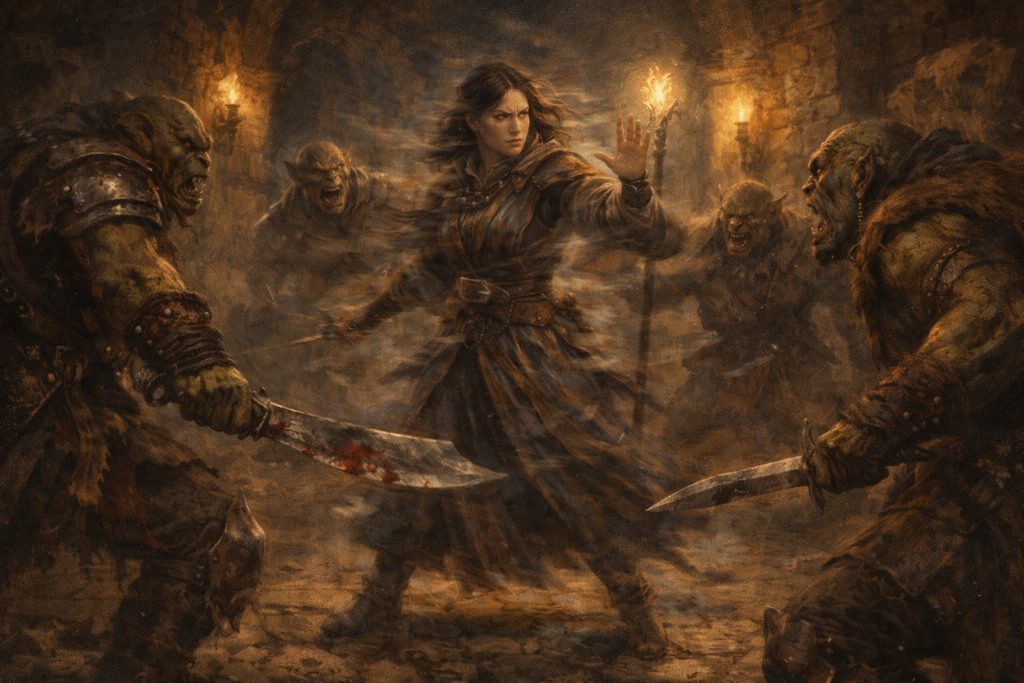
When escape is impossible and the strike is already coming, the illusionist survives not by vanishing or multiplying, but by becoming visually uncertain enough that every blow arrives a fraction too late.
Your shape wavers, your outline slips, and the eye never quite finds where the killing stroke should land.
Blur 5.5
Blur 3.5
Blur
Alternative Name: Veil of the Unfixed
2nd-Level Illusion
Casting Time: 1 action
Range: Self
Components: V
Duration: Concentration, up to 1 minute
Available To: Sorcerer, Wizard
Effect: Your body becomes blurred, shifting, and wavering to all who can see you. For the duration, any creature has disadvantage on attack rolls against you. An attacker is immune to this effect if it doesn’t rely on sight, as with blindsight, or if it can perceive illusions as false, as with truesight.
Overview
Blur is one of the purest defensive illusion spells because it does not hide the caster, split them into duplicates, or interpose a visible barrier between them and danger. Instead, it attacks visual certainty itself. The caster remains present, exposed, and plainly in the fight, yet never quite where the eye insists they should be.
That gives the spell a distinct and elegant identity. Mirror Image protects by multiplying the target. Invisibility protects by removing the target from sight. Blur protects by making sight unreliable. The enemy can still see the caster, but seeing is no longer enough to strike cleanly.
This makes Blur especially satisfying. It is not a spell of theatrical disappearance, but of constant near-failure. Blades pass where the body seemed to be. Arrows cut through a shape the eye trusted. The caster remains under pressure, yet every attack is forced through uncertainty first.
Why Blur Matters
Blur occupies an important place in illusion magic because it turns perception failure into direct defense. It does not need to frighten foes, deceive them about the room, or persuade them that another story is true. It simply ensures that hostile sight becomes a bad guide at the worst possible moment.
Its role in the illusion cluster is especially clean:
- Minor Illusion = false detail
- Silent Image / Minor Image / Major Image = false scene
- Mirror Image = false target
- Disguise Self = false identity
- Blur = false visual certainty
That distinction matters because Blur is intensely personal. It lives inside the attack roll, inside the duel, inside the charge down the corridor or the desperate clash on the stair. It does not ask enemies to believe a lie. It forces them to act through a flawed read of reality.
Best Uses
Frontline Caster Defense
Blur is excellent for any caster who expects to remain visible while drawing repeated attacks. If enemies must rely on sight to hit you, the spell makes every attempt less trustworthy.
Sustained Pressure
Where some defensive spells are strongest at the start and weaken quickly, Blur holds a steadier line. If you expect to endure several rounds of attacks rather than a single decisive exchange, its consistency becomes very valuable.
Duel Magic
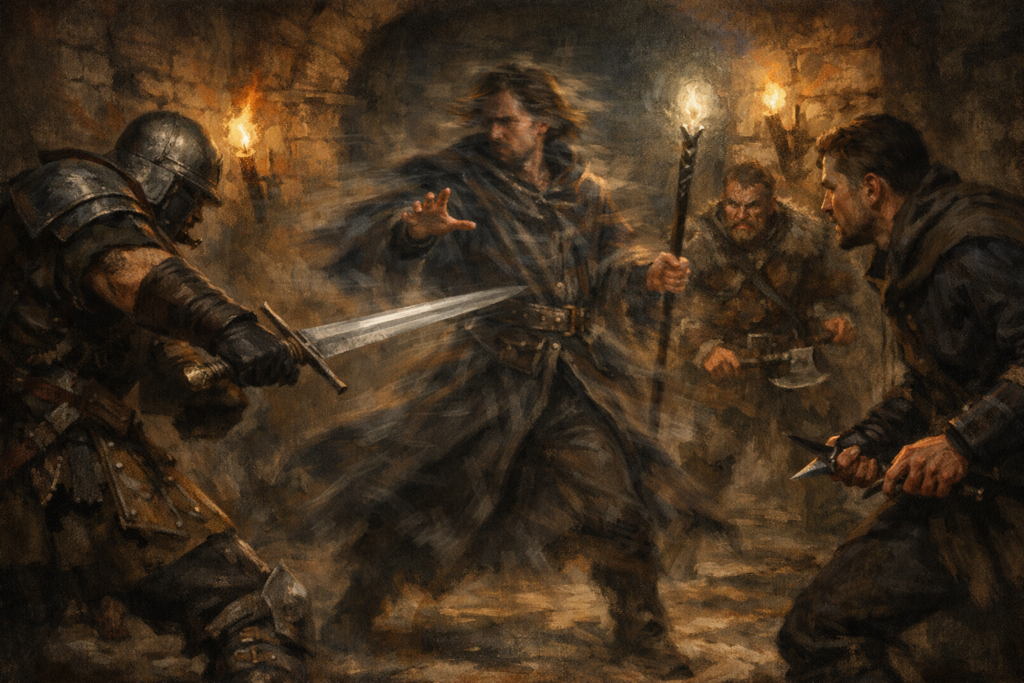
Blur shines in close, technical fights where timing matters. In duels, corridor skirmishes, stair fights, and chamber melees, even a small visual error can turn a perfect strike into a miss.
Multi-Attack Encounters
The more sight-based attack rolls enemies make against you, the more value Blur creates. Repeated disadvantage across a fight can drain hostile momentum surprisingly fast.
Choosing Survival First
Because Blur requires concentration, it often competes with stronger offensive or controlling magic. That makes it most valuable when survival itself is the priority. A living caster still has options. A fallen one does not.
Practical Tactics
Cast Before Accuracy Becomes Pressure
Blur is strongest when it comes online before enemies have fully settled into rhythm against you. Once the fight becomes a series of confident attacks, forcing those attacks back into uncertainty can change the whole exchange.
Pair It with Positioning
Blur is excellent on its own, but better when the enemy is already dealing with awkward footing, narrow angles, cover, elevation, or cluttered ground. A foe attacking through bad conditions and bad visual certainty is far less dangerous.
Use It Against Sight-Reliant Threats
The spell is at its best against guards, soldiers, assassins, archers, rival duelists, and other attackers who must judge exact position by eye. It loses much of its value when facing creatures that can ignore sight.
Prefer It When You Expect Endurance
Mirror Image can be better for absorbing a few crucial attacks. Blur is often better when you expect prolonged attention and need your defense to remain stable rather than degrade.
Respect the Cost
Blur is powerful because it asks something meaningful in return: concentration. It should be chosen when evasive survival matters more than maintaining another ongoing magical effect.
Limits of the Spell
Blur does not make you invisible, create duplicates, or mislead enemies about your general location. It only makes it harder for sight-based attackers to land attacks accurately.
That means it does nothing against:
- creatures that do not rely on sight
- blindsight
- truesight
- area effects
- dangers that do not depend on attack rolls
Its greatest balancing factor is concentration. Blur is not a universal defense; it is a deliberate trade, exchanging other sustained magical options for a strong layer of personal evasiveness.
DM Notes
Blur works best when described as visual instability rather than magical glow. The caster should appear difficult to fix in the eye: edges smearing, movement slipping, outline wavering, and position seeming fractionally displaced from where weapons actually fall.
The spell becomes much more satisfying when its effect is narrated through attacker frustration:
- a sword cuts through a place the eye swore was right
- an arrow misses because the target’s edge seemed to shift at the last instant
- a duelist commits to timing that fails by inches
- the caster remains in sight, but never fully in certainty
Keep the visual boundary honest. This is not invisibility, not mirror-duplication, and not a force barrier. Creatures that do not depend on sight should not care about it, and creatures that see through illusions should not be hindered. That sharp boundary is part of what keeps Blur elegant.
Good Combinations
Shield: If disadvantage is not enough and an attack still threatens to land, Shield can turn the near-hit aside.
Misty Step: Blur buys the uncertainty needed to break pressure and reposition cleanly.
Cover and terrain: The spell becomes much nastier when enemies are already attacking through poor angles and difficult footing.
Mirror Image: Mirror Image protects through false bodies, while Blur protects through false visual certainty. They fill related but distinct defensive roles.
Invisibility: Blur is for surviving while still seen. Invisibility is for escaping sight entirely. The contrast between them is one of the clearest in the illusion school.
Defensive concentration choices: Blur is ideal for casters whose best contribution in the moment is staying alive long enough to keep shaping the fight.
Adventure and Story Uses
Blur is an excellent spell for showing that illusion magic is not always grand deception or theatrical spectacle. Sometimes it is simply the art of denying a clean answer.
A battlemage crossing a hall under arrow-fire, never quite where the shafts arrive.
A duelist-sorcerer in a noble chamber, her enemies growing angrier as every thrust slips past uncertain edges.
A hunted wizard on a stair landing, blades failing because the eye cannot fix the true line of the body.
A war-caster holding a breach, not untouchable, but maddeningly hard to strike with confidence.
That is why the spell feels memorable. It does not remove danger. It makes danger misread.
Blur
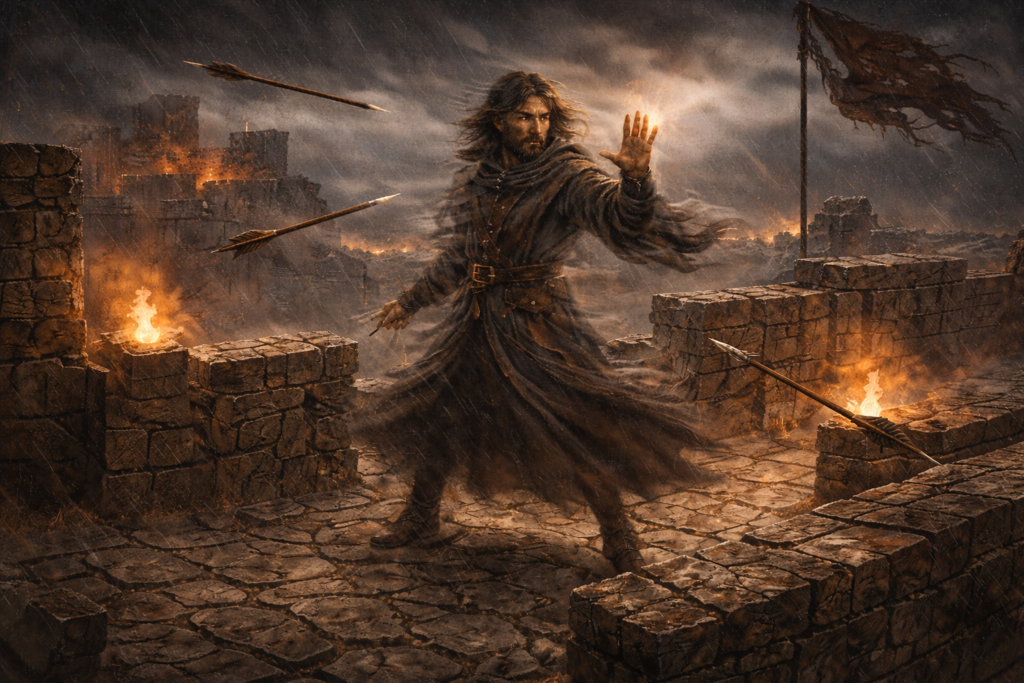
The subject’s outline appears blurred, shifting and wavering.
This material is Open Game Content, and is licensed for public use under the terms of the Open Game License v1.0a.
Illusion (Glamer)
Level Bard 2, Sorcerer/Wizard 2
Components V
Casting Time 1 standard action
Range Touch
Target Creature touched
Duration 1 min./level (D)
Saving Throw Will negates (harmless)
Spell Resistance Yes (harmless)
- This distortion grants the subject concealment (20% miss chance).
- A see invisibility spell does not counteract the blur effect, but a true seeing spell does.
- Opponents that cannot see the subject ignore the spell’s effect (though fighting an unseen opponent carries penalties of its own).
Keep this reference growing
If this page helped with your reading or game, you can support its upkeep or explore the curated books.
Explore the Bookshop — epics, classics and stories behind imagined worlds.