
 Buy me a coffee
Counterspell, “Spellshatter”
Deny the spell at the edge of becoming, and leave nothing for the world to endure.

Counterspell is not opposition. It is interruption at the point of birth.
Other magic creates, alters, summons, reveals, or destroys. Counterspell does something colder. It denies a spell the right to complete itself. The working begins, intention gathers, power rises toward expression—and then it is cut short before reality ever has to carry it.
That is why the spell feels so severe in play. There is no aftermath to manage, no lingering enchantment to strip away, no eruption to survive. The spell never arrives as an event in the world. It is refused at the threshold.
This makes Counterspell one of the clearest expressions of magical control. It is not stronger magic overwhelming weaker magic. It is the simple, brutal fact that the casting does not finish.
3rd-Level Abjuration
Casting Time: 1 Reaction, which you take when you see a creature within 60 feet of yourself casting a spell with Verbal, Somatic, or Material components
Range: 60 feet
Components: S
Duration: Instantaneous
Available To: Sorcerer, Warlock, Wizard
Effect
You attempt to interrupt a creature in the process of casting a spell. The target creature makes a Constitution saving throw. On a failed save, the spell dissipates with no effect, and the action, Bonus Action, or Reaction used to cast it is wasted. If that spell was cast with a spell slot, the slot is not expended. On a successful save, the spell is cast normally.
This version of Counterspell does not use the older “automatic success against 3rd-level spells, ability check against higher-level spells” structure. That older model is no longer the current one.
Because the trigger requires you to see a creature casting a spell with components, the spell is about perception, timing, and interruption of a visible casting act—not broad denial of any magical effect that happens nearby.
Why This Spell Is Dangerous in the World
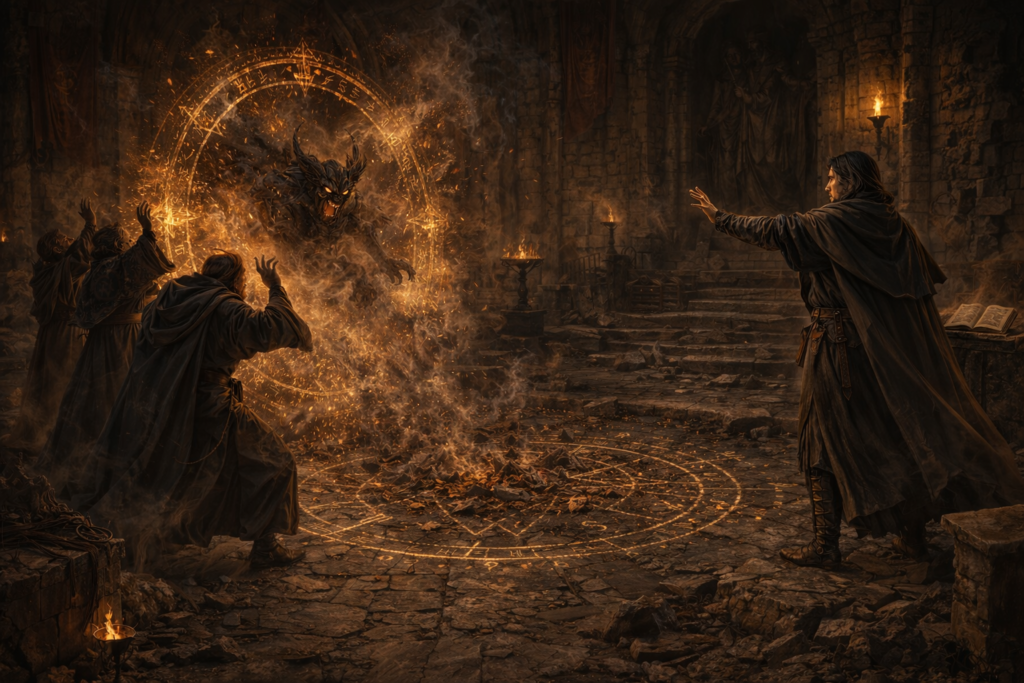
Counterspell is dangerous because it makes spellcasting itself conditional.
A mage may know the words, command the power, and reach the critical instant of release, yet still fail because another will is present to deny completion. That changes every serious magical confrontation. Rituals become vulnerable at their most important second. Battle magic becomes less about raw force and more about timing, distance, visibility, and nerve.
It also changes institutions. Courts guarded by mages are harder to enchant. Temples can protect rites from hostile casters. Duels between powerful spellcasters stop being contests of who knows the greater spell and become contests over whose intent is allowed to resolve.
The spell is frightening because it does not undo magic after the fact. It refuses to let it become fact at all.
Best Uses
Stop the spell that would change everything:
The best target is often the casting that would immediately alter the entire situation if allowed to resolve.
Protect the party from catastrophic magic:
A prevented spell is often worth far more than a healed wound or recovered position.
Break enemy tempo:
A failed casting wastes the caster’s action economy, and under the current rule may even preserve their spell slot, which changes the feel of the exchange from “resource destruction” to “denied resolution.”
Control magical duels:
This spell places a layer of threat over any visible casting.
Force more careful enemy play:
Once Counterspell is known to be present, enemies must think differently about when and where they cast.
Tactics

Use Counterspell with discipline.
Its trigger is narrow enough that positioning matters a great deal: you must be within 60 feet, and you must see the creature casting a spell with components. That makes line of sight and distance central to its use.
Because the defender’s spell slot is not expended on a failed save if the interrupted spell used a slot, this version of Counterspell is less about draining enemy resources and more about denying critical timing. That makes judgment especially important. Use it on the spell that must not resolve, not merely the spell that looks impressive.
It also means the spell is excellent for protecting turning points: the summoning that would finish the ritual, the battlefield spell that would trap the party, the control spell that would collapse your line.
DM Notes
Run Counterspell as absence, not spectacle.
The most effective presentation is usually minimal: a word cut short, a gesture that loses coherence, a surge of power that never crosses into manifestation. Avoid treating it like a beam duel unless your table strongly prefers that style. The current rules support a reading in which the casting simply fails to complete.
Be strict about the trigger. The caster must be seen, be within range, and be casting a spell with Verbal, Somatic, or Material components. That clarity keeps the spell sharp and prevents it from becoming a vague answer to anything magical.
Also be clear that Counterspell stops spells. It does not automatically stop every supernatural monster ability unless that ability is actually a spell.
Good Combinations
- Dispel Magic: One ends an ongoing spell; the other prevents a spell from ever resolving. Together they define magical denial before and after completion.
- Silence: One constrains casting conditions; the other punishes visible attempts that still get through.
- Greater Invisibility: Being harder to perceive can make it easier to preserve your own castings while threatening theirs.
- Wall of Force: Control the field while policing which hostile spells are allowed to matter.
- Banishment: Deny the enemy’s key spell, then remove the creature that depended on it.
The defining truth of Counterspell is:
The spell is denied before it becomes part of the world.