
Ninhursag — Mother Goddess of Birth, Creation & the Sacred Mountain
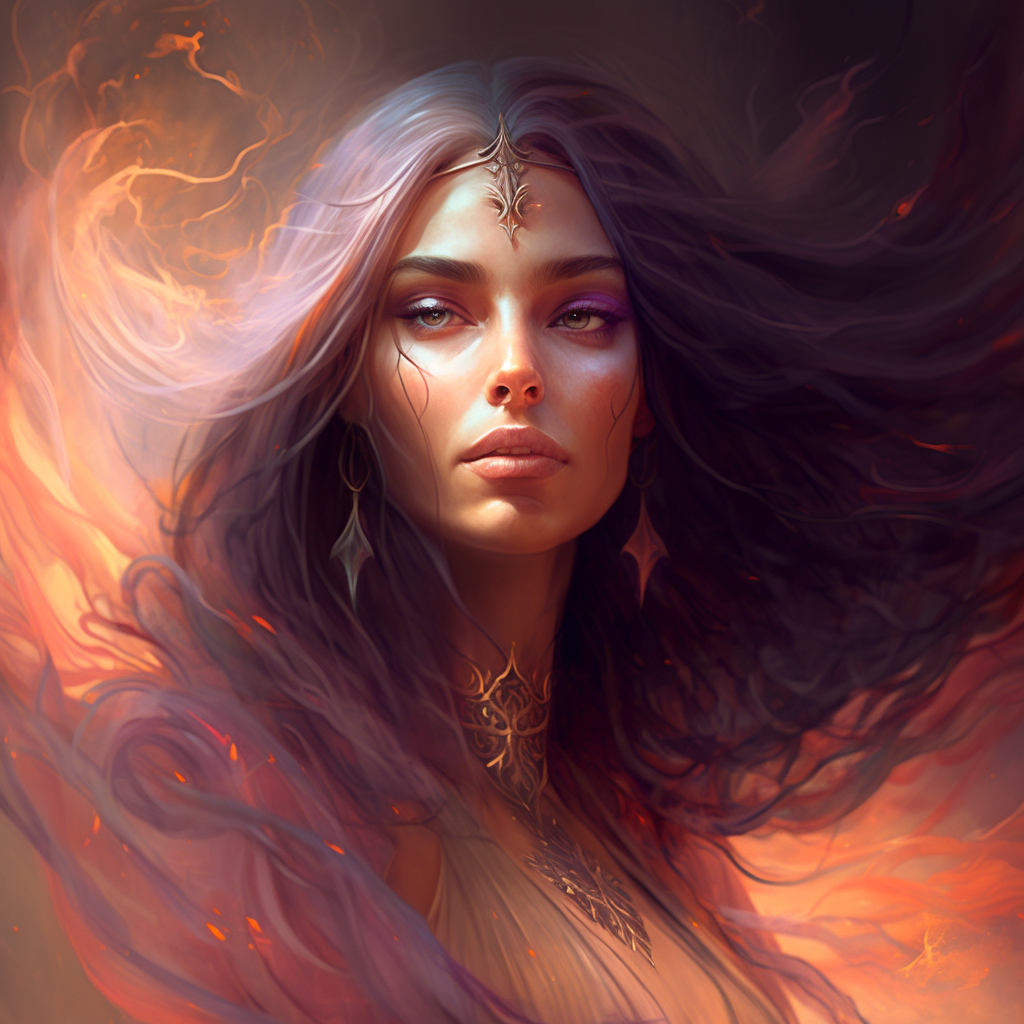
Ninhursag belongs to the great Mesopotamian mother-goddess tradition: a divine power of pregnancy, birth, creation and the shaping of humankind. Her identity overlaps with names such as Ninmah, Nintur and Belet-ili, and the surviving traditions do not reduce neatly to one permanent genealogy or one narrow “fertility” portfolio.
At a Glance
Greater Deity
Neutral Good
Lady of the Mountain; Great Mother; Lady of Birth
Pregnancy, birth, motherhood, creation, human life, mountains and the continuity of peoples
Ninmah, Nintur/Nintud and Belet-ili belong to overlapping mother-goddess traditions; Ninhursag is one important name within that complex
Keš, with worship also attested widely across Mesopotamia
The mother-goddess Ω sign, sometimes accompanied by a knife interpreted as an umbilical-cutting tool
The House of Birth beneath the Sacred Mountain
Game Mechanics
The following statistics are campaign adaptations, not official rules material.
5.5e / 2024 — Direct Divine Manifestation
Large Celestial (Greater Deity), Neutral Good. AC 28; HP 900; Speed 40 ft.; CR 36; PB +10. STR 28, DEX 22, CON 38, INT 30, WIS 40, CHA 36. Saves Con +23, Int +20, Wis +24, Cha +22. Immunities poison, radiant; Resistances necrotic, force, psychic. Condition Immunities charmed, frightened, poisoned. Truesight 180 ft.
Greater Divine Nature; Legendary Resistance (5/Day); Magic Resistance. Mother of Living Things. Allies within 60 feet have Advantage on death saves and Constitution saves. Newborn or newly created non-hostile creatures cannot be harmed by environmental damage within the aura.
Shape the Living Clay. Once per round Ninhursag may use her Reaction when a creature within 120 feet takes damage to reduce that damage by 30 and end one poison or disease affecting it.
Actions — Staff of the Great Mother. +19 to hit; 3d10+8 bludgeoning plus 6d8 radiant. Breath of Birth (Recharge 5–6). Up to six allies within 90 feet regain 50 hp and may end one blinded, deafened, poisoned or paralyzed condition. Return to Form (Recharge 6). One creature within 120 feet returns to its natural form and ends one curse, polymorph or bodily corruption of 8th level or lower. Call the Sacred Mountain (1/Day). A 60-foot-radius rise of stone and fertile earth provides total cover in chosen sections, restores damaged mundane soil and grants allies 30 temporary hp.
Legendary Actions. Protective Step; Staff Strike; Midwife’s Hand (2), stabilize and heal an ally; Mother’s Rebuke (2), 36 psychic against a creature harming a helpless target; Shape Life (3), create a temporary non-sentient animal or plant form suited to one practical task.
Cleric themes. Life, Nature and Protection fit Ninhursag. A campaign Birth Domain might use cure wounds, sanctuary; aid, lesser restoration; revivify, protection from energy; aura of life, stone shape; greater restoration, creation.
Pathfinder 1e — Campaign Adaptation
CR 36 / MR 9. AC 56; hp 860; Fort +40, Ref +29, Will +42; DR 20/epic; SR 47. Signature abilities: Mother of Living Things (Su), death-save and Fortitude protection; Shape Living Clay (Su), immediate damage reduction and disease/poison removal; Sacred Mountain (Su), terrain creation and mass protection. Domains: Community, Earth, Healing, Protection, Repose.
D&D 3.5e — Campaign Adaptation
Greater Deity; Divine Rank 15; Outsider 20 / Cleric 30; Neutral Good; suggested CR 49. DR 30/epic; SR 67. Salient abilities: Avatar, Divine Earth Mastery, Divine Spellcasting, Gift of Life, Life and Death, Rejuvenation. Domains: Community, Earth, Healing, Protection, Repose.
What Is Ninhursag Doing Right Now?
Ninhursag is paying attention to displaced families, difficult births and communities whose survival depends on whether children live through the next generation. Her cult is less interested in royal spectacle than in whether granaries, water, midwives and safe shelter exist where people are actually living.
She is also confronting magical attempts to “improve” living creatures without consent. Wizards, alchemists and divine experimenters who treat bodies as raw material are finding that the Great Mother has strong opinions about creation without responsibility.
Appearance & Manner
Ninhursag appears as a mature horn-crowned goddess in layered robes, often with mountain, birth and mother-goddess symbolism rather than a generic earth-mother costume. She is patient with fear, impatient with arrogance and utterly unmoved by anyone claiming that suffering is “necessary” when they have not shared it.
The Many Names of the Mother Goddess
Mesopotamian mother-goddess traditions overlap heavily. Nintur/Nintud, Ninmah, Belet-ili, Aruru and Ninhursag can share functions and identities in different texts and periods. Treating every name as either a completely separate goddess or a perfectly interchangeable alias oversimplifies the evidence.
The strongest shared functions are pregnancy, birth and, especially in earlier periods, the creation of humankind. The mother goddess once stood among the highest deities in the pantheon.
Divine Relationships
Enki / Ea. Their myths connect fertility, bodily creation and the life-giving waters of the Abzu. The relationship varies by composition and should not be flattened into one permanent marriage.
An, Enlil and other high gods. Different traditions assign the mother goddess different husbands or partners. Variant genealogy is part of the historical record rather than an error to be fixed.
Worship, Keš & Birth
The mother goddess’s chief cult centre was Keš, distinct from Kiš, with worship also attested in many major Mesopotamian cities. Her priests and priestesses serve expectant parents, midwives, healers, children and communities rebuilding after population loss.
Her cult treats birth as both sacred and dangerous. Ritual purity matters, but practical care matters more: clean water, warm rooms, experienced attendants and honest records of maternal and infant health.
Omens, Favour & Displeasure
Favour appears as a difficult birth easing, the Ω sign appearing in clay, an abandoned child finding protection or barren soil supporting new growth after careful work. Ninhursag dislikes cruelty toward children, coercive creation, neglect of mothers and rulers who praise “future generations” while starving the living one.
Encounters & Adventure Use
The Lost House of Keš
A buried sanctuary contains birth records proving an entire royal genealogy wrong.
The Clay Children
Magically created servants begin developing independent identities, and Ninhursag’s priests insist they are now people.
The Ω Stone
A boundary stone marked with the mother-goddess symbol prevents every pregnant creature nearby from coming to term until an ancient oath is repaired.
Divine Realm — The House of Birth
Ninhursag’s realm lies beneath and within a sacred mountain filled with gardens, birthing rooms, workshops of living clay and archives of names. No child born there lacks a name, and no parent is expected to face birth alone.
Relics & Sacred Objects
The Ω Seal. It identifies magical tampering with pregnancy, lineage or bodily creation.
The Cord-Cutting Knife. A ritual blade that can sever parasitic or possessive magical links without harming the host.
Clay of the First Body. It repairs one grievously damaged body, but cannot create a person merely to obey its owner.
Historical & Mythological Context
ORACC treats Ninhursag within the wider Mesopotamian mother-goddess complex that includes Ninmah, Nintur/Nintud and Belet-ili. The mother goddess is strongly associated with pregnancy, birth and earlier traditions of human creation. Her main cult centre was Keš, and the Ω sign is an important mother-goddess symbol.
The direct divine statistics, detailed realm, relics and current activity above are campaign adaptations.
Sources & Licensing
Historical foundation: ORACC — Mother Goddess. Game mechanics and campaign material are original adaptation.
Keep this reference growing
If this page helped with your reading or game, you can support its upkeep or explore the curated books.
Explore the Bookshop — epics, classics and stories behind imagined worlds.