
Dian Cécht, God of Healing and Medicine

He made Nuada’s silver hand move, but killed the son who could restore the flesh beneath it. Dian Cécht guards the art of healing and the secrets of Sláine. Those who request his aid must reckon with the pride of a god who destroyed his own daughter’s medicines rather than admit he had been surpassed.
>- Pantheon: Tuatha Dé Danann
- Deity Title: God of Healing and Medicine
- Divine symbol: A silver hand above the waters of Sláine, encircled by medicinal herbs (original campaign emblem; not an attested ancient symbol)
- Home Plane: Fey World, within the Irish Otherworld of Tír na nÓg; his sacred healing spring is Sláine
- Deity Level: Intermediate
- Alignment: Neutral Good
- Names: Dian Cécht, Dían Cécht, Dian Cecht
- Superior: None
- Family and rivalries: Lugh is his grandson through Cian; Míach is his son, whom Dian Cécht kills; Airmed is his daughter, who sorts the 365 medicinal herbs grown over Míach’s grave before Dian Cécht mixes them. She is a powerful healer in her own right and also chants with the family at the Well of Sláine.
- Traditional Foes: Balor, Bres, Formorians
- Holy place: The Well of Sláine, where Dian Cécht and his children chant over wounded warriors. This is a healing well in Cath Maige Tuired, not a named cauldron belonging to Dian Cécht
- Servants: None specified
- Servitor Creatures: None specified
- Sacred Animal: The Boar
- Manifestations: A silver mist that heals wounds, a gentle breeze that soothes pain, the sound of a healing chant
- Signs of Favor: The sick recovering rapidly, crops flourishing, healers making great strides in their craft
- Worshipers: Healers, physicians, surgeons, those in need of healing, those who seek to alleviate suffering
- Cleric Alignments: Neutral Good, Lawful Good, Chaotic Good
- Specialty Priests: Physicians, Herbalists, Surgeons
- Holy Days: The Summer Solstice, The Feast of Miach (February 1st), The Feast of Airmed (August 1st)
- Portfolio: Healing, Medicine, Surgery, Herbalism, Preventative Medicine
- Domains: Life, Light, Nature
- Favored Weapon: Staff
- Favored Class: Cleric
- Favored Race: Humans
- Duties of the Priesthood: To serve as healers and advisors to those in need, to advance the practice of medicine, to promote preventative medicine and healthy living practices, to protect and maintain the Healing Cauldron
- Major Cult/Temple Sites: The Temple of Dian Cécht in the Hill of Uisneach, The Sanctuary of Airmed in Slieve Bloom Mountains
- Benefits: Priests of Dian Cécht are granted access to powerful healing spells, and can use the Healing Cauldron to heal the sick and injured. They also enjoy the support and protection of the Tuatha Dé Danann, and are seen as respected members of their communities.
Dian Cécht is a prominent figure in Irish Celtic mythology, known as the god of healing and medicine. As a skilled physician and healer, he is deeply committed to relieving the suffering of the people he serves, and to restoring their health and vitality.
Dian Cécht’s expertise in the art of medicine is unsurpassed, and he is known throughout the land for his exceptional knowledge of herbs, potions, and incantations that can cure any ailment. He is also a master surgeon, capable of performing complex operations and healing grievous injuries that others would deem impossible to cure.
Despite his incredible abilities, Dian Cécht’s path to becoming a healer was not an easy one. He was once the leader of a group of physician-warriors known as the Tuatha Dé Danann, but he was cast out by his own son, Miach, who surpassed him in skill and knowledge.
Driven by his desire to regain his standing as the greatest physician in the land, Dian Cécht embarked on a journey of self-discovery, seeking out new knowledge and skills that would enable him to surpass even his own son. Along the way, he honed his craft, gaining insight and wisdom that he would later use to heal countless others.
Dian Cécht is a tall, lean figure with piercing blue eyes and a strong, angular jawline. He has long, flowing silver hair that cascades down his back in waves, and he is often seen wearing a white cloak adorned with intricate Celtic knotwork. His hands are large and capable, with nimble fingers that move with remarkable dexterity, whether he is wielding a scalpel or mixing herbs for a potion. Despite his imposing stature, Dian Cécht moves with a grace and fluidity that belies his age, and his piercing gaze seems to convey both wisdom and compassion.
Today, Dian Cécht is revered as a god of healing and medicine, respected for his unwavering dedication to the well-being of his people. He is a deeply empathetic and compassionate character, driven by his desire to heal and improve the lives of those around him. Despite his past struggles, he remains steadfast in his pursuit of knowledge and his commitment to the art of healing, always seeking new ways to improve his craft and help others.
Dian Cécht, God of Healing
Medium celestial (deity), neutral; Epic Challenge 32 (original, extrapolated; no official XP entry), Proficiency Bonus +10

Armor Class 30 (divine protection); Hit Points 725 (50d8 + 500); Speed 60 ft.
| STR | DEX | CON | INT | WIS | CHA |
|---|---|---|---|---|---|
| 30 (+10) | 20 (+5) | 30 (+10) | 30 (+10) | 30 (+10) | 30 (+10) |
Saving Throws Str +20, Con +20, Wis +20; Skills Medicine +30 (expertise), Religion +20, Perception +20; Senses truesight 120 ft., passive Perception 30; Languages Common, Gaelic, Celestial and Sylvan
Legendary Resistance (3/day): If Dian Cécht fails a saving throw, he can choose to succeed instead.
Well of Sláine (3/Day). As an action, Dian Cécht touches one willing creature within 5 feet. It regains 70 (20d6) hit points, and one poison or disease affecting it ends. This is his own power, not the mortal cleric Divine Intervention class feature.
Multiattack. Dian Cécht makes three staff attacks. Instead, he may use the Spellcasting action to cast a spell; spells are not attacks inside his Multiattack.
- Staff. Melee Weapon Attack: +20 to hit, reach 5 ft., one target. Hit: 36 (4d12 + 10) bludgeoning damage plus 10 (3d6) radiant damage.
- Cantrips. At will he can cast Guidance, Mending, Resistance, Sacred Flame and Spare the Dying, using normal spellcasting rules.
- Healing Touch (1/Day). Dian Cécht touches one willing creature within 5 feet; it regains 150 hit points. This is a separate resource from Well of Sláine.
Spellcasting. Dian Cécht is a 20th-level cleric spellcaster. His spellcasting ability is Wisdom (spell save DC 28, +20 to hit with spell attacks). He uses his normal casting times and concentration; spell slots are 4/3/3/3/3/2/2/1/1 for levels 1–9. The spells below are his personal prepared repertoire, not the domain spells automatically granted to all worshippers.
- 1st level: Cure Wounds, Detect Evil and Good, Detect Magic, Guiding Bolt, Healing Word, Identify, Shield of Faith
- 2nd level: Aid, Augury, Lesser Restoration, Prayer of Healing, Zone of Truth
- 3rd level: Beacon of Hope, Dispel Magic, Mass Healing Word, Revivify
- 4th level: Death Ward, Divination, Guardian of Faith, Freedom of Movement
- 5th level: Greater Restoration, Mass Cure Wounds, Raise Dead
- 6th level: Heal, Heroes’ Feast, True Seeing
- 7th level: Resurrection
- 8th level: Holy Aura
- 9th level: Mass Heal
Legendary Actions: Dian Cécht can take 3 legendary actions per round, choosing from the options below:
- Cast a Cantrip spell: Dian Cécht can cast any Cantrip spell from the Life, Light, or Knowledge domains.
- Attack: Dian Cécht can make one Staff attack.
- Renewal (Costs 2 Legendary Actions). One willing creature within 5 feet of Dian Cécht regains 35 (10d6) hit points.
Lair Actions: Dian Cécht’s lair is a sanctuary of healing, and he can use his lair actions to bolster his allies and hinder his enemies:
- Wave of Healing: Dian Cécht calls upon the power of his deity to heal all creatures within 60 feet for 100 hit points.
- Warding Light: Dian Cécht’s lair becomes illuminated with a bright light that dispels all magical darkness and grants all creatures within 60 feet advantage on saving throws against magical effects.
- Bane of Sickness: Dian Cécht can curse a creature within 60 feet with a debilitating illness that inflicts disadvantage on attack rolls, ability checks, and saving throws for 1 minute. The creature can make a Wisdom saving throw (DC 30) at the end of each of its turns to end the effect.
Regional Effects: The presence of Dian Cécht in an area can have the following effects:
- Blessing of Healing: All creatures within 1 mile of Dian Cécht’s presence are healed for 10 hit points at the start of each of their turns.
- Divine Protection: The area within 1 mile of Dian Cécht’s presence is protected by a ward that grants all creatures within advantage on saving throws against disease, poison, and necrotic damage.
- Aura of Vitality: Dian Cécht’s presence fills the air with a soothing energy that grants all creatures within 1 mile resistance to necrotic damage and advantage on Constitution saving throws to maintain concentration on spells.
The Cauldron That Was Never at Sláine
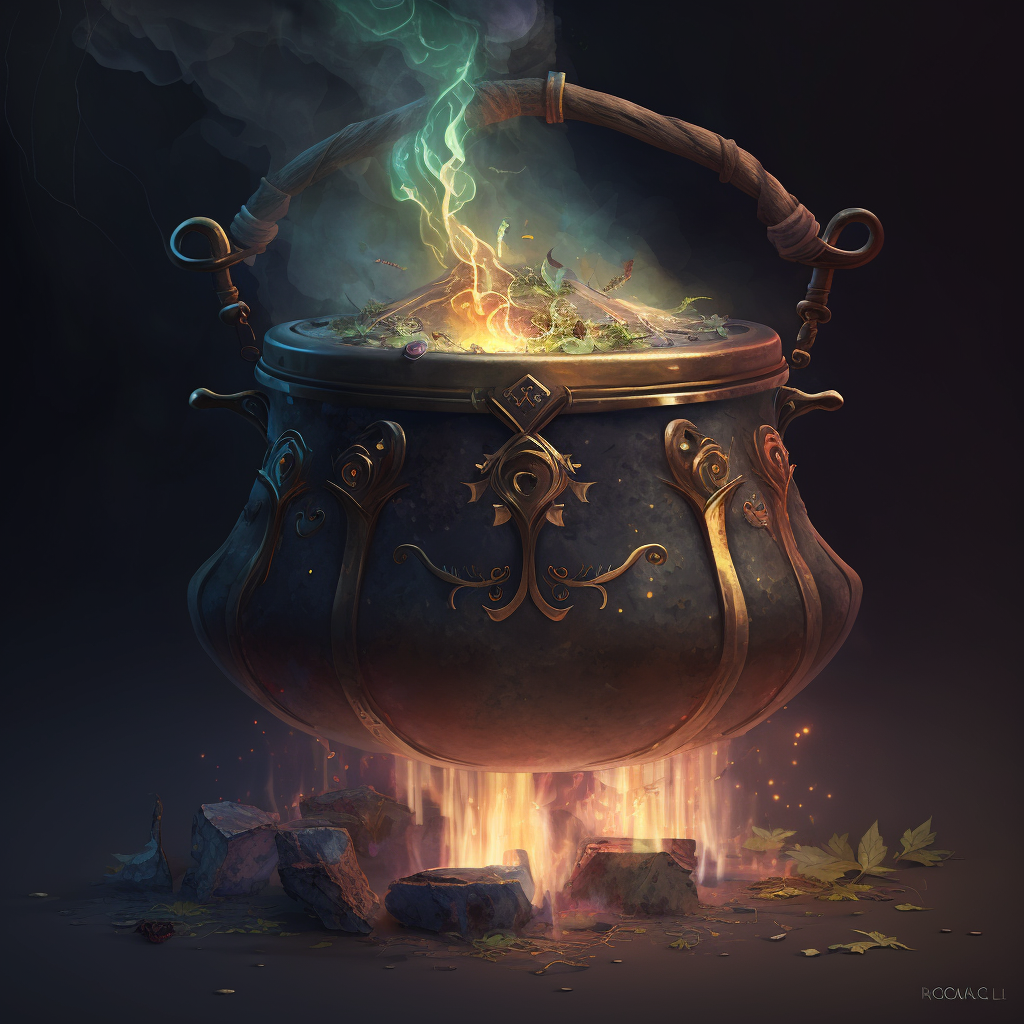
At a fair in Meath, a seller offers a bronze cauldron that supposedly restores the dead to life. The claim borrows Dian Cécht’s name, but the old account describes the Well of Sláine, where he, Míach, Octriuil and Airmed chant over wounded warriors. It does not give him a healing cauldron. A relic seller’s forged story does not become true simply because the vessel shines.
The choice: merchant Conall of the Ford uses the cauldron to promise his customers impossible cures. A sick child has been entrusted to him and is growing weaker. The characters may expose the deception, seek Dian Cécht’s help at a real healing spring, or discover that the forged vessel contains a trapped water spirit. Each path can save the child, but the merchant’s customers may demand restitution.
What Dian Cécht Is Doing in 1454
Dian Cécht is learning from mortal surgeons and battlefield physicians in Ireland and beyond, but his interest is not free of pride. He wants cures under his name, and he resents those who rediscover the methods that Miach and Airmed once knew. A physician who challenges him may receive a fair examination, a generous offer or a devastating personal rebuke.
The Three Hundred and Sixty-Five Herbs
Eithne ní Chathasaigh, an herbalist near Tara, has sorted 365 plants found growing over a burial mound. Her remedies work, but Dian Cécht has ordered his followers to seize her notebook before she can share it. The characters can protect Eithne, negotiate access to the notebook, or confront Dian Cécht over his fear of being surpassed. Airmed’s surviving healers will defend her findings, provided no one uses them to sell a monopoly on medicine.
The Silver Hand’s New Owner
A wounded knight named Tadhg mac Fergal arrives at a Meath sanctuary wearing a silver hand that moves without visible hinges. The hand has begun repeating acts of violence its former owner committed. Dian Cécht offers to replace it, but refuses to remove the memories bound into the silver. The party can seek the memories’ victims, convince him to face the consequences, or find a less proud healer prepared to rebuild the hand.
The Water Must Be Shared
At a ford, two villages have discovered a spring that closes fresh wounds in a single night. Brother Colmán wants to reserve it for his monastery’s sick; Róisín of the Ford argues it must remain open to everyone. The water is a thin connection to Sláine, and the gate begins to close as their quarrel hardens. The adventurers must secure a lasting arrangement for the wounded, keep armed retainers away and discover who is secretly poisoning the spring upstream.
Mythological Sources
Cath Maige Tuired, University College Cork’s CELT edition, records the silver hand, Miach’s death, Airmed’s 365 herbs and the battle-well of Sláine. The present-day visitors, disputed cauldron and three encounters above belong to the living campaign.
Keep this reference growing
If this page helped with your reading or game, you can support its upkeep or explore the curated books.
Explore the Bookshop — epics, classics and stories behind imagined worlds.