
e Anointing Oil
Anointing Oil
Anointing Oil: Sacred Blessing Oil for Divine Touch Magic
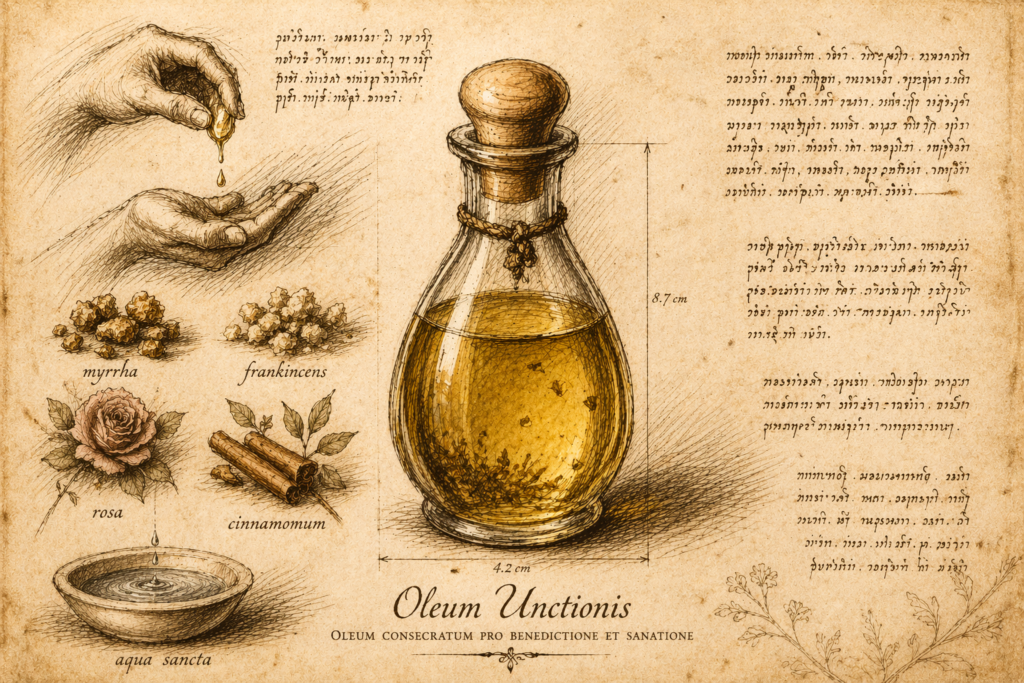
Alternative Names: Consecrated Anointing Oil, Blessing Oil, Sacred Unction
Anointing Oil is a sacred preparation of aromatic spices, fragrant resins, and distilled holy water used to bless the body and strengthen the passage of divine power through touch. It is not a battlefield tonic or a crude magical accelerant. It is a ritual aid, applied with prayer, care, and intention just before a healing, blessing, ward, or other benign divine act is completed.
In practice, anointing oil slows the rite but deepens it. The caster must pause to mark the target with the sacred mixture, turning a swift laying-on of hands into a fuller act of devotion. In return, the prayer carries greater force. The blessing settles more firmly, and the spell is cast as though by one whose bond to the sacred is momentarily stronger.
Overview
Anointing oil is a sanctified liquid infused with aromatic spices and holy water, prepared for rites of blessing and beneficial divine spellcasting. It is applied directly to the skin, brow, hands, or another ritual point of contact while the caster completes a divine spell with a range of touch. The process takes longer than an ordinary casting, but the sacred preparation briefly strengthens the caster’s effective power.
It is most often found in temples, shrines, pilgrim kits, reliquary chests, field altars, and the satchels of priests who expect to tend the sick, bless the faithful, or perform rites under difficult conditions. Though modest in appearance, it carries an unmistakable air of reverence. It smells of sanctity before it ever touches the skin.
Description
Anointing oil is usually stored in a small sealed vial, flask, or ceramic bottle, often marked with the sigils of a temple, household cult, or divine office. The liquid itself may be pale gold, green-gold, or faintly cloudy depending on the herbs and sacred waters used in its making. Some blends are rich with myrrh, cassia, cedar, rose, frankincense, or other costly fragrances. Simpler versions rely on local oils and blessed springwater, but even these tend to carry a distinct clean and resinous scent.
When applied, it leaves a visible sheen on the skin and a lingering fragrance in the air. In ritual use, that scent becomes part of the act itself. It marks the recipient as one who has been touched by sanctified intention, whether for healing, blessing, protection, or preparation for a greater rite.
Why This Item Matters in the World
Anointing oil matters because it turns divine spellcasting into something visibly and physically sacred. It is not merely a modifier hidden behind rules. It is a reminder that beneficial divine magic is often embodied through ritual, fragrance, touch, and consecrated substance. A blessing given with anointing oil feels more solemn, more deliberate, and more publicly recognizable as a holy act.
That makes it useful worldbuilding material. Temples may reserve finer oils for important feast days or for the blessing of rulers, newborns, pilgrims, warriors, or the dying. Rival cults may be identifiable by the scent of their oils alone. A priest who carries anointing oil is a figure prepared not merely to cast, but to minister.
Failure and Limitation
Anointing oil is not a shortcut. Its strength lies in careful use, and its chief limitation is time. The caster must slow the rite, apply the oil properly, and complete the prayer with full attention. In a hurried, chaotic, or desperate moment, that extra time may be the difference between success and interruption.
It is also limited by purpose. Anointing oil strengthens only beneficial divine spells delivered by touch; it does not empower every miracle indiscriminately. In the world, this preserves its character as a sacred aid rather than a universal magical enhancer.
Value in the World
The worth of anointing oil lies partly in its ingredients and partly in its consecration. Even an inexpensive vial has usually passed through priestly hands, received prayer, or been prepared according to temple custom. Better oils may be costly not because they are mechanically stronger, but because they are made from rare fragrances, sealed in decorated vessels, or blessed at holy sites during significant celestial or liturgical moments.
As a result, some anointing oils are everyday temple supplies, while others are treasured ceremonial stores used only for saints’ days, royal investitures, ordeals, or acts of final blessing before battle or burial.
Trade, Craft, and Quality Grades
- Poor Oil (10 gp): A thin, cheaply prepared blessing oil made with weak perfume, diluted holy water, or hurried consecration. It is suitable for household rites, minor shrine use, and humble local devotion, but rarely trusted for major ceremonies. Poor oil does not grant the standard spellcasting benefit of true anointing oil, though it may serve as ritual dressing or a lower-status substitute at the GM’s discretion.
- Common Oil (25 gp): The standard temple version used for routine blessings, touch-healing, and everyday sacred work. This is the normal grade assumed by the rules below.
- Fine Oil (50 gp): A better-prepared oil made from purer ingredients, stronger fragrance, and more careful consecration. Fine oil is often used for feast days, important pilgrims, respected patrons, and formal acts of blessing. It normally uses the same mechanics as common oil, but carries greater ceremonial weight and social prestige.
- Superior Oil (100 gp): Reserved for major rites, temple dignitaries, sacred vows, royal blessings, and other occasions of public or spiritual importance. These oils are often stored in decorated vessels, prepared only at holy seasons, or blessed by high-ranking clergy. Their value lies as much in sanctity, ceremony, and status as in function.
- Relic Oil (250 gp or more): Exceptionally rare anointing oils associated with saints, miracles, great shrines, or major holy events. Such oils are usually not bought as ordinary goods at all. They are gifts, inheritances, temple treasures, or plot-significant relics.
Trade, Craft, and Common Variants
- Common Temple Oil: The standard version used for routine blessings, touch-healing, and household devotions.
- Pilgrim’s Vial: A smaller travel-sized version carried by wandering priests, healers, and shrine-servants.
- Festival Oil: A richer and more fragrant version prepared for feast days, public rites, and ceremonial blessings.
- Royal or High Temple Oil: Kept in precious containers and reserved for coronations, oaths, sacred offices, or other major acts of consecration.
- Regional Blends: Different lands favor different oils and spices. Desert cults may prefer myrrh and cinnamon, forest shrines cedar and pine resin, and island temples citrus, floral, or sea-herb blends.
Using the Item in Your Game
Anointing oil is most useful when treated as part of religious life rather than just a small spellcasting bonus. Put it in reliquaries, temple stores, healer’s kits, tomb chapels, shrine cupboards, and the traveling gear of devoted priests. Let its scent linger in places where blessings are common. Let characters recognize a temple’s presence before they ever see its altar.
It also works well in scenes where ritual matters. A hurried battlefield blessing, a midnight healing in a plague-house, a ruler marked before swearing an oath, or a dying hero anointed before one last miracle all become more memorable when the spell is made visible through sacred oil.
Adventure and Worldbuilding Hooks
- A temple’s anointing oil begins to lose its fragrance and power, suggesting that its sacred spring has been defiled upstream.
- A stolen vial of royal consecration oil threatens to disrupt a coronation, and without it the realm’s legitimacy may be publicly challenged.
- A dying saint’s final anointing oil is said to cure spiritual corruption, but the reliquary carrying it vanished generations ago.
- Priests from rival shrines can identify one another’s loyalties by scent alone, and a counterfeit blessing oil exposes an infiltrator in the sanctuary.
Anointing Oil 5.5e
Anointing Oil, Pathfinder
Anointing Oil
| Item Type | Cost | Weight | Use | Effect |
|---|---|---|---|---|
| Adventuring Gear | 25 gp | 1 lb. | 1 application | Beneficial divine touch spell cast as a full-round action gains +1 effective caster level |
Use
As part of casting a beneficial divine spell with a range of touch, you may apply anointing oil to the target. Doing so increases the casting time to a full-round action. If the spell is successfully completed, you cast it as though your effective caster level were 1 higher for that spell.
The oil is consumed when used, whether the spell succeeds or is lost after the casting begins, at the GM’s discretion.
Restrictions
Anointing oil affects only beneficial divine spells with a range of touch. It does not affect hostile divine spells, arcane spells, spells with a different range, or features that are not spells unless the GM rules otherwise.
Designer’s Note
The 5.5e version keeps the item narrow and ritual-focused. Its purpose is not raw optimization, but to support visible sacred practice and give touch-based blessings a more ceremonial presence in play.
Anointing Oil
| Item | Price | Weight | Aura | Use |
|---|---|---|---|---|
| Anointing Oil | 25 gp | 1 lb. | Faint conjuration or universal (if detected after consecration, GM’s discretion) | 1 application |
Effect
This sacred oil, infused with aromatic spices and distilled holy water, may be applied to a creature while casting a harmless divine spell with a range of touch. Doing so increases the casting time to a full-round action but increases the caster’s effective caster level by +1 for that spell.
Pathfinder Notes
The item is best suited to clerics, druids, inquisitors, or other divine casters who regularly deliver harmless touch spells and can afford the extra time. It is especially useful in temple play, healing scenes, pre-battle blessings, and rites where ritual emphasis matters more than speed.
Closing Note
Anointing oil is a small item, but it gives divine magic texture. It reminds the table that blessing is not always instantaneous. Sometimes it is fragrant, deliberate, and solemn, marked on the skin before the miracle takes hold.
For broader background on historical rites of anointing, see Encyclopaedia Britannica’s overview of anointment.
Keep this reference growing
If this page helped with your reading or game, you can support its upkeep or explore the curated books.
Explore the Bookshop — epics, classics and stories behind imagined worlds.