
Elf Witch Traditions — Kuruni and Fey-Touched Craft
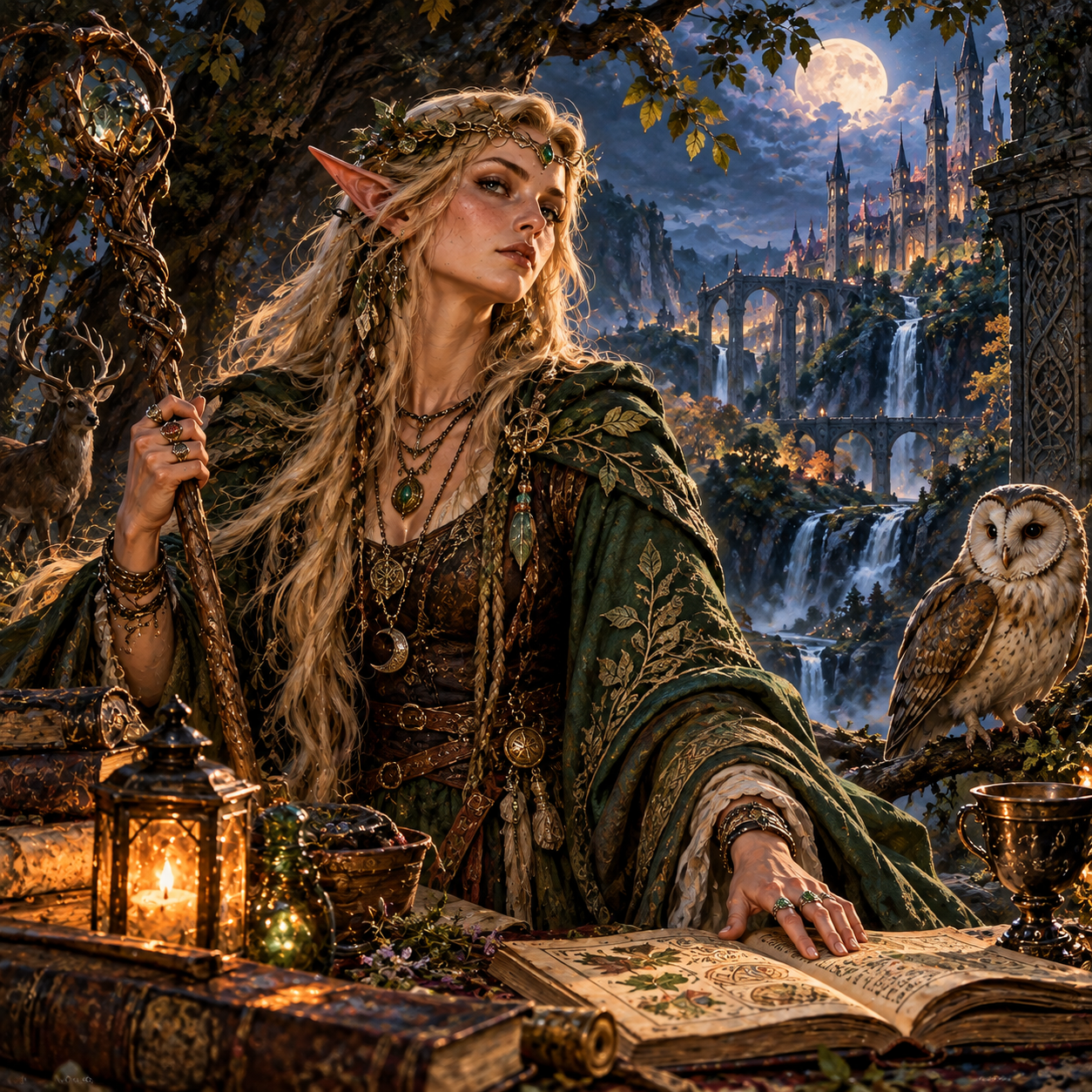
Elven Witch traditions develop from long-lived magical cultures, local patrons, fey relationships and inherited schools of craft. The Kuruni is one legacy d20 example rather than the default form of every elven Witch.
Choose an Elf Witch If…
- You want Witchcraft shaped by long memory, old magical schools or close relationships with fey places.
- You like a character whose teachers may have known the same patron for centuries.
- You want the Kuruni as one elven Witch school rather than the default form of elven Witchcraft.
At a Glance
| Common traditions | Faerie, Classical, Family, Eclectic and other locally established schools. |
|---|---|
| Strong themes | Long memory, fey diplomacy, inherited lore, ancient patrons and magical continuity. |
| Legacy archetype | Kuruni — an elven Witch school strongly associated with the Faerie Tradition. |
| 5.5e use | Use normal elf ancestry rules and choose any Witch Tradition suited to the character. |
What it feels like to play: an elf Witch can make ordinary adventuring problems feel very old. A ruin may be remembered by your teacher, a patron may still be angry about a bargain made generations ago, and a “new” road may cross a place your coven has avoided for centuries.
Legacy cultural note
The preferences, alignment rules and Kuruni material below are preserved cultural material from an older d20 source. Elven ancestry does not determine class, tradition, alignment or patron.
Liber Mysterium
The Netbook of Witches and WarlocksBy Timothy S. Brannan and The Netbook of Witches and Warlocks Team
Elves were old when the world and mankind were still new. It should be no surprise then that histories of the elves and of witches have often met, intertwined, and drifted apart only to come back together many times. Some elves even claim that it was in fact the elfish race that created witchcraft and discovered its magic.
While human witches, in particular those of the Craft of the Wise, absolutely deny such theories, even they can acknowledge these secrets are buried so far back in time that no one may truly, if ever, know. An elven witch is given the same treatment as that of an elven sorcerer or druid.
Preferred Traditions: Many elven Witches enter the Faerie Tradition where their communities maintain strong fey ties, but elves also belong to Classical, Family, Eclectic, elemental and other Witch traditions. Culture and teacher matter more than ancestry.
Preferred Covens: Elven Witches may practise alone, in family circles, in mixed covens or in specifically elven schools. Long lifespans can produce unusually old coven customs, but do not require solitary practice.
Legacy Social Note: Some elven communities treat Witchcraft as one magical discipline among many, while others distinguish sharply between covens, wizards, druids and patron-bound practitioners. Acceptance depends on local culture.
Racial Drawbacks: None
Legacy Archetype, Kuruni: The Kuruni (“kuh-roon-ee” or “kuh-roo-nee”) is an elven Witch archetype associated with the Faerie Tradition. Kuruni preserve old magical knowledge and often cultivate an intentionally enigmatic public identity, but they are one branch among many possible elven Witch traditions.
Kuruni covens commonly serve elven deities, fey powers or other patrons recognised by their own community. Some organise membership in groups of three and communicate through magic or familiars. The original d20 archetype requires chaotic alignment and uses the wand as a ritual tool; those are legacy features of this specific tradition, not rules for all elven Witches.
Keep this reference growing
If this page helped with your reading or game, you can support its upkeep or explore the curated books.
Explore the Bookshop — epics, classics and stories behind imagined worlds.