
Lombardy · Sforza court and the Po plain
Duchy of Milan
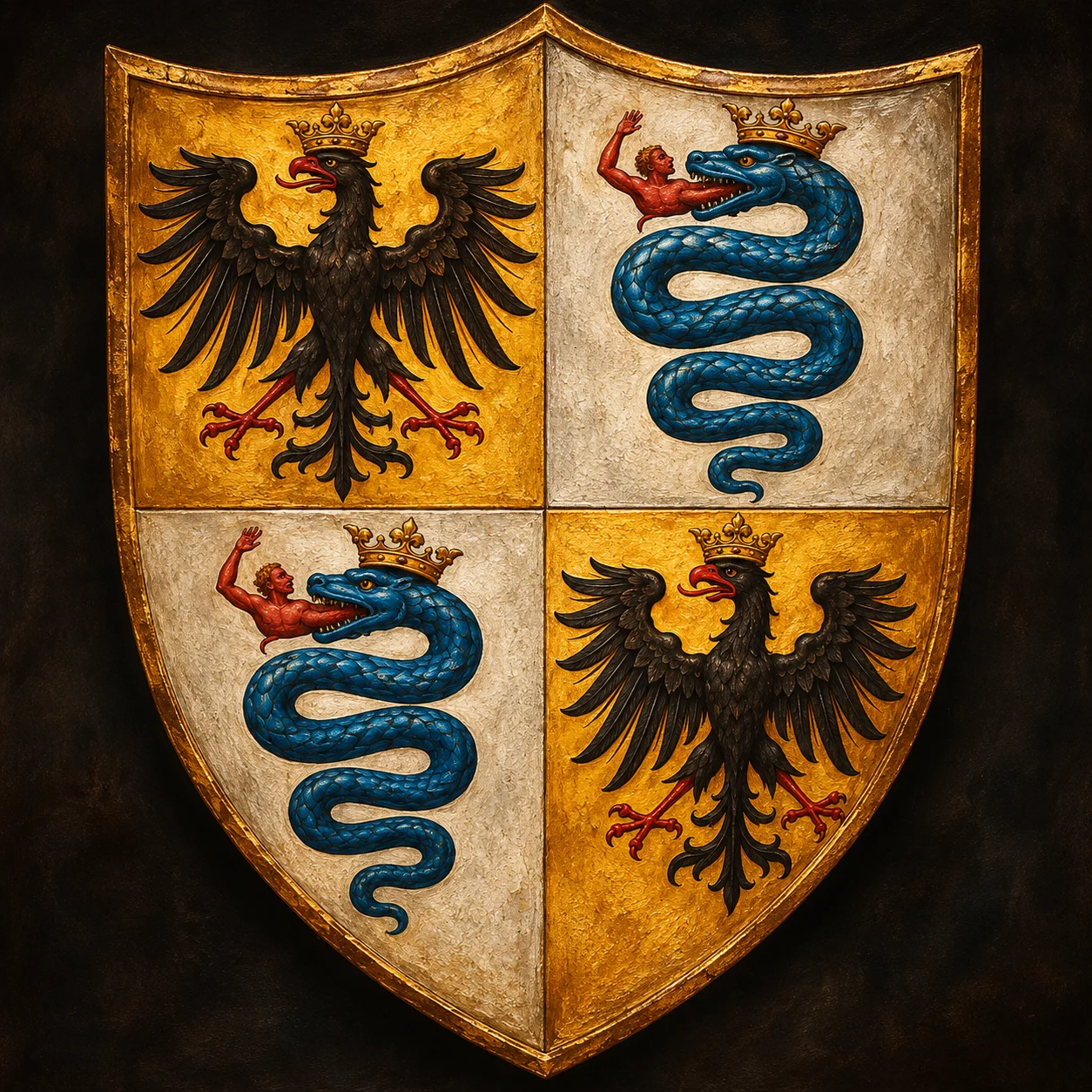
At a Glance
| Political form | Duchy within the imperial world of northern Italy |
|---|---|
| Duke | Francesco Sforza |
| Seat | Milan; court business also passes through Pavia and Lodi |
| Principal rivals | Venice across the Lombard frontier; competing interests in Genoa and Florence |
| Tuscan relationship | Pisa lies under Florentine rule; Milan watches Tuscan ports through diplomacy, credit and competing alliances |
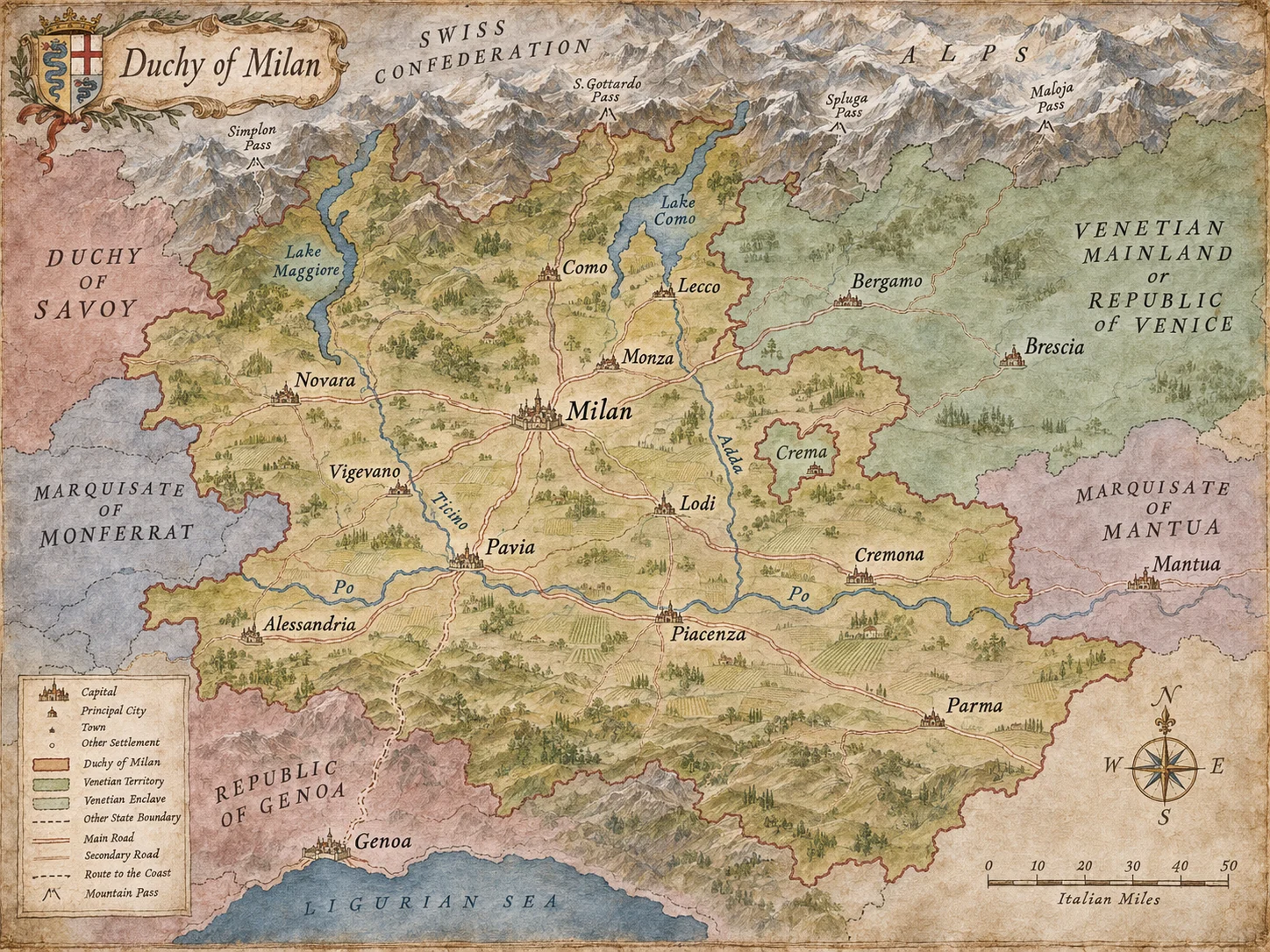
| Routes | Po crossings, Alpine approaches and the roads toward Tuscany |
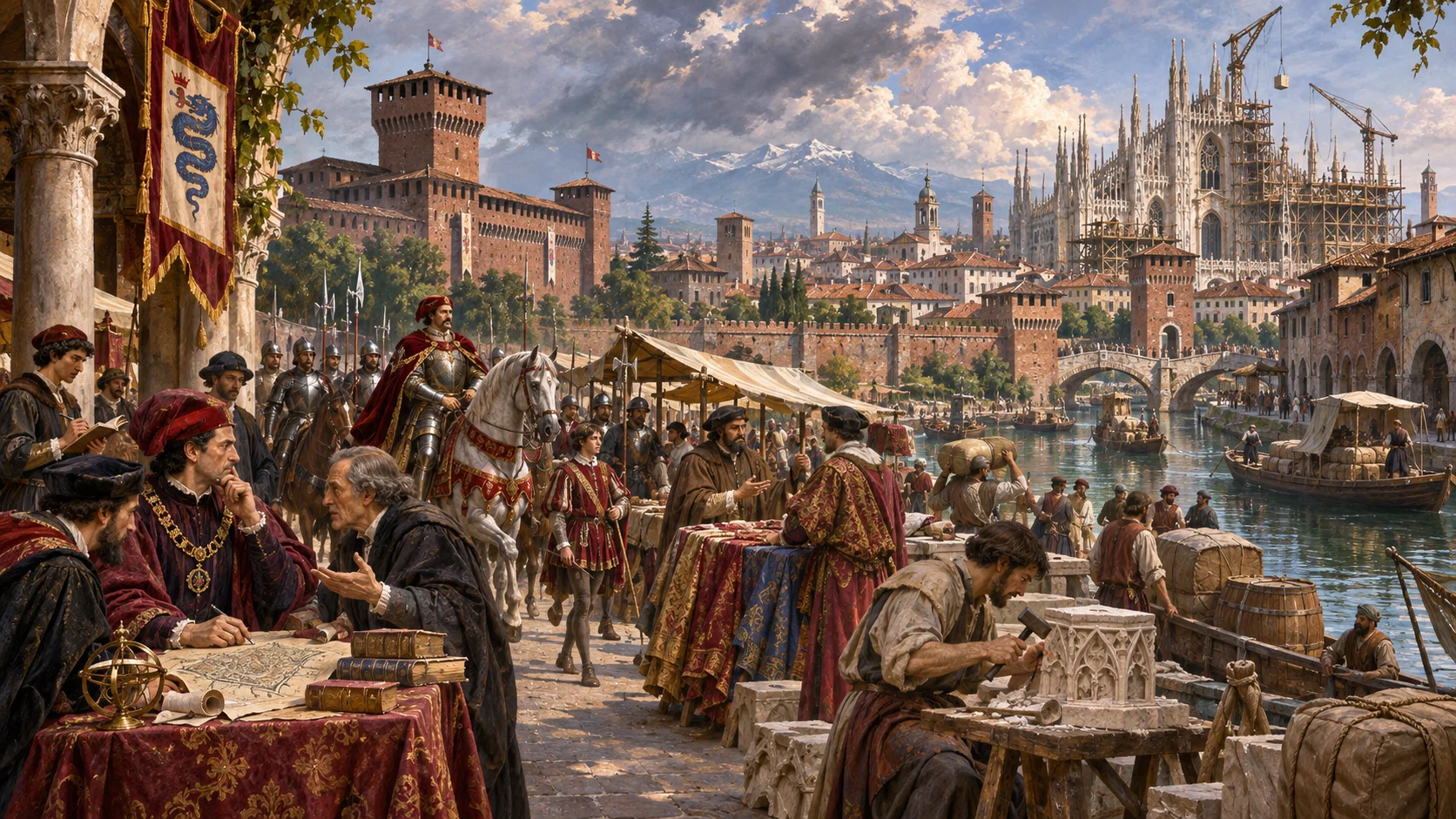
The duke can win a city with soldiers; keeping it takes account books, marriage promises, letters, fortified roads and people who trust his seal. Francesco Sforza’s Milan is rich enough to command armies and exposed enough that every bargain across the Lombard plain has a second meaning.
The struggle with Venice has led to peace at Lodi. It has also left captains without settled employment, landholders asking whose rule now binds them, and couriers carrying copies of agreements that a distant garrison has not seen. From Milan, such uncertainty reaches west to Genoa and south into Tuscany, where Florence controls Pisa and its access to the western sea.
What Is Happening Right Now?
Peace at Lodi
Venetian and Milanese envoys must turn a settlement into orders for captains, toll keepers and local lords. Each side watches for a breach that could be argued as the other’s fault.
Use it: escort the signed terms to an isolated fortress before its commander seizes a convoy.
Fortress and treasury
The Sforza stronghold is being rebuilt. Stone, timber, engineers, wages and access to secure rooms all bring petitioners into ducal service.
Use it: a builder discovers a sealed Visconti chamber before the duke’s agents inspect the plans.
Tuscan credit and rivalry
Florence controls Pisa, but Milanese merchants, diplomats and creditors still have reasons to influence what reaches the Tuscan coast. A failed guarantee in the port can become a crisis in a Milanese counting house.
Use it: recover a letter of credit before three cities claim that it was forged.
Places and Institutions
Sforza court and castle
Petitioners, captains, scribes and engineers compete for the duke’s attention. An audience may settle a border or commit a family to war.
The city’s stoneworks
Milan’s great stoneworks employ skill and patronage. A quarrel over a carved image can involve builders, patrons and old families.
Markets and lenders
Merchants trade cloth, grain, metal and military supplies. Credit connects households across the peninsula; a missing ledger can ruin more than its owner.
Pavia and Lodi
Pavia offers a learned and political road into the duchy. Lodi stands at a diplomatic and military crossing where the terms of peace have consequences on the ground.
People and Factions
Francesco Sforza’s household, officials and hired captains carry ducal power into territory the court cannot inspect daily. Older Visconti loyalties remain valuable to anyone who can prove a claim. Venice negotiates from strength; Florence’s financiers and patrons have interests on both sides of a contract; Rodrigo Borgia can change the legal standing of an heir or an oath from Rome.
Artisans and experimental engineers find work wherever a patron needs better walls, waterworks or engines. The Artificer tradition gives such skill a magical edge, though even a brilliant device must pass the inspection of those who pay for it. The Italian NPCs collection connects the broader courts and personalities.
Services, Magic and Law
| What a party needs | Who controls access | Complication |
|---|---|---|
| Safe conduct across the duchy | Ducal officers and local garrisons | Another jurisdiction may demand its own seal |
| Military employment | Captains and court treasurers | Payment, loyalty and the exact terms of service |
| Credit and exchange | Bankers, merchants and notaries | A debt in Florence or Pisa can be enforced here |
| Engineering or magical craft | Guilds, patrons and specialists | Ownership of a design, material or workshop |
In the countryside, travellers bring stories of a basilisk that kills with its gaze. Some sell the story to frighten caravans off a rival road; others refuse to take the road at all. An escort hired to learn the truth must still account for those who profited from the fear.
Dangers, Rumours and Hooks
- A commander along the Venetian frontier has two conflicting orders, each carrying a seal the court recognises.
- Builders uncover a Visconti cache beneath the castle, and the family named on its inventory is still alive.
- Money sent to pay a mercenary company vanishes between Pavia and Lodi; the soldiers threaten to collect directly.
- A Pisan councillor requests an audience, but a Florentine creditor has already bought the only witness who can support his claim.
- Caravans avoid a road after reports of a stone-eyed creature; no two survivors agree on what they saw.
Travel and the Larger Duchy
Milan’s road network leads toward Alpine passes, Po river crossings and the approaches to Venice. The southern route reaches Pavia and the roads into Tuscany. Merchants bound for the sea bargain through Genoa or negotiate through Florentine-controlled Pisa; messengers headed to Rome cross several courts before reaching the Roman territories.
A ducal permit speaks for Milan. It does not silence a temple precinct, a local toll keeper, a Venetian captain or a Florentine official at Pisa. Keep copies of letters, record payments and learn who actually holds the bridge ahead.
Visconti Foundations
The old Visconti fortress and the short-lived Ambrosian republic left more than broken masonry. Francesco Sforza builds a new court over inherited walls and inherited claims. An old family charter, a temple record or a soldier’s oath can still make yesterday’s allegiance dangerous today. Milan is a city of workshops and worship as well as dynastic bargains; the castle, workshops and markets all draw resources from the surrounding plain.
Historical Sources and Related Routes
Comune di Milano on the castle’s history, a dated Sforza letter from Lodi and Treccani on the peace provide historical context. Hero illustration: original painted depiction of Milan in the mid-fifteenth century. Continue to Italy, Pisa and Venice. Setting prose and hooks are original; this guide contains no copied game statistics.
Keep this reference growing
If this page helped with your reading or game, you can support its upkeep or explore the curated books.
Explore the Bookshop — epics, classics and stories behind imagined worlds.