
Leonardo da Vinci — Inventor, Artist & Engineer
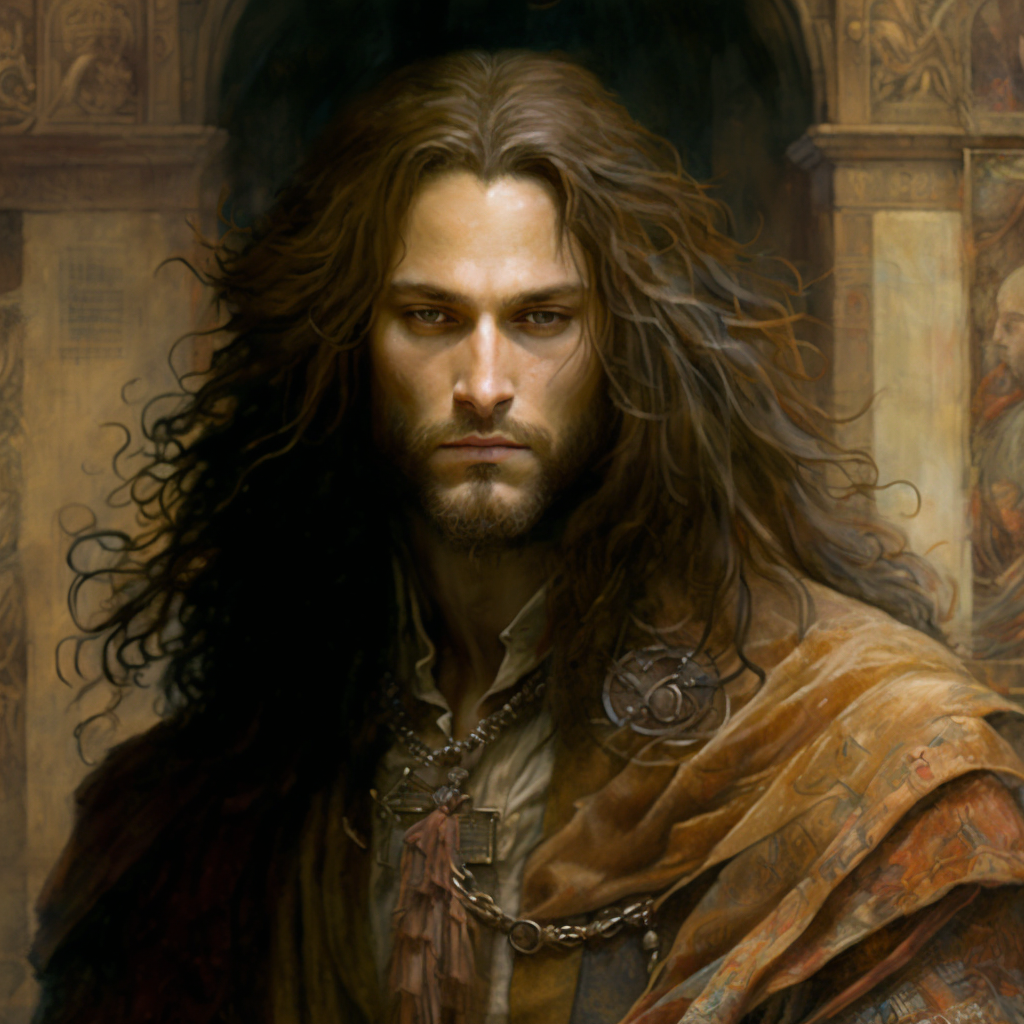
Florence · Milan · Artificer · Artist · Engineer · Anatomist
Leonardo da Vinci is a polymath who rarely accepts the boundary between art, engineering and natural philosophy. He sketches machines beside portraits, studies anatomy to improve sculpture, designs fortifications while thinking about water flow and abandons finished commissions when a more interesting problem appears.
At a Glance
| Base | Workshops and courts across Florence, Milan, Venice and Rome |
|---|---|
| Role | Inventor, artist, engineer, anatomist, musician and Artificer |
| Campaign alignment | Neutral Good |
| Strengths | Observation, design, engineering, anatomy, drawing, improvisation and impossible prototypes |
| Allies | Lorenzo de’ Medici, Niccolò Machiavelli, patrons and workshop specialists |
| Campaign pressure | Leonardo has more ideas than time, and several rulers would prefer his best designs remain exclusive |
Explore: Italian NPCs · Artificer · Florence · Milan · Michelangelo
- Alias – The Renaissance Man
- Gender – Male
- Race – Human
- Occupation – Inventor, Artist, Scientist, Engineer, Philosopher
- Religion – Agnostic
- Allies – Lorenzo de’ Medici, Niccolò Machiavelli, Francesco Melzi, workshop specialists and patrons who fund experiments
- Rivals – Michelangelo, competing engineers, jealous workshops and patrons who want exclusive control of his designs
- Abode/ Base of operations – Various workshops, studios, and laboratories in Florence, Milan, Venice, and Rome
- Nationality – Italian
- Languages – Italian, Latin, French
- Alignment – Neutral Good
- Affiliation (s) – Medici Family, Sforza Family, Cesare Borgia, Francis I of France
- Close relationships – Apprentices, collaborators and a small circle trusted with unfinished notebooks and private experiments
What Is Leonardo Doing Right Now?
Designing for several patrons
Leonardo keeps military, hydraulic, artistic and mechanical projects moving at once. Patrons think they hired him for a specific problem; Leonardo usually discovers three more interesting problems before the first is finished.
Testing flight and motion
Wing shapes, gears, springs and observations of birds fill notebooks beside sketches of anatomy and weapons. A successful prototype could transform travel—or kill the first person brave enough to trust it.
Working with hidden anatomy
Leonardo studies muscle, bone, organs and proportion because he believes machines and bodies obey related principles. Some discoveries are medically useful; others raise questions about creatures whose anatomy should not exist.
Protecting unfinished notebooks
His notes are valuable to artists, rulers, artificers and spies. Leonardo uses mirrors, shorthand, diagrams and incomplete explanations partly because he thinks visually and partly because not every reader should understand a design immediately.
Personality and Working Style
Leonardo is patient with difficult questions and impatient with dull answers. He notices small physical details, shifts rapidly between subjects and often leaves assistants trying to determine whether a sketch is an artwork, a machine, an anatomical study or all three at once.
He is generous with ideas when curiosity is shared, guarded when a patron demands ownership and easily distracted by a problem nobody else noticed. Adventurers who bring him a strange mechanism, unusual creature or impossible material may lose several hours before he remembers why they came.
Relationships
- Lorenzo de’ Medici: patron and political connector whose money can turn a notebook sketch into a staffed workshop.
- Niccolò Machiavelli: understands where an invention fits into statecraft, logistics and political risk.
- Michelangelo: rival genius whose certainty and physical approach to art challenge Leonardo’s habit of testing several solutions at once.
- Cesare Borgia: dangerous patron for military engineering, maps and fortifications because he expects designs to survive contact with war.
Adventure Pressure
- The missing codex: a notebook containing half of a siege-machine design vanishes; the thief has the drawings but not the page explaining why the machine should never be built.
- The flying test: Leonardo has a workable glider and no shortage of volunteers. The real problem is the thing nesting on the cliff where the first launch must occur.
- The impossible anatomy: a preserved limb from an unknown creature has joints that imply a completely different skeletal plan.
- The flooded workshop: a hydraulic experiment opens an older channel beneath the city and something begins moving through it at night.
Background
Leonardo grew up in Tuscany and trained through the workshop world of Florence, where drawing, painting, engineering and practical craft overlap. His reputation now carries him between courts and cities because patrons value the same quality that makes him difficult to employ: he rarely sees only the problem he was given.
Game Statistics
Leonardo da Vinci — D&D 5.5e
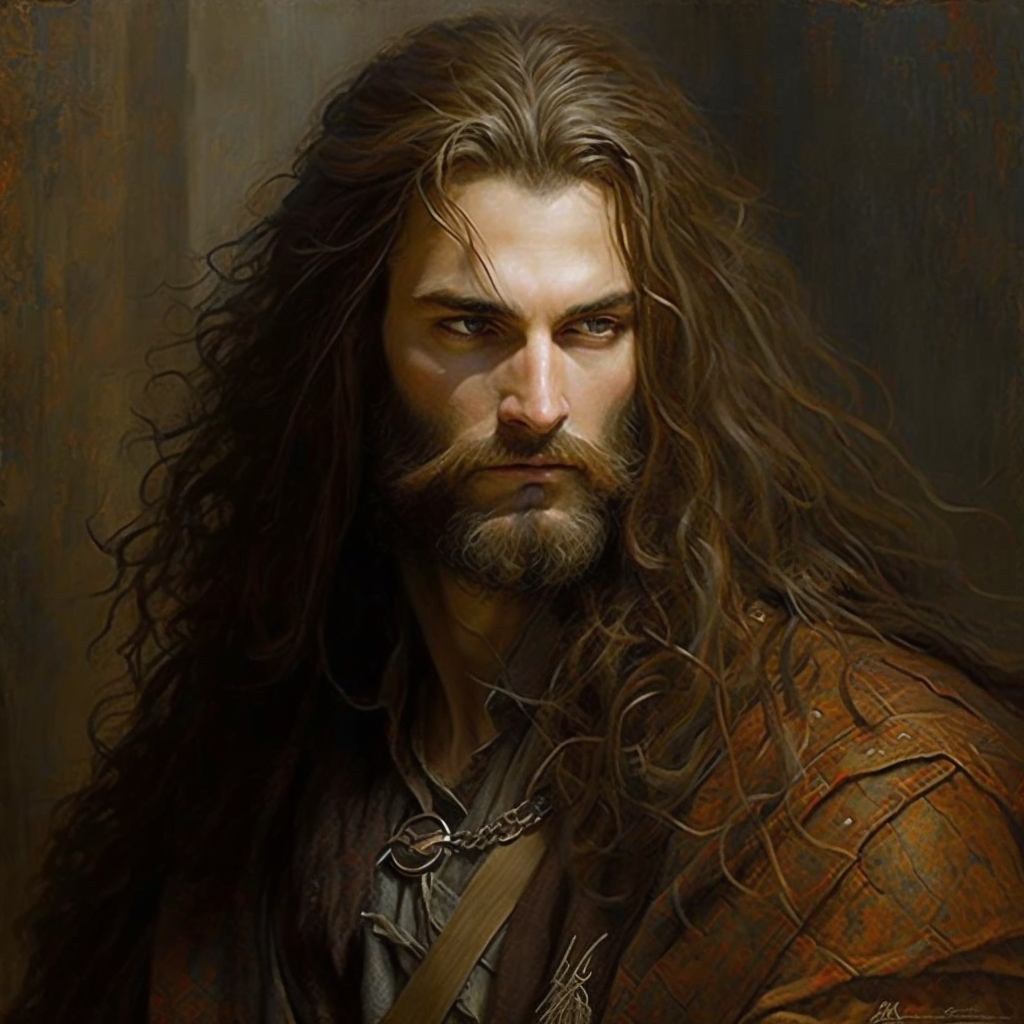
Medium humanoid (human), neutral good
Armor Class: 16 (studded leather armor)
Hit Points: 150 (20d8 + 40)
Speed: 30 ft.
| STR | DEX | CON | INT | WIS | CHA |
|---|---|---|---|---|---|
| STR 8 (-1) | DEX 16 (+3) | CON 14 (+2) | INT 20 (+5) | WIS 16 (+3) | CHA 12 (+1) |
Skills: Arcana +12, History +12, Investigation +12, Perception +8 Tools: Alchemist’s supplies, painter’s supplies, tinker’s tools
Languages: Common, Draconic, Elvish, Giant, Gnomish, Sylvan
Challenge: 14 (11,500 XP)
Equipment: Studded leather armor Longsword Hand crossbow 20 bolts Alchemist’s supplies Painter’s supplies Tinker’s tools Bag of holding Pouch containing 25 gp
Actions:
Multiattack. Leonardo da Vinci can make two attacks with his longsword. Longsword. Melee Weapon Attack: +9 to hit, reach 5 ft., one target. Hit: 7 (1d8 + 3) slashing damage, or 8 (1d10 + 3) slashing damage if used with two hands.
Hand Crossbow. Ranged Weapon Attack: +7 to hit, range 30/120 ft., one target. Hit: 6 (1d6 + 3) piercing damage.
Inventor’s Arsenal.
Leonardo has a number of inventions at his disposal, which he can use to great effect. He can use each invention once per day.
Flying Machine. Leonardo da Vinci ‘s flying machine allows him to fly for up to 1 hour. While flying, his speed is 60 feet and he has advantage on Wisdom (Perception) checks.
Ballista. Leonardo’s ballista deals 8d10 piercing damage to a single target within 500 feet. Targets must make a DC 18 Dexterity saving throw to take half damage.
Automaton. Leonardo’s automaton is a clockwork servant that can be commanded to perform simple tasks. It has 50 hit points, an AC of 16, and can take one action per round. The automaton can make a melee attack for 3d6 bludgeoning damage, or it can use its action to perform a task, such as opening a door or carrying an object.
Legendary Actions (3/day).
Leonardo can take 3 legendary actions, choosing from the options below. Only one legendary action option can be used at a time and only at the end of another creature’s turn. Leonardo regains spent legendary actions at the start of his turn.
Longsword Attack. Leonardo makes one attack with his longsword.
Inventor’s Insight. Leonardo targets a creature within 30 feet that he can see. The target must make a DC 18 Intelligence saving throw. On a failed save, the target takes 6 (1d6 + 3) psychic damage and Leonardo gains advantage on his next attack against that target. An affected creature can repeat the saving throw at the end of each of its turns, ending the effect on itself on a success.
Inventor’s Inspiration. Leonardo targets a creature within 30 feet that he can see. The target gains 2d10 temporary hit points and can add a d4 to one attack roll, ability check, or saving throw it makes within the next minute. Leonardo’s Intellect. Leonardo is a master inventor and polymath, with a mind that is always working. He has several unique abilities that reflect his intellect and creativity.
Genius Inventor. Leonardo is able to create new inventions on the fly, allowing him to improvise solutions to problems. Once per long rest, he can create a new invention that can be used to solve a specific problem or challenge. This invention can have any effect that the DM approves and can be used once before it becomes inert.
Mastery of the Elements. Leonardo has studied the natural world and is able to manipulate the elements to his advantage. Once per short rest, he can cast any spell from the druid spell list of 3rd level or lower, using his Intelligence as his spellcasting ability.
Artistic Vision. Leonardo’s artistic abilities extend beyond painting and sculpture. Once per day, he can use his artistic vision to gain insight into a problem or challenge. This grants him advantage on his next ability check, attack roll, or saving throw.
CR Calculation:
Leonardo’s abilities and arsenal make him a formidable opponent, with a CR of 14. His high intelligence and skill in inventing give him a wide range of options in combat, while his flying machine and ballista provide long-range attacks. The automaton gives him a versatile and durable companion, and his legendary actions allow him to keep the pressure on his opponents.
Leonardo da Vinci — Pathfinder 1e
CR 14; NG Medium humanoid (human)
Init +7; Perception +24
AC 28, touch 18, flat-footed 21; hp 176
Fort +13, Ref +17, Will +18
Speed 30 ft.
Abilities Str 11, Dex 18, Con 14, Int 26, Wis 18, Cha 14
Skills Appraise +29, Craft (clockwork) +34, Craft (painting) +31, Craft (weapons) +30, Heal +22, Knowledge (arcana) +27, Knowledge (engineering) +34, Knowledge (nature) +27, Perception +24, Profession (engineer) +30, Use Magic Device +27
Master Artificer (Ex). Leonardo creates mundane and magical prototypes in half the normal time and gains a +8 competence bonus on Craft checks made to design, repair or understand a machine.
Improvised Device (Su) 3/day. As a standard action, Leonardo produces a temporary device that duplicates the effect of a 4th-level or lower wizard spell with a duration of no more than 1 minute. The device uses Intelligence for its save DC and ceases functioning after the encounter.
Automaton Companion. Leonardo may deploy a Medium clockwork servant with AC 22, 70 hp and a slam attack at +16 (2d8+6). It follows simple commands and may manipulate tools and doors.
Flying Harness (Ex). For up to 10 minutes per day, Leonardo may fly at 40 ft. with average manoeuvrability while wearing one of his experimental harnesses.
Leonardo da Vinci — D&D 3.5e
CR 14; NG Medium Humanoid (Human)
Hit Dice 16d6+32 (88 hp); Initiative +4; Speed 30 ft.; AC 24
Attack masterwork rapier +15 melee (1d6+2/18–20) or experimental hand crossbow +18 ranged (1d6+3)
Saves Fort +10, Ref +13, Will +15
Abilities Str 11, Dex 18, Con 14, Int 26, Wis 18, Cha 14
Skills Appraise +27, Craft (clockwork) +33, Craft (painting) +30, Craft (weaponsmithing) +29, Heal +21, Knowledge (architecture and engineering) +33, Knowledge (nature) +26, Listen +21, Profession (engineer) +29, Spot +21, Use Magic Device +26
Special Qualities artificer’s insight, improvised device 3/day, trapfinding, masterwork vision, automaton companion
Artificer’s Insight (Ex). Leonardo may take 10 on Craft, Knowledge (architecture and engineering) and Use Magic Device checks even when rushed or threatened.
Improvised Device (Su). Three times per day, Leonardo may create a one-use device reproducing a spell effect of 4th level or lower, caster level 12th, subject to the physical limitations of the device.
Keep this reference growing
If this page helped with your reading or game, you can support its upkeep or explore the curated books.
Explore the Bookshop — epics, classics and stories behind imagined worlds.