
Eustace Folville, Outlaw Captain
Eustace Folville, Outlaw Captain
A Leicestershire gentleman-outlaw who turns failed justice into private war, making corrupt officials fear the road and honest witnesses fear the truth.

- Alias: Eustace de Folville; the Ashby Wolf; Captain of the Folville Gang
- Gender: Male
- Race: Human
- Occupation: Outlaw captain, armed gentleman, ransom-taker, hired enforcer, soldier
- Homeland: Ashby Folville, Leicestershire, Kingdom of England
- Base of Operations: Ashby Folville, Leicestershire roads, manor lanes, safehouses, and gentry contacts across the Midlands
- Languages: English, Anglo-Norman French, enough Latin to understand writs, warrants, and accusations
- Alignment: Chaotic Neutral
- Affiliations: The Folville brothers, local gentry patrons, bribed clerks, frightened tenants, hired riders, sympathetic villagers
- Allies: His kin, aggrieved landholders, desperate commoners, corruptible servants, and minor lords who privately use him
- Enemies: Royal justices, sheriffs, Exchequer officials, Despenser loyalists, hostile magnates, rival outlaw companies
- Challenge Role: Major regional NPC; outlaw patron, violent ally, local villain, anti-corruption threat, or faction leader
Overview
Eustace Folville is not a merry outlaw. He is a minor gentleman who learned that royal law could be slow, corrupt, frightened, and blind — and then made himself the more immediate danger.
He understands law well enough to weaponise its failures. A warrant, seal, witness list, manor court, or royal commission all matter to him because he knows how easily powerful men bend them. His answer is ambush, ransom, intimidation, and private justice.
That is what makes him dangerous. Eustace can look like justice when his victims are hated, protection when sheriffs are worse, and local order when royal officers bring only fees and seizure. But he is not clean. He murders, kidnaps, extorts, breaks witnesses, and turns grievance into private rule.
In play, he should never be a simple folk hero or common bandit. He is a man the party may need today and condemn tomorrow.
Character
Eustace is clever, proud, patient, and vindictive. He has a genuine hatred of corrupt officials and predatory magnates, but he also profits from that hatred.
He rewards loyalty quickly and punishes betrayal permanently. He can be courteous to a widow, generous to a village, charming to a minor noble, and pitiless to a hostage before sunrise.
Wants: To make royal officers fear entering his country without negotiation; to protect his family; to punish enemies; to have his crimes remembered as rough justice.
Fears: Written proof, surviving witnesses, sealed confessions, copied indictments, and the moment common people stop seeing him as a scourge of worse men.
How He Enters Play
Eustace should enter through consequences.
A justice disappears. A hated official dies near a ford. A village refuses to speak. A noble condemns Folville in public and feeds him at night. A clerk offers the party a sealed record and then vanishes.
When the party finally meets him, they should already know that people are lying for him.
Social and Political Web
Eustace’s real armour is complicity.
A groom misdirects pursuers because Folville spared his brother. A widow lies because the dead official seized her land. A reeve hides horses because the sheriff took bribes. A minor knight lends a barn because he wants a rival frightened.
His support is conditional. Some admire him, some fear him, some hate him, and some will betray him if the party can make survival believable.
Methods
Eustace prefers control before violence.
He studies routes, counts escorts, bribes servants, intercepts letters, chooses ground carefully, and strikes officials in transit. He takes hostages alive when ransom is useful and kills publicly when fear is worth more than money.
He is not an honour-duellist. If he accepts single combat, he has already arranged what happens if he loses.
The Folville Gang
Eustace is most dangerous as the head of a family-based outlaw company, not as a lone criminal. The Folville Gang includes brothers, kinsmen, hired riders, bribed servants, frightened witnesses, and local sympathisers who benefit from silence.
The gang’s strength is kinship, reputation, and reach. One man watches a ford, another hides horses, another learns which justice is travelling with too few guards, and another ensures that a witness forgets the colour of a cloak. By the time steel is drawn, the Folvilles have usually shaped the ground, the testimony, and the escape.
Useful gang roles include:
- The Road-Watcher: A groom, toll-keeper, shepherd, or ferryman who knows who is travelling, with how many guards, and by which route.
- The Quiet Clerk: A literate accomplice who copies warrants, alters dates, delays messages, or warns the gang when legal pressure is coming.
- The Safehouse Keeper: A widow, reeve, tenant, or minor household officer who hides horses, wounded men, stolen goods, or hostages for one night too long.
- The Respectable Patron: A minor lord or gentry neighbour who publicly condemns the Folvilles while privately using them against rivals.
Killing or capturing Eustace does not automatically end the gang. A brother, cousin, patron, or frightened ally may inherit the feud. Breaking the Folvilles may require more than battle: protecting witnesses, exposing patrons, recovering sealed records, cutting off safehouses, and convincing local people that lawful protection will not vanish once the party leaves.
Edition Versions
Eustace Folville D&D 5.5e / 2024
Eustace Folville Pathfinder 1e
Eustace Folville, Outlaw Captain

Medium Humanoid, Chaotic Neutral
Armour Class: 17, mail shirt, riding coat, shield
Initiative: +4
Hit Points: 136
Speed: 30 ft.
Proficiency Bonus: +4
Saving Throws: Dex +8, Con +7, Wis +5
Skills: Deception +8, Insight +5, Intimidation +8, Perception +5, Persuasion +8, Stealth +8, Survival +6
Senses: Passive Perception 15
Languages: English, Anglo-Norman French, Latin
Challenge: 8
| STR | DEX | CON | INT | WIS | CHA |
|---|---|---|---|---|---|
| 16 (+3) | 18 (+4) | 16 (+3) | 15 (+2) | 14 (+2) | 18 (+4) |
Challenge Note. Eustace’s CR assumes he is encountered as a prepared outlaw-captain with followers, terrain, witnesses, and local support. Alone and surprised, he is far less dangerous.
Traits
Outlaw Jurisdiction. Eustace has advantage on Charisma checks made to influence commoners, servants, minor gentry, and local officials who hate corrupt authority or fear Folville retaliation.
Prepared Ambusher. During the first round of combat, Eustace has advantage on attack rolls against creatures that have not yet taken a turn, provided he or one ally began hidden, disguised, mounted beyond easy reach, or in prepared cover.
Local Silence. In regions where his network is established, checks to track Eustace, locate safehouses, or gather testimony against him are made with disadvantage unless the searcher has a loyal guide, captured gang member, written intelligence, or magical aid.
No Clean Witnesses. Once per day, after Eustace spends at least 10 minutes in a settlement where he has contacts, he can cause one mundane witness or clerk to withdraw, contradict, misremember, lose, or obscure testimony. This imposes disadvantage on one social, legal, or investigative check made against him.
Commanding Outlaw. Friendly bandits, scouts, guards, veterans, and mounted retainers within 30 feet of Eustace add +2 to weapon damage rolls if they can see or hear him.
Actions
Multiattack. Eustace makes two attacks with Arming Sword, Dagger, or Shortbow. He may replace one attack with Command the Road.
Arming Sword. Melee Weapon Attack: +8 to hit, reach 5 ft., one target. Hit: 9 slashing damage.
Dagger. Melee or Ranged Weapon Attack: +8 to hit, reach 5 ft. or range 20/60 ft., one target. Hit: 7 piercing damage.
Shortbow. Ranged Weapon Attack: +8 to hit, range 80/320 ft., one target. Hit: 8 piercing damage.
Mounted Lance. Melee Weapon Attack: +7 to hit, reach 10 ft., one target. Hit: 12 piercing damage, or 18 piercing damage if Eustace moved at least 20 feet straight toward the target while mounted immediately before the attack. Eustace can make only one Mounted Lance attack on his turn.
Command the Road. One ally within 60 feet who can hear Eustace may immediately move up to half its speed without provoking opportunity attacks, or make one weapon attack as a reaction.
Ransom Threat. Eustace targets one bloodied, restrained, grappled, prone, surrounded, or socially compromised creature within 30 feet. The target must succeed on a DC 16 Wisdom saving throw or be frightened of Eustace until the end of its next turn. Officials, nobles, tax collectors, magistrates, clerks, sheriff’s officers, known informers, and sworn enemies of the Folvilles have disadvantage on the save.
Bonus Actions
Dirty Withdrawal. Eustace takes the Disengage action. If an ally is within 5 feet of the creature he moves away from, that ally may also move 5 feet without provoking opportunity attacks.
Name the Price. Eustace chooses one creature he can see within 60 feet and names what makes that creature valuable: ransom, confession, witness, rank, bloodline, office, or revenge. Until the start of his next turn, the first time one of Eustace’s allies hits that creature, the attack deals an extra 7 damage.
Reactions
Witness the Cost. When a creature within 30 feet misses Eustace with an attack, Eustace may force it to make a DC 16 Wisdom saving throw. On a failed save, it has disadvantage on its next attack roll before the end of its next turn.
Use the Crowd. When Eustace is hit by an attack while one of his allies, hostages, frightened witnesses, or noncombatant locals is within 5 feet of him, he reduces the damage by 10 as he twists behind bodies, cover, confusion, or hesitation.
Equipment
Mail shirt, shield, arming sword, dagger, shortbow with 20 arrows, riding cloak, spare seals, altered writs, ransom cords, signet ring, blackmail packet, travel purse, and trained riding horse.
Encounter Support
Eustace should rarely fight alone. A serious encounter may include 2–4 veterans or mounted retainers, 4–8 bandits or local bowmen, one hostage or frightened witness, and ambush ground such as a ford, hollow road, orchard, churchyard wall, toll bridge, or wooded track.
Eustace Folville CR 8

XP 4,800
Male human fighter 5 / rogue 4
CN Medium humanoid human
Init +8; Senses Perception +13
Defence
AC 21, touch 14, flat-footed 17; mail shirt, heavy wooden shield, Dex
hp 85
Fort +9, Ref +10, Will +5
Defensive Abilities bravery +1, evasion, trap sense +1, uncanny dodge
Offence
Speed 30 ft.
Melee +1 longsword +14/+9 (1d8+6/19–20), dagger +13 (1d4+4/19–20)
Ranged shortbow +13/+8 (1d6/×3)
Mounted Lance +1 lance +13 (1d8+7/×3), or +15 while charging mounted with Ride-By Attack; this is a single charge attack, not a full-attack routine
Special Attacks sneak attack +2d6
Tactics
Before Combat Eustace studies roads, counts escorts, bribes servants, prepares escape routes, and places bowmen where witnesses cannot count them.
During Combat He opens with intimidation and missile pressure, lets lesser men fix enemies in place, then strikes officers, spellcasters, and leaders. Mounted, he uses a single lance charge only when the ground is controlled.
Morale Eustace withdraws if reduced below 25 hp unless escape would destroy his reputation, abandon a brother, or surrender a valuable hostage.
Statistics
Str 16, Dex 18, Con 16, Int 15, Wis 14, Cha 18
Base Atk +8; CMB +11; CMD 25
Feats Combat Expertise, Dazzling Display, Improved Initiative, Mounted Combat, Persuasive, Ride-By Attack, Skill Focus (Intimidate), Weapon Focus (longsword)
Skills Bluff +16, Diplomacy +16, Disguise +11, Intimidate +21, Knowledge (local) +14, Perception +13, Ride +15, Sense Motive +13, Stealth +15, Survival +10
Languages English, Anglo-Norman French, Latin
SQ rogue talents: combat trick, fast stealth; armour training 1
Combat Gear potion of cure moderate wounds, alchemical smoke flask
Other Gear +1 longsword, +1 lance, mail shirt, heavy wooden shield, dagger, shortbow, riding horse, ransom cords, forged writs, stolen warrant copy, 180 gp in mixed coin and jewellery
Special Abilities
Folville Law (Ex). In regions where Eustace has local support, he gains a +4 circumstance bonus on Bluff, Diplomacy, Intimidate, and Knowledge (local) checks involving commoners, servants, petty officials, and minor gentry.
No Witness Stands Alone (Ex). Once per day, after at least 1 hour in a friendly or intimidated settlement, Eustace may arrange for one mundane witness to become unavailable, frightened, contradictory, or compromised. This imposes a –4 penalty on one legal, social, or investigative check relying on local testimony.
Outlaw Captain (Ex). Allies within 30 feet who can see or hear Eustace gain a +1 morale bonus on attack rolls and weapon damage rolls against officials, guards, soldiers, tax agents, or openly named enemies.
Treasure
Eustace’s wealth is hidden, mobile, pledged, and politically dangerous.
On His Person: 80–180 gp in mixed coin, two rings worth 100 gp total, a sealed ransom letter, a blackmail note, and a copied warrant marked with altered names.
In a Safehouse: 600–1,200 gp in coin, plate, jewellery, stolen tack, quality weapons, legal documents, hostage pledges, and letters from men who deny knowing him.
True Treasure: Evidence of who hired him, bribed him, looked away, altered records, or paid for violence while pretending loyalty to the crown.
Adventure Hooks
The Justice Taken from the Road
A royal justice vanishes between manor courts. Three days later, a ransom demand appears in careful clerkly Latin. The kidnapped man is corrupt and hated, but if the party lets Eustace keep him, every armed faction in the county learns that judges can be priced like cattle.
The dilemma is not whether the justice deserves rescue. It is whether letting Folville punish him will make every future judgement hostage to armed men.
The Murder Everyone Wanted
A hated official is found dead near a hollow road, and half the shire privately thanks Eustace Folville. The victim’s papers prove his own crimes, but they also prove that several respectable households helped arrange the ambush.
If the party exposes the truth, they may destroy a corrupt network and several desperate families at once. If they bury it, Folville learns they can be made part of the silence.
Folville’s Pardon
Eustace has been offered pardon in exchange for military service, but a surviving witness can still destroy him. The witness begs the party for protection. Eustace offers a counter-deal: surrender the witness, and he will give them proof that their patron is guilty of worse crimes.
The pardon may prevent wider violence, or it may make a murderer untouchable. Either way, someone truthful will be ruined.
GM Guidance
Keep Eustace morally useful and morally dangerous.
Do not clean him into a folk hero. Do not flatten him into a sneering villain. His victims may deserve punishment, but his methods are murder, kidnapping, ransom, witness-breaking, and private terror.
Use him to force hard choices: whether corrupt law is worse than outlaw justice, whether common people shelter criminals from cowardice or survival, and what the party does when the man they need today may deserve hanging tomorrow.
Source and Literary Context
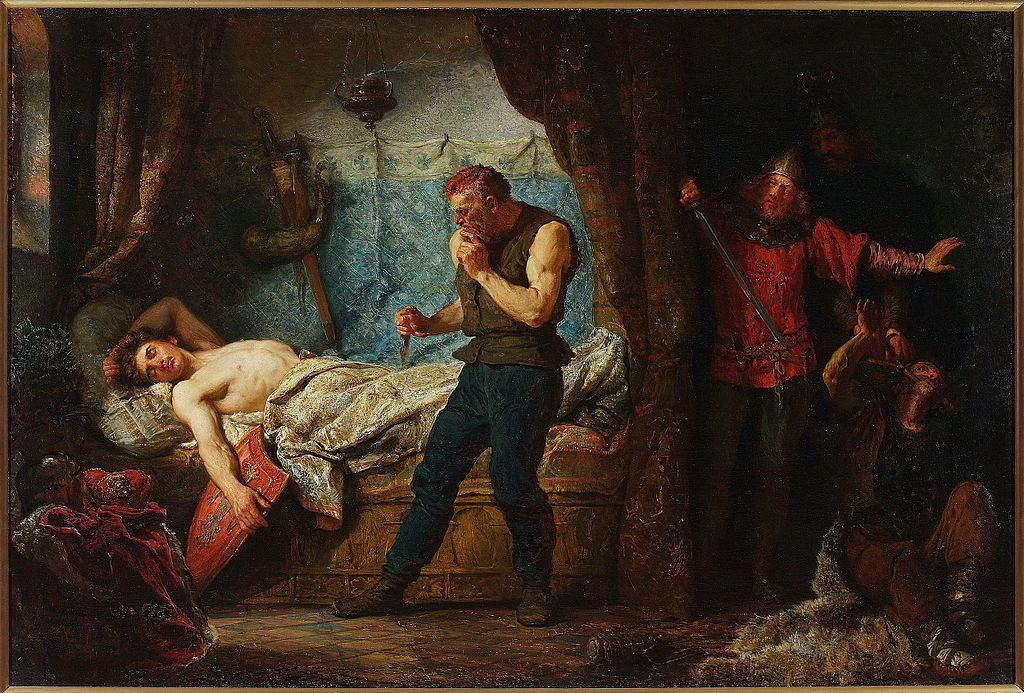
Eustace Folville, also written Eustace de Folville, was a 14th-century English outlaw from Ashby Folville in Leicestershire and the leading figure associated with the Folville Gang. His most famous crimes include the 1326 killing of Sir Roger de Beler, a Baron of the Exchequer and supporter of the Despenser regime, and the 1332 kidnapping and ransom of the royal justice Richard Willoughby. These were attacks on officials, institutions, and royal authority, not petty roadside crimes.
For campaign purposes, his value lies in ambiguity: outlaw, gentry enforcer, political criminal, local avenger, and useful soldier. He should not be treated as a simple folk hero, but as a remembered figure whose crimes expose how fragile royal justice becomes when local power, corruption, and private violence overlap.
For a scholarly starting point, see E. L. G. Stones, “The Folvilles of Ashby-Folville, Leicestershire, and their Associates in Crime, 1326–1347”, published in the Transactions of the Royal Historical Society. A useful local overview is also available from the Leicestershire Archaeological and Historical Society.
Keep this reference growing
If this page helped with your reading or game, you can support its upkeep or explore the curated books.
Explore the Bookshop — epics, classics and stories behind imagined worlds.