
 Buy me a coffee
Spider Hand Spell: The Crawling Hand That Sees
Send your own hand crawling ahead of you, seeing through its spider eyes while your body waits behind.
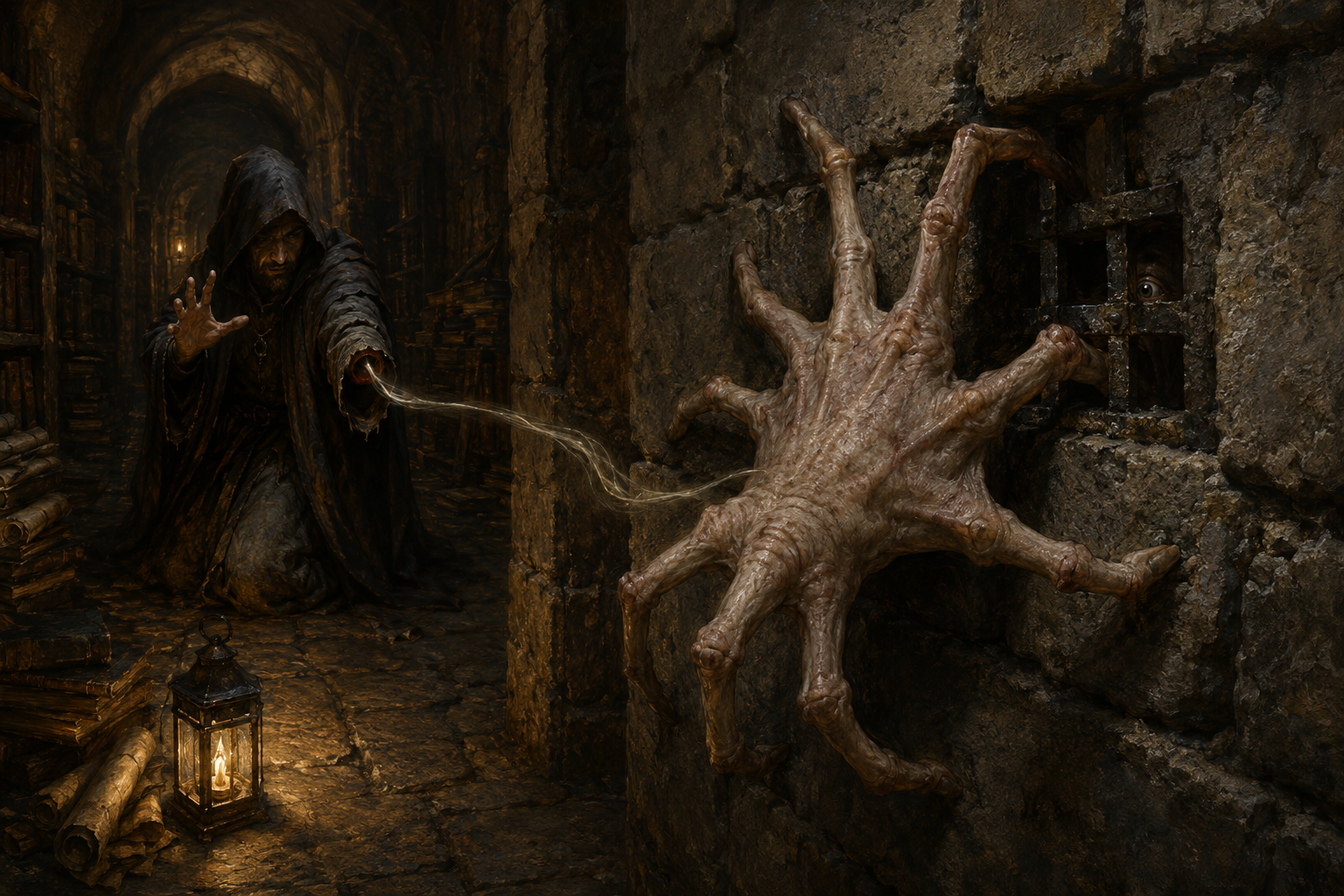
Some spells open a door. Spider Hand sends a piece of you through it first.
The caster’s hand detaches, reshapes, and scuttles away as a small spiderlike creature under the caster’s control. It can slip beneath furniture, climb walls, peer through cracks, cross rafters, crawl through murder holes, and explore places too narrow or dangerous for a full body.
The horror is not only that the hand becomes a spider. It is that the caster still sees through it, still commands it, and still waits for it to come back.
This is a useful spell, but it should never feel clean. A person who uses Spider Hand accepts a disturbing bargain: better knowledge, better reach, and better infiltration at the cost of bodily violation.
Quick Rules Reference
- Your hand detaches and becomes a Small spiderlike creature.
- You control the spider-hand while concentrating.
- You can see through its eyes.
- The spider-hand can scout, climb, hide, squeeze through gaps, and manipulate simple objects.
- Your missing hand cannot be used while the spell lasts.
- If the spider-hand returns before the spell ends, it reattaches safely.
- If it is killed, trapped, or prevented from returning, your hand reforms and you take damage.
- The spell is a scouting and infiltration spell, not a combat summon or permanent familiar.
Effect
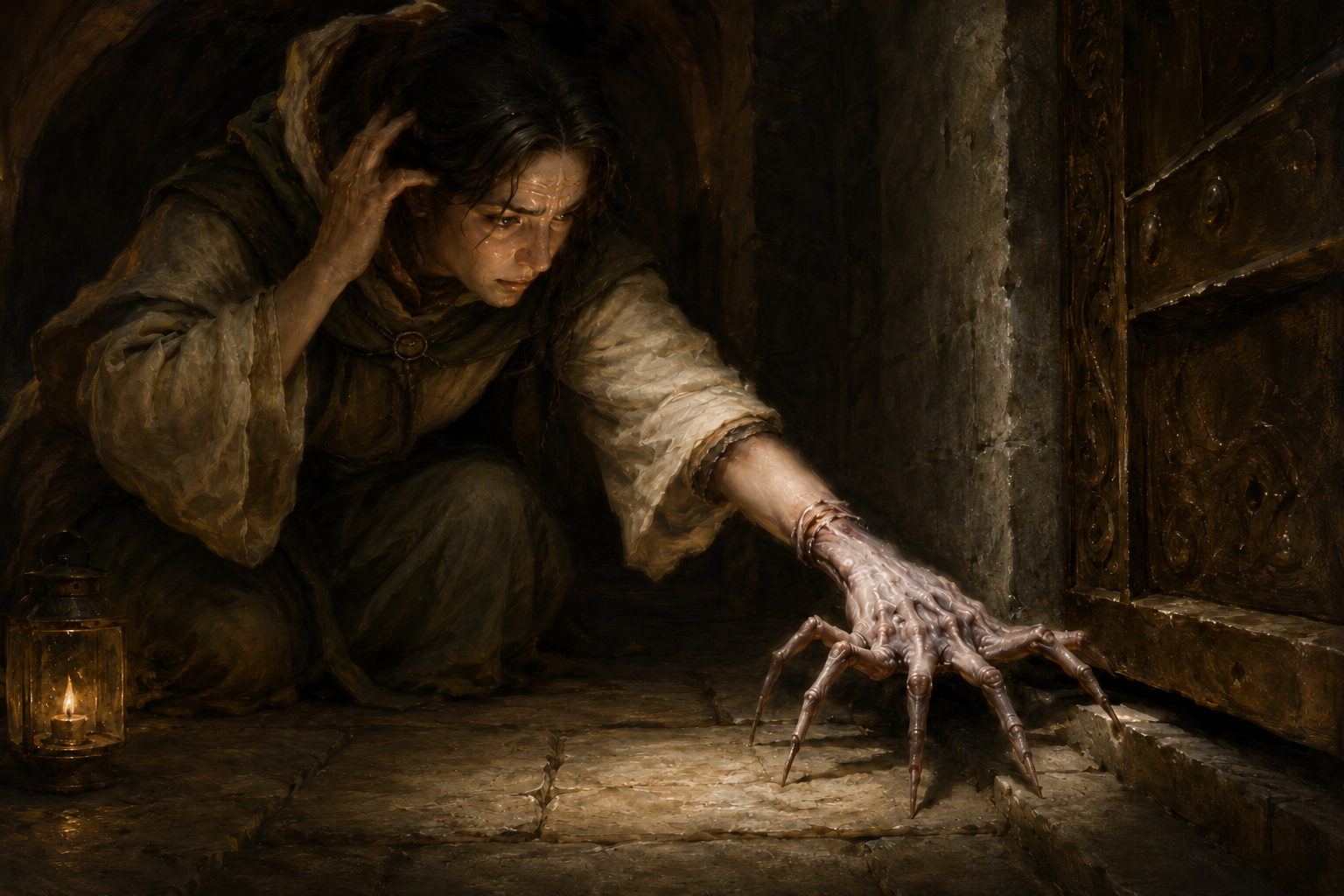
When you cast Spider Hand, one of your hands detaches from your body and transforms into a spiderlike creature. The spider-hand is still part of you for the purpose of the spell. You direct its movement, perceive through its eyes, and command it to return.
While the spell lasts, the missing hand is unavailable. You cannot use that hand to hold a weapon, carry a shield, manipulate an object, perform somatic components requiring that hand, reload a weapon, climb normally, grapple normally, or perform any task that clearly requires two hands.
The spider-hand is best used to scout a room, crawl through narrow gaps, climb over obstacles, find hidden passages, observe enemies, follow a suspect, inspect a dangerous object, or create fear and confusion. It is not intelligent on its own. It acts by your will.
Mechanics Tabs
The rules below are mechanics compatible for different game editions.
Spider Hand 5.5e / 2024
Spider Hand Pathfinder 1e / 3.5e
Spider Hand 3.0e
Spider Hand 5.5e / 2024
1st-Level Transmutation
Casting Time: Action
Range: Self
Components: V, S
Duration: Concentration, up to 10 minutes
School: Transmutation
Spell Lists: Cleric, Druid
Alternative Spell Name: Spider Hand, “The Crawling Hand That Sees”
When you cast this spell, choose one free hand. That hand detaches from your body and transforms into a Small spider-hand under your control. The spider-hand appears in your space.
Until the spell ends, the chosen hand is absent from your body.
Spider-Hand
Creature Type: Small Monstrosity
AC: 13
HP: 5
Speed: 30 ft., Climb 30 ft.
Senses: Darkvision 30 ft.; passive Perception equals 10 + your spellcasting ability modifier
Damage Immunities: Poison
Condition Immunities: Charmed, Frightened, Poisoned
Languages: Understands your mental commands but cannot speak
The spider-hand uses your spellcasting ability modifier for Dexterity (Stealth), Wisdom (Perception), and any ability check made to climb, squeeze, hide, observe, or manipulate a simple object.
The spider-hand can move up to 120 feet away from you. If it is more than 120 feet from you at the end of your turn, the spell ends, and the spider-hand counts as unable to return.
While the spell lasts, you can see through the spider-hand’s eyes. While perceiving through it, you are blinded and deafened to your own surroundings. You can return to your normal senses at any time, no action required.
On your turn, you can mentally command the spider-hand. It can move and take one of the following actions: Dash, Disengage, Dodge, Hide, Search, or Use an Object. It can also make harmless physical contact with a creature or surface.
The spider-hand cannot attack, cast spells, activate magic items, provide the Help action on attack rolls, or deliver touch spells unless a specific feature or DM ruling allows it.
The spider-hand can carry, push, or drag one Tiny unattended object weighing no more than 1 pound. It can open an unlocked latch, pull a thread, move a small key, push a loose coin, disturb papers, or perform a similar simple task. It cannot pick complex locks unless the DM decides the task is possible and you have suitable tools available.
As a Bonus Action, you can command the spider-hand to return to you by the safest direct route it can find. If it reaches your space before the spell ends, it reattaches and the spell ends safely.
If the spider-hand is reduced to 0 Hit Points, trapped, sealed away, restrained, too far from you, or otherwise unable to return to your body when the spell ends, your hand reforms on your arm and you take 1d6 Necrotic damage.
If your hand was holding an object when you cast the spell, the object falls in your space.
5.5e Notes
This version keeps Spider Hand useful without turning it into a replacement for Find Familiar. It costs concentration, removes one of the caster’s hands, has a limited operating distance, cannot attack, and carries a real penalty if the spider-hand is destroyed or trapped.
The 10-minute duration preserves the original spell’s scouting purpose, while concentration, distance, fragility, missing-hand consequences, and the risk of damage keep the spell dangerous.
The spell should reward clever scouting, not become a cheap extra combatant.
Spider Hand Pathfinder 1e / 3.5e
Transmutation
Level: Cleric 1, Druid 1
Components: V, S
Casting Time: 1 standard action
Range: Personal
Target: Your hand
Duration: Concentration, up to 1 minute/level
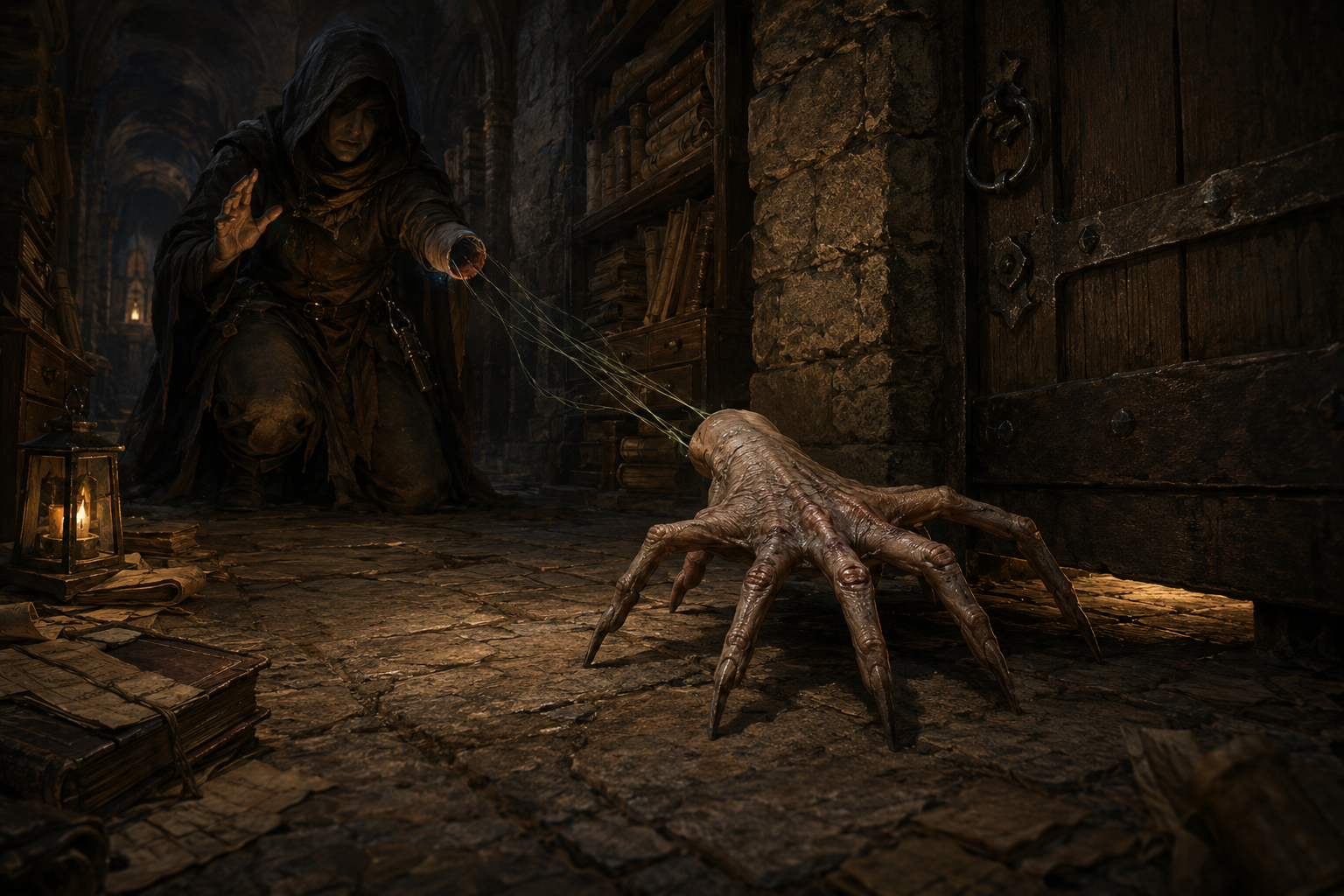
When you cast this spell, one of your hands detaches and transforms into a Small monstrous spider under your control. You can see through the spider’s eyes and direct its movement while concentrating.
The spider-hand can travel up to 20 feet per caster level away from you. If it moves beyond that distance and cannot immediately return within range, the spell ends.
The spider-hand has the statistics of a Small monstrous spider, except that it is part of the spell rather than a normal summoned creature. It acts on your turn and follows your mental direction. It is not an independent ally.
If you direct the spider-hand to return to your arm and allow the spell to end after it has reattached, you take no damage. Returning to your arm is a move-equivalent action.
If the spider-hand is killed, trapped, blocked from returning, too far away, or otherwise prevented from reattaching before the spell ends, your hand reforms on your arm and you take 1d6 points of damage.
While your hand is detached, you cannot use that hand for attacks, shields, held items, somatic activity requiring that hand, climbing, grappling, or two-handed tasks.
Notes
Use the spell as a short-range scouting and infiltration tool. The spider-hand can climb, crawl, hide, observe, squeeze through narrow spaces, and interact with small unattended objects.
It should not usually be treated as a summoned monster that fights for the caster. If your table uses the original monstrous spider statistics directly, keep the creature fragile and make the risk of losing it matter.
If the spider-hand is slain, the caster does not lose the hand permanently. The hand reforms when the spell ends, but the caster suffers the listed damage.
Spider Hand 3.0e
Book of Vile Darkness 3.5
By Monte Cook
Transmutation
Level: Cleric 1, Druid 1
Components: V, S
Casting Time: 1 action
Range: Personal
Target: Caster’s hand
Duration: Concentration (up to 1 minute/level)
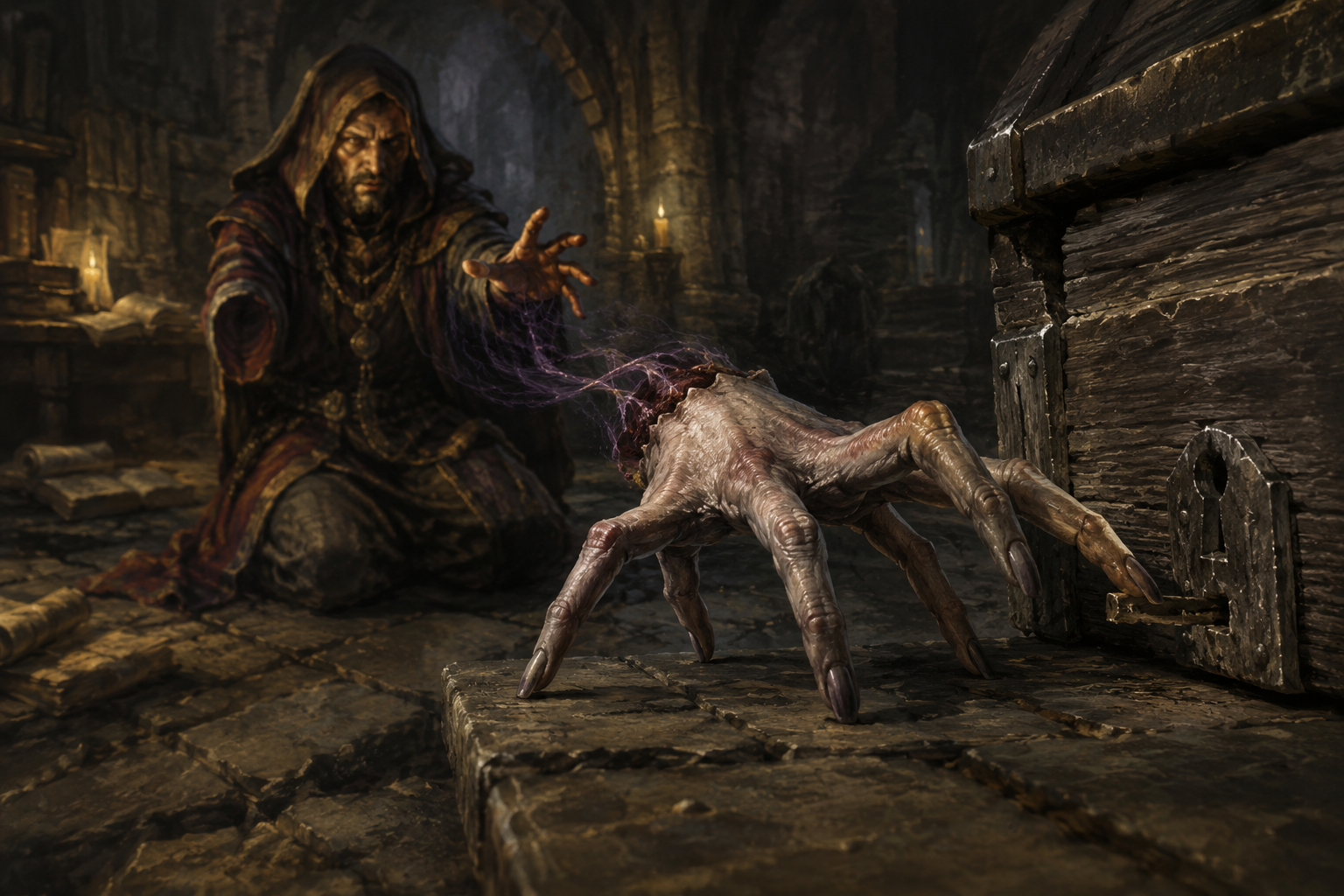
The caster detaches his hand, which transforms into a Small monstrous spider that he controls. The caster can see through its eyes, and it can travel up to 20 feet per level away from him. If the spider is killed or prevented from returning to the caster, his hand is restored when the spell ends, but he takes 1d6 points of damage. If the caster directs the spider to return to his arm (a move equivalent action), then lets the spell end, he takes no damage.
Why This Spell Is Dangerous in the World
Spider Hand makes privacy fragile. A locked door, high window, priest-hole, bedchamber crack, rafterspace, or council chamber screen is no longer enough to keep a watcher out.
A druid can send a hand into a poacher’s camp. A priest can search a prison cell without opening it. A spy can learn who visits whom after dark. A blackmailer can find the hidden letter, the lover’s token, the poison vial, or the treaty no one was meant to see.
The spell also corrupts the caster’s relationship with the body. It turns flesh into a tool, hand into vermin, and self into something detachable. In villages, monasteries, castles, and courts, the sight of a severed hand crawling like a spider is enough to start accusations of witchcraft, corpse-magic, demonic blessing, or plague-sign.
The battlefield power is limited. The social horror is not.
Rules Clarifications and Edge Cases
- Spellcasting: The caster can still cast spells if the remaining hand can perform the required components. A spell requiring both hands, a held focus, or a two-handed gesture may be impossible.
- Weapons and shields: The missing hand cannot hold a weapon, shield, staff, wand, holy symbol, tool, or other object.
- Touch spells: The spider-hand does not automatically deliver touch spells. Allow this only if a specific rule or DM ruling permits it.
- Lockpicking: The spider-hand can manage simple latches and small loose objects. Complex locks require tools, time, and DM approval.
- Trapping the hand: A jar, sack, boot, chest, drawer, locked box, glue, webbing, or slammed door can prevent the spider-hand from returning.
- Pain and sensation: The caster is magically connected to the spider-hand but does not need to suffer constant penalties from every scratch. The spell’s damage already represents the backlash of losing it.
- Gloves, rings, and held items: Mundane objects fall away when the spell is cast unless the DM rules that a particular magic item remains fitted.
Good Combinations
- Silence pairs well with Spider Hand when the hand must crawl through a guarded room, chapel, council chamber, or sleeping quarters without the scrape of claw on wood or stone giving it away.
- Pass without Trace helps the party reach the right wall, door, ruin, or chamber before the caster risks sending the spider-hand ahead.
- Mage Hand covers safer object manipulation at a distance, while Spider Hand handles climbing, crawling, hiding, and seeing through narrow physical gaps.
- Detect Magic can support the same investigation before or after Spider Hand is used, but concentration limits may prevent both spells from running at the same time in some editions.
- Arcane Eye, Clairvoyance, and similar divinations are stronger for pure observation, while Spider Hand remains useful when the scout must physically crawl, squeeze, or move a small object.
Adventure and Worldbuilding Hooks
The Hand in the Reliquary
A monastery claims a preserved holy hand has begun crawling at night. The truth may be a hidden caster using Spider Hand, a relic reacting to the spell, or a dead holy figure refusing to remain displayed.
The Spy Under the Council Door
A city council discovers scratches under its chamber doors and tiny bloody prints near the hearth. Someone is using crawling hand-magic to steal votes, blackmail councillors, and learn troop movements.
The Surgeon of Eight Fingers
A battlefield healer uses Spider Hand to crawl into collapsed plague houses and search for survivors. The locals think he is spreading the Red Death because his hand keeps returning stained with corpse-fluid and grave-dust.
Historical and Mythic Context
Spider Hand draws on several old fears at once: the severed hand that still acts, the spider that enters forbidden spaces, and the spellcaster whose body is not fully bound by ordinary limits. Its horror is intimate because the spell does not summon a monster from elsewhere. It makes the caster’s own flesh become the thing that crawls.
Hands have long carried symbolic weight in law, oath, craft, punishment, blessing, theft, healing, murder, and magic. A hand can swear, steal, write, anoint, strike, caress, accuse, and seal a bargain. A spell that detaches the hand turns that symbol into a wandering agent. It suggests guilt made mobile, intention made visible, and secrecy given fingers.
The spider adds another layer. Spiders live in thresholds, corners, rafters, cracks, hidden chambers, and patient traps. They are watchers, builders, ambushers, and signs of places that have gone untouched too long. A spider-hand is therefore more than a grotesque scout. It is a spy shaped like a taboo: a piece of the caster able to enter spaces where the caster’s body cannot go.
This imagery also echoes the wider tradition of crawling hands, animated limbs, and body parts that continue to act after separation. Such figures often represent unfinished will, punishment, curse, sorcery, or the refusal of the body to remain obedient to death. In a late medieval campaign, witnesses are unlikely to treat a crawling severed hand as a harmless scouting trick. They may read it as witchcraft, demonic service, plague-sign, corpse-magic, or proof that the caster has surrendered part of the human form.
For background on spiders as animals and cultural symbols, see Britannica’s overview of spiders. For a classical comparison point on transformation, bodily violation, and unnatural metamorphosis, Ovid’s Metamorphoses remains one of the great ancient sources.
For a spell like Spider Hand, the useful tension is not simply that the magic is strange. It is that the spell can save lives, expose murder, or scout a deadly chamber while marking the caster as someone willing to make their own body into a crawling instrument. That is why the spell belongs as much to suspicion, secrecy, and bodily dread as it does to transmutation.