
Hellfire Spell – Diabolic Fire Magic
Hellfire Spell – Diabolic Fire Magic
A brief infernal blast of brimstone and black-red flame punishes the living with fire that ordinary wards were never meant to stop.
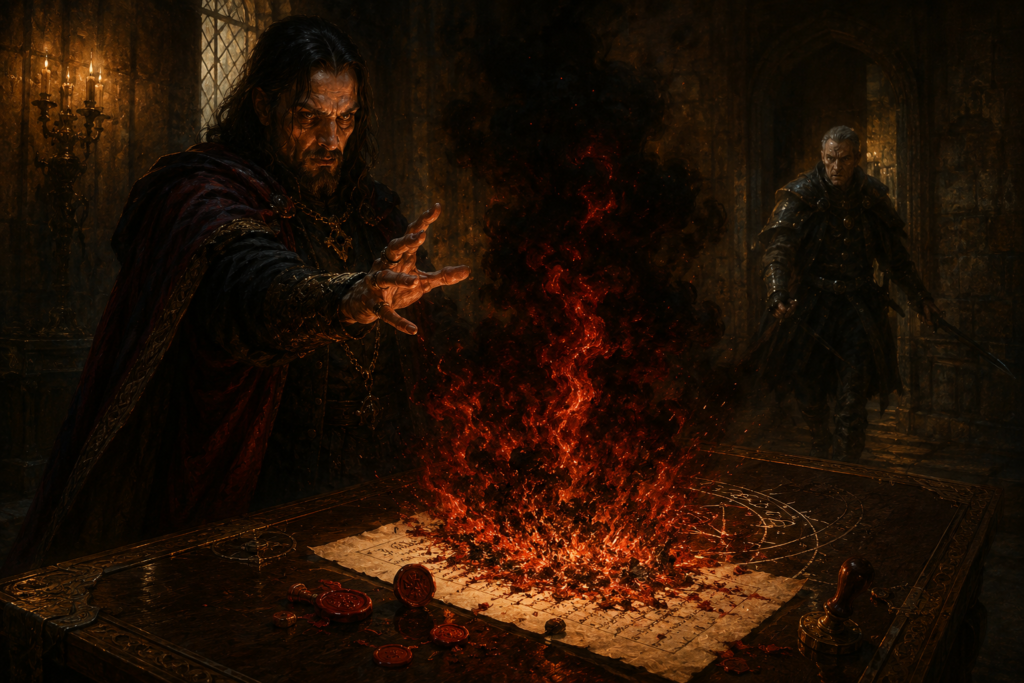
Hellfire is the flame of punishment, not mere combustion. It is a compact infernal eruption: sulfur, black-red light, and malice given shape for a single violent instant. Where ordinary battle magic throws heat and flame in broad destructive force, Hellfire is narrower, crueler, and more deliberate. It is the sort of spell cast by diabolists, corrupt clergy, infernal warlocks, and damned magistrates who want more than injury. They want proof that Hell can reach through the protections other people trust.
The spell’s area is small, but its meaning is large. A knight warded against flame can still burn. A protected witness can still die. A chapel door can still reek of sulfur after its prayers fail. Hellfire is feared not because it is the biggest fire spell, but because it teaches onlookers that some flames belong to judgement rather than nature.
Quick Rules Reference
- Spell Level: 4th-level infernal or diabolic spell.
- School: Evocation.
- Damage Type: Infernal fire, often paired with corruptive harm in later conversions.
- Area: A very small burst centred on a point within close range.
- Protection: Ordinary fire protection does not reliably stop it.
- Theme: Evil magic, brimstone, infernal punishment, contracted damnation.
Effect
You conjure a sudden burst of brimstone and diabolic flame at a point within range. The explosion is tight, fast, and vicious, filling only a small area with sulfurous smoke and black-red fire. Creatures caught in the blast take special infernal fire damage. This is not ordinary flame. Hellfire is supernatural punishment made manifest, and the protections that blunt mundane or merely elemental fire may fail against it.
Mechanics Tabs
The rules below are mechanics compatible for different game editions.
Hellfire 5.5e / 2024
Hellfire, Pathfinder 1e / 3.5e
Hellfire 3.0e
Hellfire 5.5e / 2024-Compatible Version
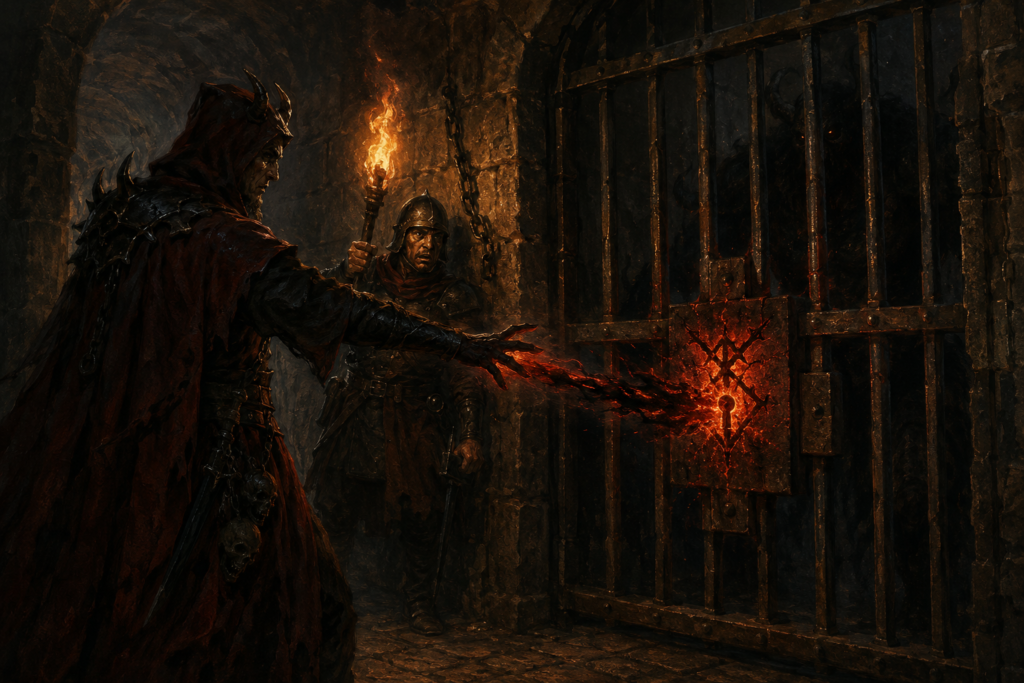
4th-Level Evocation
Casting Time: Action
Range: 60 feet
Components: V, S
Area: 5-foot-radius Sphere
Duration: Instantaneous
Available To: Warlock, Cleric, Wizard; also suitable for characters with infernal, diabolic, or fiend-pact spell access.
Alternative Spell Name: Infernal Brimstone
Effect: Choose a point you can see within range. A compact explosion of black-red flame and sulfur erupts from that point. Each creature in a 5-foot-radius Sphere centred there must make a Dexterity saving throw. A creature takes 4d6 Fire damage and 3d6 Necrotic damage on a failed save, or half as much damage on a successful one.
The Fire damage from this spell is infernal fire. Resistance to Fire damage granted by ordinary equipment, environmental adaptation, or spells such as Protection from Energy does not reduce this spell’s Fire damage. Fire resistance from a creature’s stat block, class feature, divine blessing, or major magic item applies normally unless the DM rules that it protects only against mundane flame. Immunity to Fire damage applies normally.
At Higher Levels: When you cast this spell using a spell slot of level 5 or higher, the Fire damage increases by 1d6 for each slot level above 4.
Notes
- Small burst: Hellfire is deliberately compact. It is not a replacement for broad battlefield fire spells.
- Infernal fire: Its greatest value is against creatures relying on ordinary magical fire protection rather than true supernatural immunity.
- Fire immunity: Fire immunity applies normally. This spell should not become a loophole for burning devils, red dragons, fire elementals, or similar creatures whose nature is bound to flame.
- Objects: The spell can scorch, blacken, and ignite unattended flammable objects in the area where appropriate, but it is primarily a supernatural injury spell rather than a large arson effect.
- Corruption: In campaigns that track corruption, damnation, or infernal attention, each casting of Hellfire is a clear act of diabolic magic and may count as evidence of infernal allegiance.
Hellfire, Pathfinder 1e / 3.5e-Compatible Version
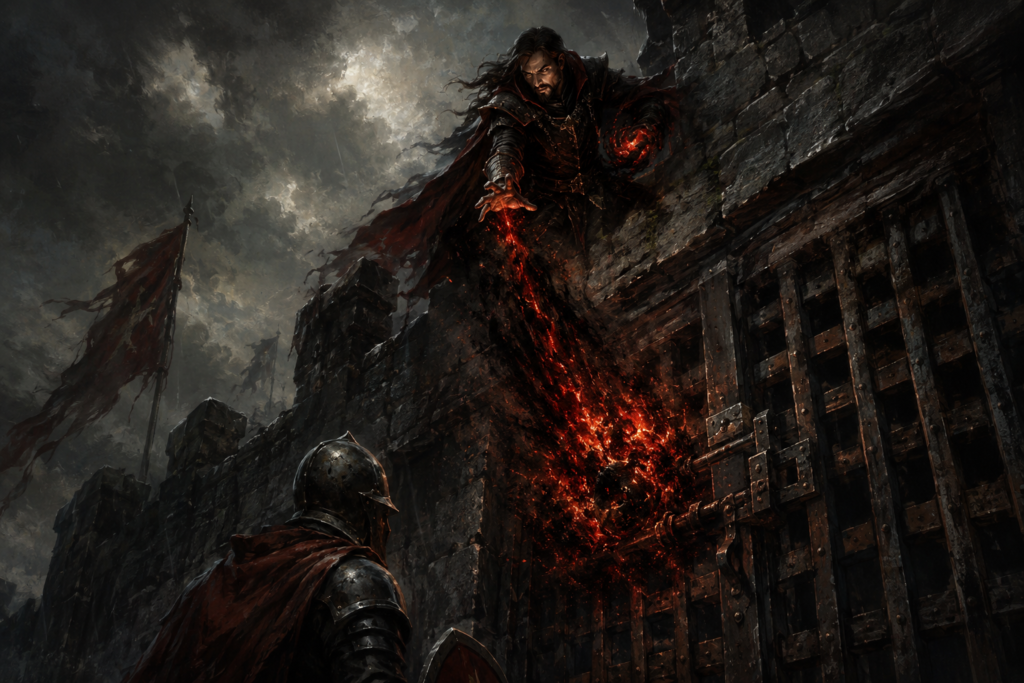
Evocation [Evil]
Level: Diabolic 4
Components: V, S
Casting Time: 1 standard action
Range: Close (25 ft. + 5 ft./2 levels)
Area: 5-ft.-radius spread
Duration: Instantaneous
Saving Throw: None
Spell Resistance: Yes
You create a small explosion of brimstone and diabolic flame. Creatures and objects in the area take 3d6 points of diabolic fire damage.
Diabolic fire is not reduced by protection from energy against fire, fire shield in its chill shield form, or similar magic that protects only against ordinary fire. Spell resistance applies normally.
Notes
- No saving throw: The legacy version is accurate to the original spell’s identity: a small no-save burst balanced by modest damage and spell resistance.
- Diabolic fire: Treat this as supernatural fire with an evil infernal source rather than ordinary elemental flame.
- Energy immunity: A creature with true immunity to fire should normally ignore the damage unless the campaign explicitly defines diabolic fire as a separate damage category.
- Protection effects: Spells that protect against fire but do not specifically cover infernal, unholy, supernatural, or hellish flame should not reduce the damage.
Hellfire 3.0e
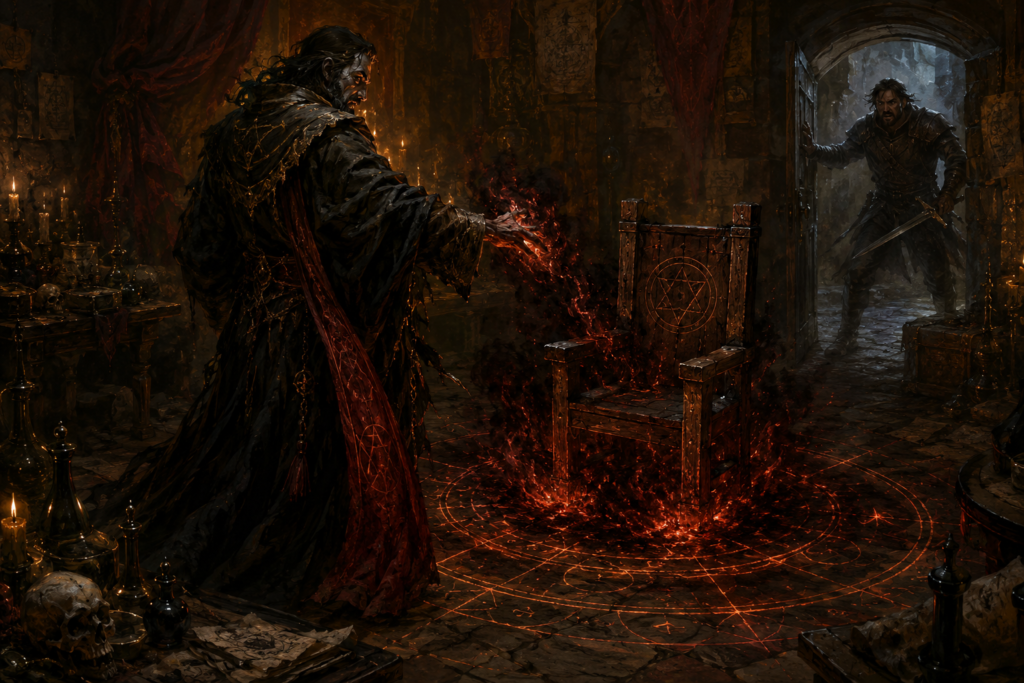
Book of Vile Darkness 3.5
By Monte Cook
Evocation [Evil]
Level: Diabolic 4
Components: V, S
Casting Time: 1 action
Range: Close (25 ft. + 5 ft./2 levels)
Area: 5-ft.-radius spread
Duration: Instantaneous
Saving Throw: None
Spell Resistance: Yes
The caster creates a small explosion of brimstone and fire that deals 3d6 points of special diabolic fire damage. The diabolic flames are not subject to being reduced by protection from energy (fire), fire shield (chill shield), or similar magic.
Why This Spell Is Dangerous in the World
Hellfire is dangerous because it attacks confidence as much as flesh. A warrior who trusts a charm against flame, a magistrate guarded by expensive wards, or a priest who believes sacred protections are enough may all discover that Hellfire burns through assumptions as easily as cloth and skin. It undermines faith in defences, prayers, and institutions.
Its scale is small, but that makes it more frightening in certain contexts. It is the magic of cult punishments, infernal assassinations, ritual executions, courtroom murders, and compact battlefield cruelty. Hellfire does not need to burn down a city to matter. It only needs one warded victim collapsing in sulfurous smoke while everyone else watches their protections fail.
Rules Clarifications and Edge Cases
- Does Hellfire bypass all fire resistance? No. It bypasses ordinary fire protection, especially spell-based or situational defences meant for elemental flame. Strong supernatural defences may still apply.
- Is Hellfire just another kind of fire damage? It behaves like fire in most descriptive and environmental ways, but its infernal nature changes how some protections interact with it.
- Can it ignite objects? Yes, where sensible. It can char parchment, blacken cloth, ignite straw, and scorch exposed wood, but it should not be treated as a large-scale fire-setting spell by default.
- Can a good character cast it? Mechanically, only if they have access to it. In-world, using Hellfire should usually carry moral, spiritual, legal, or reputational consequences.
- Does it work especially well against devils? Usually no. Devils are creatures of infernal order and punishment, and many will resist or ignore fire in the normal way for their edition.
Good Combinations
- Bane: Softens a cluster of enemies before Hellfire lands, especially in versions that allow a saving throw.
- Hold Person: Locks a target in place so the burst can be placed precisely and punishment cannot be escaped.
- Bestow Curse: Makes Hellfire feel like the visible sentence laid upon an already-condemned victim.
- Silence: Prevents a protected or politically important target from calling for aid, prayer, or counter-magic before the infernal blast is delivered.
Adventure Hooks
The Warded Man Burned Anyway: A magistrate protected by expensive fire wards survives repeated threats, then dies in a tiny black-red blast that should not have harmed him. The investigation quickly turns from “who wanted him dead?” to “who knew exactly how his protections worked?”
The Fireproof Witness: A condemned witness agrees to testify only after public magical protection from flame is placed upon him. In the middle of the hearing, a small burst of Hellfire kills him in full view of the court, leaving his protections intact but useless. Someone in the court understood infernal magic well enough to arrange the murder.
The Trial by Flame: An old legal ordeal is revived by a corrupt noble who secretly replaces ordinary ritual fire with Hellfire through a contracted diabolist. The accused may be innocent, but the judgement itself has already been sold to Hell.
Historical and Mythic Context
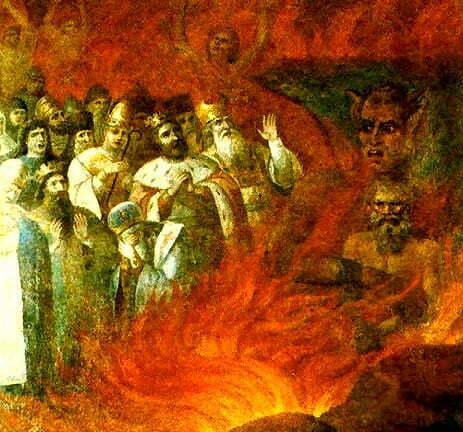
The idea of hellfire draws on older traditions of underworld punishment, sulfurous burning, and divine or infernal judgement. In many religious and literary traditions, hell is imagined not simply as a place of death, but as a place of punishment, separation, and terrible consequence. For a useful overview, see Britannica’s article on hell.
Brimstone is the older common name for sulfur, a substance long associated with noxious smoke, choking fumes, and fiery destruction. The phrase “fire and brimstone” became powerful because sulfur is both physically real and symbolically potent: it smells unnatural, burns harshly, and leaves a vivid sensory impression. See Britannica on sulfur.
The later image of punitive supernatural flame is also shaped by traditions surrounding Gehenna, a place whose name became tied to eschatological punishment in later religious imagination. That heritage helps explain why hellfire is more than heat. It is morally charged fire, the visible sign of judgement and exclusion. See Britannica on Gehenna.
In a late medieval fantasy campaign, Hellfire works best when treated not as a mere redder fireball, but as the flame of sentence, contract, blasphemy, and infernal law. The spell should smell of sulfur, feel judicial in its cruelty, and leave witnesses thinking not “that was a fire spell,” but “that was punishment.”
Keep this reference growing
If this page helped with your reading or game, you can support its upkeep or explore the curated books.
Explore the Bookshop — epics, classics and stories behind imagined worlds.