
Graz’zt’s Long Grasp
A vile transmutation spell that tears one of the caster’s hands from her wrist and sends it flying through the air to deliver touch spells, grasp objects, and harry enemies from a distance.
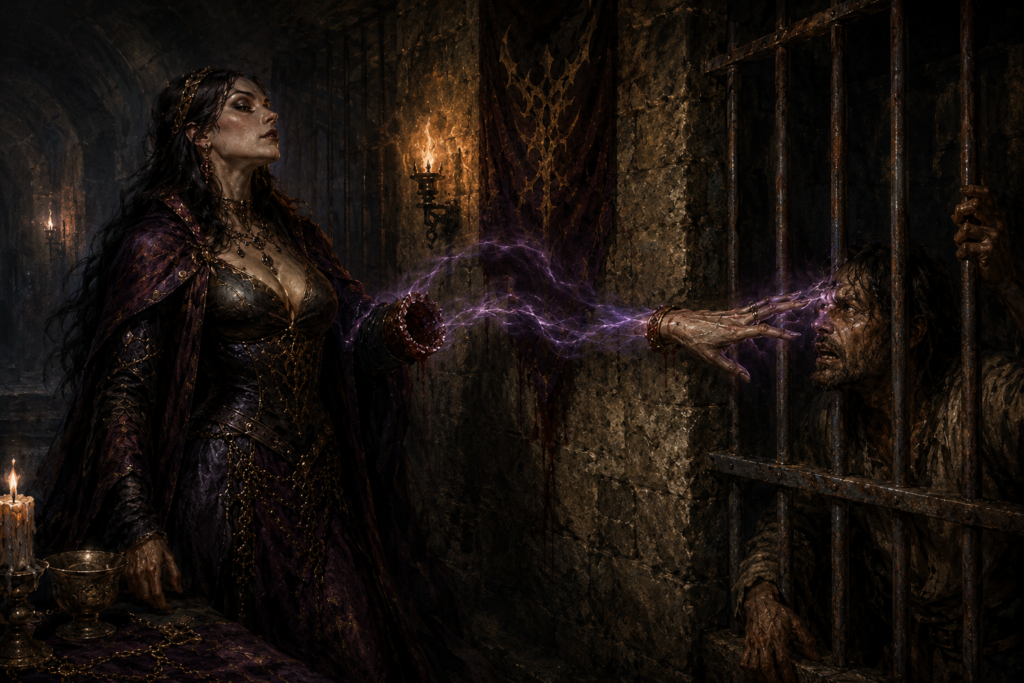
Graz’zt’s Long Grasp is a cruel and memorable spell for demon-bound arcanists, corrupt wizards, cult assassins, and villains who want to touch victims without standing near them. The caster’s hand detaches from her body and becomes a flying extension of her will, able to carry touch magic, manipulate objects, strike, grapple, and create a flanking threat.
The spell is useful because it changes the angle of danger. A caster can remain behind guards, bars, curtains, furniture, or summoned creatures while the hand slips forward to deliver the spell’s real threat. This is not simply a stronger version of mage hand. It is living flesh, severed from the caster, and losing it has a real cost.
Used well, the spell creates a scene players remember: a pale hand drifting beneath a banquet table, crawling through a prison grille, pressing a curse into a sleeping victim’s brow, or returning across the floor to reattach itself to the wrist of a smiling spellcaster.
Effect
When you cast this spell, one of your hands detaches from your arm and becomes a flying disembodied hand under your mental control. You take damage when the hand separates. If the hand returns and reattaches before the spell ends, that damage is healed. If the hand is destroyed, trapped, or prevented from returning, the damage remains and heals normally.
The hand can move, manipulate objects, deliver your touch spells, make simple attacks, and grapple creatures small enough for it to restrain. It must remain close enough for you to see and direct it. If it moves too far away, leaves your sight, or is no longer commanded, it attempts to return to your wrist.
Edition Tabs
Graz’zt’s Long Grasp, 5.5e / 2024
Graz’zt’s Long Grasp, Pathfinder 1e / 3.5e
Graz’zt’s Long Grasp 3.0
Graz’zt’s Long Grasp, 5.5e / 2024
2nd-Level Transmutation
Casting Time: Action
Range: Self
Components: V, S
Duration: Concentration, up to 10 minutes
Available To: Sorcerer, Warlock, Wizard
Saving Throw: None
Alternative Spell Name: Demon Prince’s Long Grasp
One of your hands detaches from your arm and becomes a flying hand under your mental control. When you cast the spell, you take 5 (2d4) necrotic damage. This damage cannot be reduced. If the hand reattaches to your wrist before the spell ends, you regain hit points equal to the damage you took from casting the spell. If the hand is destroyed or prevented from returning, this healing does not occur.
The hand has AC 16, hit points equal to the necrotic damage you took when casting the spell, a flying speed of 20 feet, and the ability to hover. It uses your saving throw bonuses and has Evasion. If it is subjected to an effect that allows it to make a Dexterity saving throw to take only half damage, it takes no damage on a success and half damage on a failure.
On each of your turns, the hand can move without requiring an action from you. When you cast a touch spell through the hand, attack with it, grapple with it, or have it manipulate an object, that activity uses the same action you would normally use to perform that task. The hand does not gain its own separate action.
The hand can perform one simple manual task at a time, such as opening an unlocked door or container, retrieving an unattended object, pulling a lever, carrying a small item, pouring a vial, or manipulating something that could reasonably be handled with one hand. It uses your Strength score for lifting, dragging, and carrying.
The hand cannot wield weapons, activate magic items that require attunement, perform tasks requiring two hands, or replace a creature’s full body in complex physical work.
When you cast a spell with a range of Touch, the hand can deliver that spell as if it were your own hand. The hand must be within 60 feet of you, you must be able to see it, and the target must be within the hand’s reach. If the spell requires an attack roll, you make the spell attack roll with a +2 bonus.
As an action, you can command the hand to make one unarmed strike against a creature within 5 feet of it. Use your spell attack modifier for the attack roll, with a +2 bonus. On a hit, the target takes bludgeoning damage equal to 1 + your spellcasting ability modifier. This attack is magical.
The hand can attempt to grapple a Tiny creature. Use your spell attack modifier for the attempt. On a hit, the target has the Grappled condition. The escape DC equals your spell save DC. The hand can grapple a Small creature only if that creature is surprised, restrained, unconscious, helpless, or otherwise unable to resist normally. While grappling a creature, the hand cannot deliver touch spells or manipulate objects. The hand cannot grapple Medium or larger creatures.
The hand counts as your ally for flanking if your game uses flanking rules.
If the hand moves more than 60 feet away from you, if you can no longer see it, or if you do not direct it on your turn, it immediately tries to return to your wrist by the safest direct route. If it reaches you before the spell ends, it reattaches. If the spell ends while the hand is unable to return, the hand collapses into dead flesh and you do not regain the hit points lost when the spell was cast.
Graz’zt’s Long Grasp, Pathfinder 1e / 3.5e
School: transmutation [evil]; Level: sorcerer/wizard 2
Casting Time: 1 standard action
Components: V, S
Range: personal
Target: you
Duration: 10 minutes/level
When you cast this spell, one of your hands detaches from your arm and becomes a flying disembodied hand under your mental control. You take 2d4 points of damage when the hand separates. If the hand returns and reattaches before the spell ends, you are healed by the same amount. If the hand is destroyed or prevented from reaching your wrist before the spell ends, the damage remains and heals normally.
You control the hand by thought as a free action. The hand has a fly speed of 20 feet with perfect maneuverability.
The hand can deliver any spell with a range of touch that you cast. When it delivers such a spell, you gain a +2 bonus on the melee touch attack roll.
The hand can make unarmed attacks as if it were your hand, using your normal unarmed strike damage and gaining a +2 bonus on the attack roll. It can grasp and move objects using your normal Strength score. It can make grapple attacks, but it is treated as Tiny for grapple purposes.
The hand can flank enemies as a creature can.
The hand has AC 22, hit points equal to the damage you took when casting the spell, improved evasion, and your saving throw bonuses. Your Intelligence modifier applies to the hand’s AC as though it were the hand’s Dexterity modifier.
If the hand moves beyond the spell’s effective range, if you can no longer see it, or if you stop directing it, it attempts to return to your wrist and reattach. If it cannot return before the spell ends, the damage caused by casting the spell is not healed by the spell.
Graz’zt’s Long Grasp 3.0
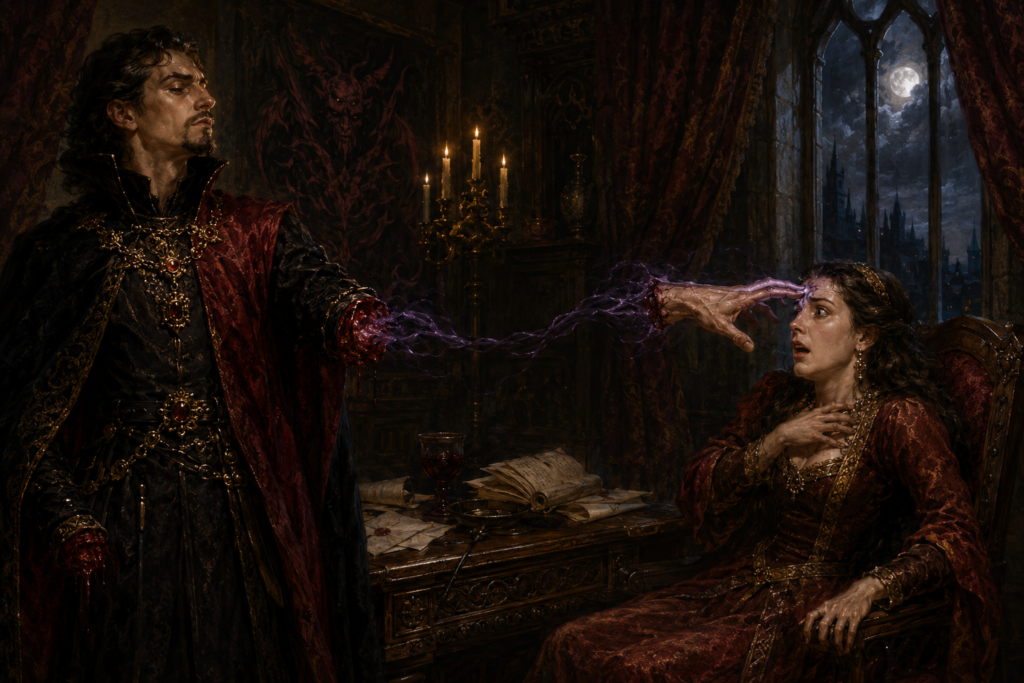
The caster causes one of her hands to detach from her arm. She can control the hand by thought alone as a free action. It can fly at a speed of 20 feet (perfect maneuverability).
Book of Vile Darkness 3.5
By Monte Cook
Transmutation [Evil]
Level: Sorcerer/Wizard 2
Components: V, S
Casting Time: 1 action
Range: Personal
Target: Caster
Duration: 10 minutes/level
On casting the spell, the caster takes 2d4 points of damage, but she is healed by the same amount when the hand returns to her arm (unless it is destroyed or otherwise prevented from reaching her arm before the end of the spell). The damage heals normally. As long as the spell lasts, the floating hand can deliver any spell with a range of touch that the caster can cast. The spell gives the caster a +2 bonus on her melee touch attack with the disembodied hand, which functions as if it were attached to her. The hand can flank targets as a creature can.
The hand can punch opponents (as a normal unarmed attack with a +2 attack bonus), or it can grasp things and move them (with the caster’s normal Strength). The hand can make grapple attacks, but it is considered Tiny.
If the hand goes beyond the spell’s range, if the caster can no longer see it, or if she is not directing it, the hand attempts to return to her on its own, reattaching to the end of the wrist. The hand has improved evasion (half damage on a failed Reflex save and no damage on a successful save), the caster’s save bonuses, and AC 22. The caster’s Intelligence modifier applies to the hand’s AC as if it were the hand’s Dexterity. The hand has 2d4 hit points, the same number that the caster lost in creating it.
Why This Spell Is Dangerous in the World
Graz’zt’s Long Grasp makes touch magic more frightening because it separates contact from proximity. A victim can be cursed, drained, paralysed, poisoned, or marked by a spellcaster who never comes within sword reach.
The spell also reveals something ugly about the caster. This is magic that treats the body as a tool to be broken apart and used. Among demon cults, that willingness may be praised as devotion. In courts, temples, guilds, and common households, it is the sort of spell that turns rumour into panic.
A severed hand found near a bedchamber, treasury, shrine, or prison cell is not just evidence of magic. It is evidence that someone was willing to mutilate herself to get what she wanted.
Best Uses
Delivering Touch Spells: This is the spell’s main purpose. The hand lets the caster deliver dangerous touch spells while remaining behind cover, guards, bars, furniture, or summoned allies.
Reaching Through Obstacles: The hand can pass through open grilles, arrow slits, broken shutters, narrow windows, and other spaces a full creature cannot easily enter.
Manipulating Objects: It can steal keys, pull cords, open unlocked latches, spill a vial, lift a note, smear poison, or drag a small object away from sight.
Creating Flanking Pressure: In games that use flanking, the hand can threaten a flank and force enemies to divide their attention.
Villain Presentation: The spell is visually strong. A calm caster standing across the room while her severed hand does the dirty work is far more memorable than another ranged attack roll.
Tactics
The hand is useful, but fragile. A caster should not throw it into the centre of a fight unless the reward is worth the risk. Its best use is to dart in, deliver a touch spell, manipulate one important object, or create a brief tactical opening.
The spell becomes nastier in confined spaces: prison corridors, locked rooms, ships, noble chambers, shrines, libraries, vaults, and ritual chambers. In open battle, enemies can see the hand coming. In a cramped interior, it can appear from under furniture, around a doorframe, or through a narrow gap.
Players should be allowed to counter it. They can attack it, trap it under a shield, pin it with a dagger, slam a door on it, cut off the caster’s line of sight, or force the caster to choose between concentrating on the spell and defending herself.
DM Notes
Do not let the hand become a perfect scouting drone. The caster must be able to see and direct it. If it moves out of sight, goes too far away, or is not commanded, it tries to return.
The hand can perform one-handed tasks, but it should not replace a skilled rogue, a full creature, or a second character. It can lift a key, tug a cord, open an unlocked latch, hold a vial, or deliver a spell. It should not pick a difficult lock without an appropriate check, reload a crossbow, perform surgery, tie complex knots under pressure, or carry out tasks requiring two hands.
For the 5.5e version, concentration is important. Without concentration, the spell becomes too efficient as a low-level way to deliver repeated touch spells while the caster remains safe.
The spell should feel risky. If the caster sends the hand into danger, enemies can destroy it. If the hand is trapped behind a closing gate, caught in a warded box, or pinned beneath a heavy object, the caster may have to choose between staying safe and recovering her own flesh.
Good Combinations
- Bestow Curse: A natural villain pairing. The hand delivers the curse while the caster stays protected.
- Vampiric Touch: A strong combat use, especially for a caster who wants to drain life without standing in melee.
- Inflict Wounds: Simple, brutal, and visually clear.
- Invisibility: The caster hides while the visible hand creates confusion and fear.
- Darkness: Useful only if the caster can still see the hand. Darkness should not bypass the spell’s line-of-sight limit unless another feature clearly allows it.
Using This Spell in Your Game
Use Graz’zt’s Long Grasp when you want magic to feel invasive, intimate, and wrong. It belongs to demonologists, corrupt court magicians, surgical necromancers, infernal spies, cult leaders, and villains who prefer indirect cruelty.
For player characters, the spell should be useful but socially dangerous. Public use marks the caster. Guards remember it. Servants whisper about it. Temple authorities may treat it as proof of demonic practice. Even allies may hesitate after watching a companion calmly detach her own hand and send it crawling toward an enemy.
For villains, the spell is excellent. It lets a foe threaten the scene without moving: a hand touches a sleeping heir, lifts a key from a gaoler’s belt, closes around a witness’s throat, or drifts over a banquet table while the caster smiles from the far end of the hall.
Spellcasting Culture and Worldbuilding Hooks
Among demon cults, Graz’zt’s Long Grasp may be taught as a rite of devotion. The initiate must trust the spell to return what it takes.
In arcane colleges, the spell is often banned not because it is overwhelmingly powerful, but because it proves the caster accepts mutilation, possession, and bodily violation as ordinary tools of magic.
In noble courts, accusation of using this spell can ruin a magician. Once people believe a caster can send her hand through windows and bedcurtains, every theft, poisoning, and locked-room death becomes suspicious.
Adventure and Worldbuilding Hooks
The Hand at the Window: A locked-room murder leaves no forced entry, no visible intruder, and only four bloodless fingerprints on the victim’s throat.
The Missing Hand Returns: A wizard dies during a failed rite, but her severed hand crawls back days later, still trying to complete its final command.
The Cult Initiation: A demon cult requires each new spellcaster to cast Graz’zt’s Long Grasp and send the hand into a sealed chamber where something unseen judges it.
Source and Literary Context
Graz’zt’s Long Grasp originates in the 3.5 edition Book of Vile Darkness, where it appears as a vile transmutation spell that causes the caster’s hand to detach, fly, deliver touch spells, attack, grapple, and return before the magic ends. This adaptation preserves the spell’s central idea: the caster gains reach and tactical control by sacrificing bodily integrity. The original spell gives the hand a 20-foot fly speed, lets it deliver touch spells, grants a +2 bonus on its melee touch attacks, and makes the caster’s lost hit points return only if the hand successfully reattaches. For a rules reference to the original spell, see Graz’zt’s Long Grasp at D&D Tools.
Graz’zt is one of Dungeons & Dragons’ most enduring demon princes: a figure of corruption, seduction, tyranny, appetite, and beautiful cruelty rather than simple bestial destruction. The Great Library of Greyhawk describes Graz’zt as one of the most powerful fiends in the Abyss, defined not only by martial and magical power, but by seduction, guile, intelligence, and dominion over the Abyssal realm of Azzagrat. For wider lore context, see Graz’zt at the Great Library of Greyhawk.
That matters for this spell. Graz’zt’s Long Grasp should not feel like a random body-horror trick. It is an expression of demonic intimacy: the caster reaches into a scene without entering it, violates distance, turns her own flesh into an instrument, and treats the body as something to be divided, commanded, and used.
In a campaign, the spell works best when connected to demon cults, corrupt aristocrats, decadent magicians, and servants of Graz’zt who understand power as possession. It is a spell of locked rooms, bedchambers, prison cells, feasts, and private threats. Its horror is not only that a severed hand can fly. Its horror is that the caster is willing to make herself less human in order to touch someone who thought they were safe.