
Spell, Fiendish Seed Spell — Infernal Lineage Curse
Fiendish Seed Spell — Infernal Lineage Curse
Also known as: Infernal Lineage
A secret curse that turns bloodline, inheritance, and birth into instruments of Hell.
Overview
Fiendish Seed is not a battle spell. It is a dynastic curse, used by infernal cults, corrupt priests, and patient fiends to place evil into the future rather than the present.
The caster marks their own body with infernal generative power. If a child is conceived during the spell’s duration, that child is born fiend-touched. The spell does not create an immediate monster; it corrupts lineage, inheritance, and succession.
The spell does not charm, compel, seduce, dominate, or force any creature into intimacy. It only corrupts the supernatural outcome if conception occurs during the duration.
Effect
For the duration, the caster is infused with infernal lineage magic. If the caster conceives or causes the conception of a child during this time, mundane preventative measures fail, and the child is marked by fiendish blood.
The spell affects only the first conception involving the caster that occurs during the duration. Once this occurs, the magic is discharged and the spell ends.
If multiple conceptions could occur within the same period through magical or unusual means, the first to successfully take hold is the one affected.
Magical protections against conception, curses, evil influence, or fiendish corruption may still function if they are already active or cast before conception occurs.
The resulting child is born fiend-touched. This inheritance is supernatural and meaningful, not merely cosmetic. The child is not automatically mindless, monstrous, or irredeemable, but the spell places a real infernal burden into the bloodline.
Infernal Lineage Signature
A child affected by Fiendish Seed carries a detectable infernal signature that persists throughout life.
This signature is subtle but consistent.
Divination magic that detects evil, fiends, curses, or supernatural influence reveals the individual as faintly infernal, even when no active spell is present.
Fiends, devils, and infernal servants can recognise the signature on sight or within close proximity, usually within 30 feet. To such creatures, the individual is marked blood.
Consecrated or sanctified places may react with discomfort, resistance, minor omens, priestly suspicion, or other signs at the GM’s discretion.
Rituals, blood magic, lineage magic, and planar effects may treat the individual as having a connection to the Lower Planes.
The signature is not automatically obvious to ordinary observers and does not impose a constant penalty or visible deformity unless the GM chooses to emphasise it narratively.
Fiendish Seed 5.5e / 2024
Fiendish Seed Pathfinder 1e / 3.5e
Fiendish Seed 3.0
Fiendish Seed 5.5e / 2024

5th-Level Transmutation
Casting Time: 1 action
Range: Self
Components: V, S, M
Duration: 1 hour
Available To: Cleric, Warlock, and infernal or corruption-themed spell lists at the DM’s discretion
You infuse yourself with infernal generative power. If a child is conceived involving you before the spell ends, that conception succeeds unless prevented by magic of equal or greater power, such as a protective ward, curse-breaking rite, divine intervention, or a specific spell designed to prevent conception or fiendish corruption.
The spell affects only the first conception involving you during the duration. Once this occurs, the spell ends.
The child is born fiend-touched. By default, use tiefling traits or a custom infernal lineage appropriate to the campaign. If the ritual is empowered by unusual fiendish patronage, sacrificial magic, or major story stakes, the child may instead be treated as a cambion-like unique creature. A merely cosmetic mark should only be used for a weakened, interrupted, or failed casting.
The child also carries an Infernal Lineage Signature, which can be detected by divination, recognised by fiends, and may influence interactions with sacred or consecrated places.
This spell cannot charm, compel, dominate, seduce, or force any creature to participate in intimacy.
Interference and Weakening
If the conception is protected by active magic that wards against curses, evil influence, supernatural alteration, or conception:
Stronger magic: The spell fails and is expended.
Equal magic: The child is born with a lesser fiendish mark, weakened lineage, or dormant infernal signature.
Weaker or no protection: The full effect applies.
Material Component: A rotted seed blackened with ash and sealed in wax.
Ritual Cost: Rare infernal reagents worth 500 gp, consumed by the spell.
Fiendish Seed Pathfinder 1e / 3.5e
Transmutation [Evil]
Level: Cleric 5, Perversion 4
Components: V, S, M, XP
Casting Time: 1 standard action
Range: Personal
Target: You
Duration: 1 hour/level
Saving Throw: None; see text
Spell Resistance: No; see text
You infuse yourself with infernal generative power. If a child is conceived involving you before the spell ends, the conception succeeds regardless of mundane preventative measures. Magical protections may still prevent the effect if already active or specifically designed to block conception, curses, or fiendish corruption.
The spell affects only the first conception involving you during the duration. Once this occurs, the spell ends.
The resulting child gains the half-fiend template. In a lower-powered or more socially focused campaign, the GM may instead apply a fiendish bloodline, tiefling ancestry, or lesser fiend-touched template, but this should be treated as a softened version of the spell rather than the default result.
The child bears a persistent infernal aura, as described under Infernal Lineage Signature. This aura is detectable by divination magic and recognisable to fiends and similar beings.
This spell does not compel intimacy, attraction, obedience, or consent. It only alters the supernatural result if conception occurs during the duration.
Before birth, a remove disease, remove curse, break enchantment, or similar effect may end the infernal corruption at the GM’s discretion. Removing the corruption is physically dangerous and may deal 1d6 points of damage, cause fatigue, or require a difficult recovery.
Interference and Weakening
If the conception is protected by active magic that wards against curses, evil influence, supernatural alteration, or conception:
Stronger magic: The spell fails and is expended.
Equal magic: The child is born with a lesser fiendish mark, weakened lineage, or dormant infernal signature.
Weaker or no protection: The full effect applies.
Material Component: A rotted seed blackened with ash and sealed in wax, often marked with an infernal sigil or pressed with a signet of the caster’s patron.
XP Cost: 500 XP (3.5e); in Pathfinder 1e, this cost is typically replaced with a material or ritual cost of equivalent value (usually 5,000 gp in rare infernal reagents), at the GM’s discretion.
Fiendish Seed 3.0
The child shall be a thing of evil.
Book of Erotic Fantasy
Author: Gwendolyn F.M. Kestrel
Transmutation [Evil, Sexual]
Level: Cleric 5, Perversion 4
Components: V, S, XP
Casting Time: 1 action
Range: Personal
Target: You
Duration: 1 hour/level
Saving Throw: Fortitude negates
Spell Resistance: Yes
This spell infuses you with demonic energy that infuses your sperm or womb with infernal power. The next time that you copulate with a member of the opposite gender, it results in a pregnancy, regardless of mundane birth control methods taken (certain spells, such as Block the Seed still function). A remove disease spell terminates the pregnancy, although it causes 1d6 points of damage to the mother in the process. In addition, the child gains the half-fiend template.
Material Component: A rotted seed covered in sexual fluid.
XP Cost: 500 XP.
Why This Spell Is Dangerous in the World
Fiendish Seed is dangerous because it works slowly. It does not topple a throne today; it poisons the succession that inherits it tomorrow.
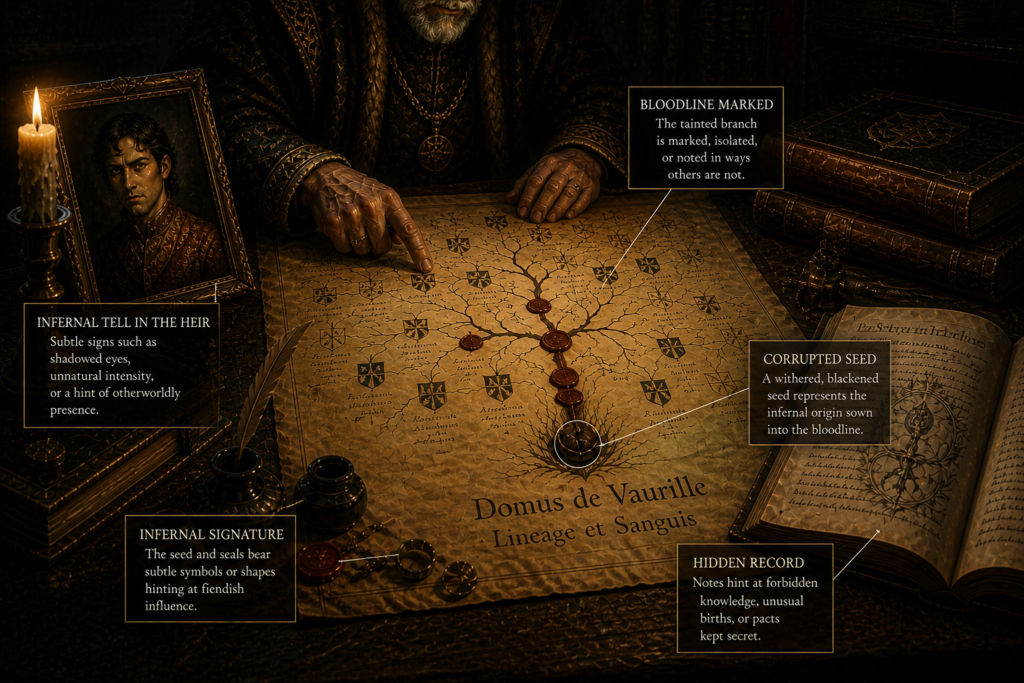
A single casting can place an infernal heir into a noble house, temple bloodline, royal succession, prophetic lineage, or sacred family. By the time the corruption is discovered, the child may already be loved, protected, politically valuable, or legally impossible to remove.
That makes the spell more useful to cults and devils than to battlefield casters. It creates scandal, inheritance crisis, theological panic, and generational suspicion.
The Infernal Lineage Signature makes this corruption playable beyond the birth itself. Priests may detect it. Fiends may claim it. Nobles may hide it. Enemies may expose it. A bloodline touched by this spell becomes a political, religious, and supernatural liability.
Best Uses
Use Fiendish Seed as a villain spell, forbidden rite, cult secret, or dynastic curse. It works best when the horror lies in consequence rather than explicit description.
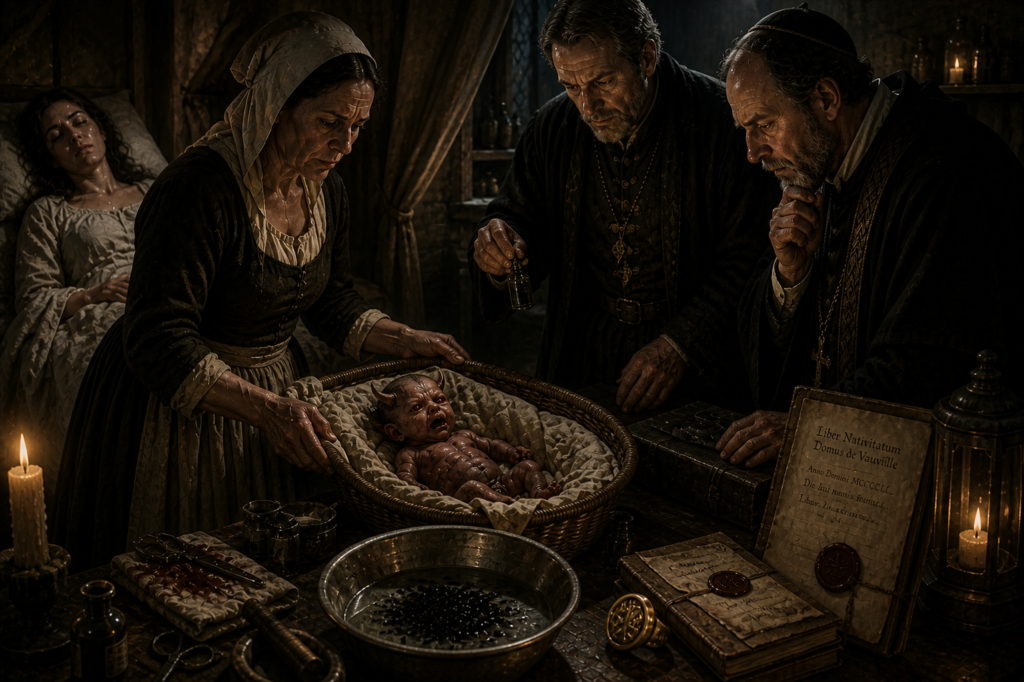
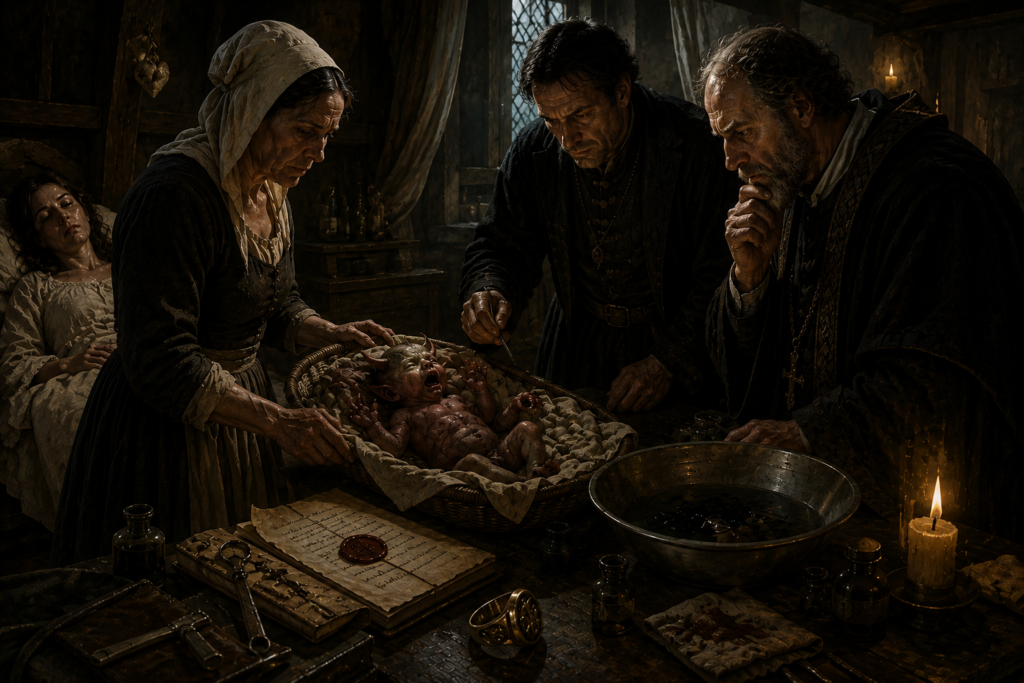
Strong uses include a royal heir showing signs of infernal blood, a noble family hiding a corrupted birth, a temple quietly testing children for fiendish marks, a midwife realising a conception was cursed, or a devil claiming spiritual rights over a bloodline.
DM Notes
This spell needs firm table boundaries.
Do not use it to roleplay intimate coercion, override player boundaries, or create shock-value scenes. The spell should never become a tool for abusive play at the table.
For most campaigns, the cleanest approach is to treat Fiendish Seed as a background curse, villain rite, or discovered consequence rather than something resolved in detail at the table.
Treat this spell as a single-trigger curse, not an ongoing condition.
It resolves at the moment conception becomes viable, not at birth. It does not stack across multiple offspring from one casting. It should be rare enough that its appearance signals deliberate action, not coincidence.
The child created by the spell should not be treated as automatically evil. Fiendish inheritance is a burden, danger, and supernatural pressure; it is not a substitute for character, upbringing, or choice.
Good Combinations
- Disguise Self: Lets the caster enter a court, shrine, or household under false identity.
- Nondetection: Conceals the caster from divination after the rite.
- Modify Memory: Hides the circumstances surrounding the corrupted lineage.
- Bestow Curse: Adds further supernatural affliction to a family or bloodline.
- Infernal Calling: Allows devils to recognise, negotiate over, or attempt to claim individuals bearing an Infernal Lineage Signature.
Using This Spell in Your Game
Fiendish Seed belongs in mature, dark campaigns where bloodline, inheritance, and infernal corruption matter. It should feel rare, vile, and consequential.
It is strongest as a mystery engine. The players may first see the result decades later: a strange heir, a hidden birth record, a priest murdered before naming the father, or a noble house whose children are quietly disappearing.
The Infernal Lineage Signature gives the spell long-term play value. It lets diviners, priests, devils, rivals, inquisitors, healers, and family enemies discover or exploit the truth without requiring crude exposition.
Spellcasting Culture and Worldbuilding Hooks
Infernal cults may preserve records of successful bloodline corruptions like genealogies of sin.
Midwives, temple physicians, and court astrologers may know old signs of fiend-touched birth.
Noble houses may keep secret rites for testing heirs.
Some devils may prefer this spell to open invasion because a legal heir can do what an army cannot.
A cathedral, sacred grove, or consecrated royal tomb may react to a marked heir long before anyone understands why.
Historical Context
Fiendish Seed is fantasy magic, but it fits a clear medieval legendary pattern: the feared child born under infernal influence. One of the strongest parallels is Robert the Devil, a Norman legendary figure whose birth is tied to an appeal to the devil and whose early life is marked by violent, unnatural power. The point is not simple monstrosity, but a bloodline curse made visible through inheritance, behaviour, reputation, and the fear that evil has entered a noble house.
This makes Fiendish Seed most useful as dynastic horror. Its consequences may surface years later as a fiend-touched heir, a court astrologer’s warning, a midwife’s concealed testimony, a noble family suppressing rumours of a cursed birth, or a sacred place reacting against a child whose bloodline has been altered. For a concise historical-literary parallel, see Encyclopaedia Britannica’s article on Robert the Devil.
Keep this reference growing
If this page helped with your reading or game, you can support its upkeep or explore the curated books.
Explore the Bookshop — epics, classics and stories behind imagined worlds.