
Darkbolt Spell: Lance of Vile Night, Cold Shadow, and Stunning Evil
Darkbolt Spell: Lance of Vile Night, Cold Shadow, and Stunning Evil
A bolt of freezing darkness strikes from the caster’s hand, wounding the body and crushing the victim’s senses beneath a moment of vile night.
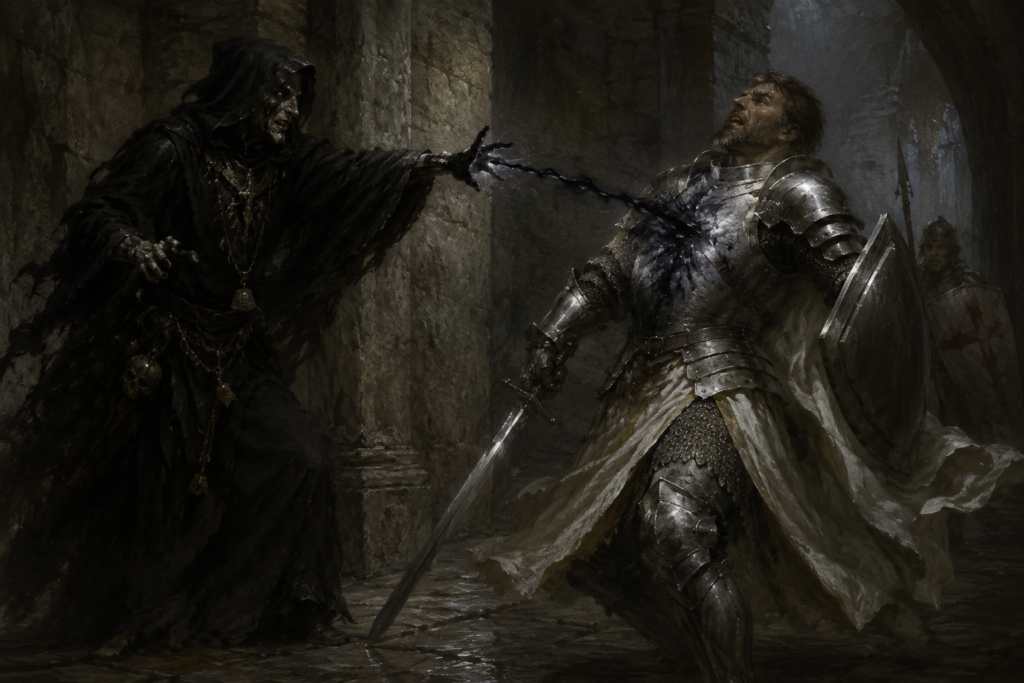
Darkbolt is a compact, cruel attack spell: a close-range ray of cold supernatural darkness that damages one creature and can leave the target stunned for a heartbeat. It is not merely shadow shaped into force. The spell carries an evil charge, striking the nerves, breath, and soul at once.
In play, Darkbolt works best as a low-level villain spell, a sinister cleric’s opening strike, or a corrupt arcanist’s answer to a dangerous front-line hero. Its damage is useful, but the true threat is the stun. One failed save can create the brief opening a cultist, assassin, undead servant, or devil-bound priest needs.
Because Darkbolt is explicitly evil magic, its presence in the world should matter. This is not a respectable temple spell with a dark colour. It is the kind of magic taught in sealed crypts, infernal cells, forbidden military orders, plague chapels, execution cults, and blasphemous schools where cruelty is treated as discipline.
Quick Rules Reference
- Spell Type: Single-target ranged spell attack.
- Damage: Cold damage plus supernatural evil darkness damage.
- Control Effect: The target may be stunned briefly on a failed Constitution or Fortitude save.
- Best Use: Against dangerous single enemies, especially when allies can exploit the stun.
- Limitation: Requires an attack roll and affects only one creature.
Effect
You launch a bolt of freezing, light-devouring darkness at one creature within range. Make a ranged spell attack against the target. On a hit, the target takes cold damage and a second portion of supernatural evil darkness damage, defined by the edition used. The target must also resist the vile shock of the spell or be briefly stunned.
The darkness created by Darkbolt is momentary. It does not create an area of magical darkness, dim light, or concealment after the attack resolves.
Mechanics Tabs
The rules below are mechanics tabs for different game systems.
Darkbolt 5.5e / 2024
Darkbolt, Pathfinder 1e / 3.5e
Darkbolt 3.0e
Darkbolt 5.5e / 2024-Compatible Version
2nd-Level Evocation
Casting Time: Action
Range: 60 feet
Components: V, S
Duration: Instantaneous
Spell Lists: Cleric, Sorcerer, Wizard
Alternative Spell Name: Lance of Vile Night
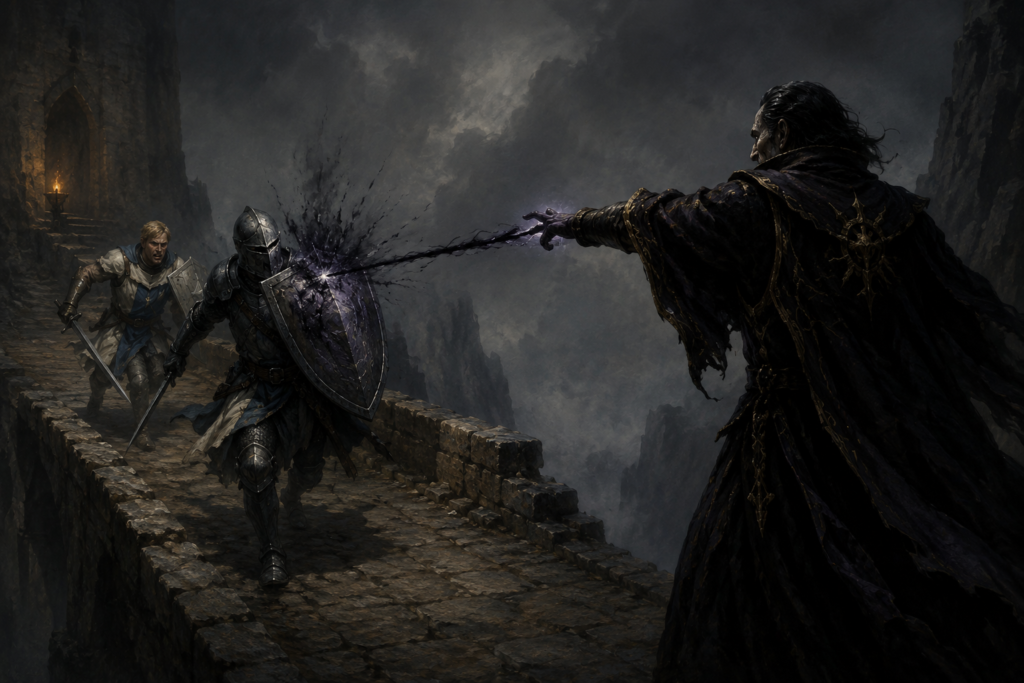
Effect: You hurl a narrow bolt of freezing darkness at one creature you can see within range. Make a ranged spell attack against the target. On a hit, the target takes 2d8 Cold damage and 2d8 Necrotic damage. The target must then make a Constitution saving throw. On a failed save, the target is Stunned until the start of your next turn. On a successful save, the target is not stunned.
At Higher Levels: When you cast this spell using a spell slot of 3rd level or higher, the damage increases by 1d8 for each slot level above 2nd. Alternate the added dice between Cold and Necrotic damage as evenly as possible, starting with Cold.
Balance Note: The stun is intentionally brief because the Stunned condition is one of the strongest conditions in the game. The spell must hit first, the target must then fail a Constitution saving throw, and the stun ends at the start of the caster’s next turn. Do not extend the stun duration unless you deliberately want this spell to become a much harsher villain tool.
Conversion Note: Necrotic damage is used here as the closest modern rules fit for the original spell’s untyped evil darkness damage. This does not make Darkbolt a necromancy spell; it remains an evocation of cold, darkness, and spiritual malice.
Cleric Access Note: Ordinary good or neutral temples rarely teach this spell. In most campaigns, it belongs to evil gods, death cults, infernal patrons, demon-stained sects, grave courts, blasphemous inquisitors, and villainous NPC spell lists. A cleric who casts it openly is making a statement about the power they serve.
Darkbolt, Pathfinder 1e / 3.5e-Compatible Version
School: Evocation [darkness, evil]
Level: Cleric 2, Darkness 2, Sorcerer/Wizard 2
Components: V, S
Casting Time: 1 standard action
Range: Close, 25 ft. + 5 ft./2 levels
Target: One creature
Duration: Instantaneous
Saving Throw: Fortitude partial
Spell Resistance: Yes
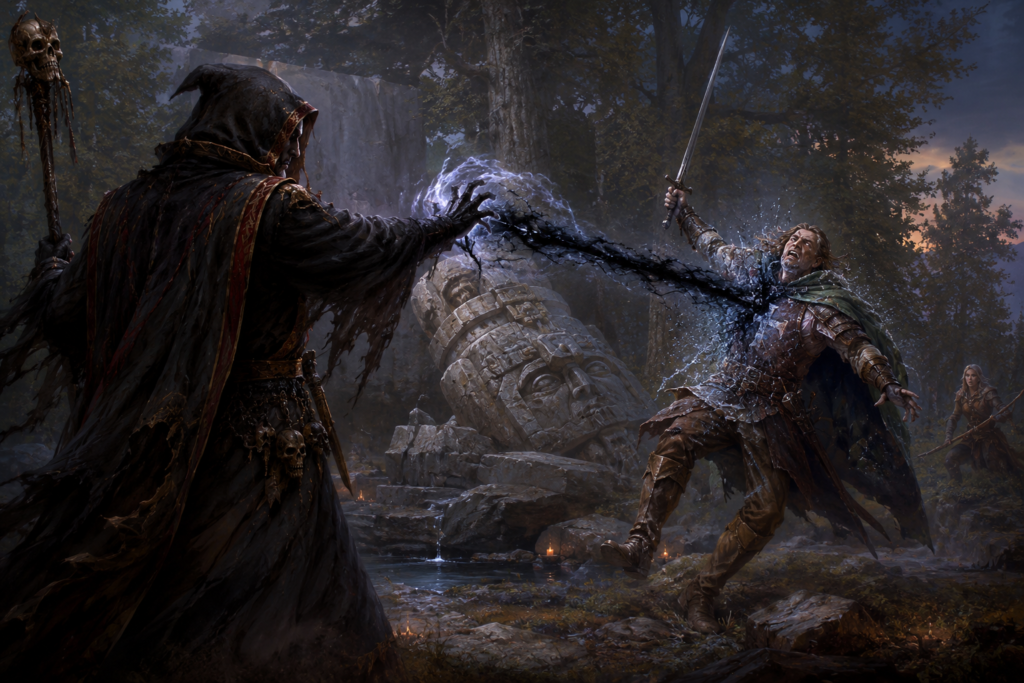
Effect: You make a ranged touch attack against one creature within range, launching a bolt of freezing darkness from your hand. On a hit, the target takes 1d8 points of damage per two caster levels, to a maximum of 5d8. Half of this damage is cold damage. The other half is supernatural evil darkness damage and has no ordinary energy type unless your table requires one.
The struck creature must also make a Fortitude save. On a failed save, it is stunned for 1 round. On a successful save, it takes the damage normally but is not stunned.
Rules Note: Because part of the damage is not cold damage, cold resistance only reduces the cold half. Effects that protect against evil magic, stun effects, or spells with the evil descriptor may apply normally if your campaign uses those protections.
Darkbolt 3.0e
Book of Vile Darkness 3.5
By Monte Cook
Evocation [Darkness, Evil]
Level: Cleric 2, Darkness 2, Sorcerer/Wizard 2
Components: V, S
Casting Time: 1 action
Range: Close (25 ft. + 5 ft./2 levels)
Target: One creature
Duration: Instantaneous
Saving Throw: Fortitude partial
Spell Resistance: Yes
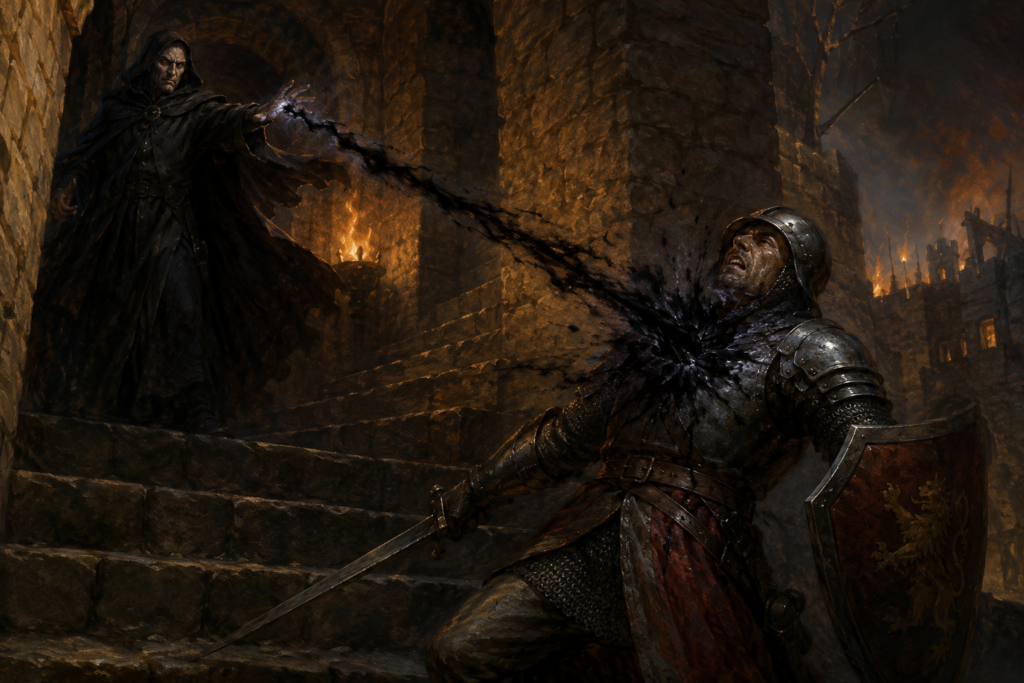
The caster makes a ranged touch attack against a foe, launching a bolt of cold darkness from his left hand. The bolt deals 1d8 points of damage per two caster levels (maximum 5d8). Half the damage is cold, and the other has no specific type. When struck, the foe must also succeed at a Fortitude save or be stunned for 1 round, overwhelmed by the evil charge of the darkbolt.
Why This Spell Is Dangerous in the World
Darkbolt is not dangerous because it is grand. It is dangerous because it is efficient. A cult priest can cast it in a corridor. A hidden necromancer can use it to drop a guard for one decisive moment. A devil-taught court magician can cripple a champion before the duel truly begins.
The spell’s evil nature matters. In the campaign world, this is not simply “cold magic with a dark colour.” It is a spell that teaches the hand to carry spiritual malice. Temples, knightly orders, city courts, and sacred magistrates may treat its use as evidence of corruption, infernal allegiance, forbidden training, or magical assault with vile intent.
The left-hand casting tradition gives the spell another layer of suspicion. In many courts and temples, witnesses remember gestures more clearly than words. A whispered accusation that “he struck with the left hand and the candles died” may be enough to start an inquiry, a duel of honour, or a temple trial.
Rules Clarifications and Edge Cases
- Does the spell create darkness? No. The darkness is part of the projectile and fades when the attack resolves.
- Does a missed attack still force the save? No. The target only saves against the stun if the bolt hits.
- Can cold resistance stop the whole spell? No. It reduces only the cold portion. The evil darkness portion remains unless a rule specifically protects against it.
- Is the stun a poison, disease, or fear effect? No. It is a direct vile magical shock.
- Can undead or constructs be stunned? Use the edition’s normal immunity rules. If the creature is immune to being stunned, it still takes damage on a hit unless another defense applies.
- Can a good-aligned caster use it? Mechanically, a caster may be able to cast it if the spell is on their list. In-world, this should carry moral, divine, or reputational consequences because the spell is explicitly evil.
Good Combinations
- Darkness: Darkbolt becomes more dangerous when cast from concealment, especially by priests, warlocks, assassins, or creatures that can see through magical darkness.
- Hold Person: A held target is easier for allies to finish, while Darkbolt gives the caster a second way to lock down a single enemy if the first control spell fails.
- Bane: Reducing a target’s saving throws makes the stun more likely to land, especially against martial enemies with strong attack rolls but only moderate Constitution or Fortitude defenses.
- Bestow Curse: A cursed enemy with weakened saving throws or reduced combat effectiveness becomes much more vulnerable to repeated disabling magic.
- Ray of Enfeeblement: Against heavily armed warriors, weakening the target first can turn Darkbolt into part of a cruel anti-frontliner spell sequence.
Adventure Hooks
The Left-Handed Murder
A noble is found dead in a locked chapel, the flesh around the wound rimed with black frost. Witnesses saw no weapon, only a priest making a small gesture with his left hand during the final prayer.
The Stunned Champion
A famous tournament fighter loses a duel after freezing motionless for a single breath. The crowd thinks it cowardice or poison, but the wound under his armour carries the residue of evil darkness.
The Choir of Cold Night
A cult trains children, prisoners, or desperate apprentices to cast Darkbolt in unison. The spell is weak alone, but terrifying when a dozen black rays strike before the melee begins.
Historical and Mythic Context
Darkbolt draws on a very old symbolic language: darkness as more than absence of light. In myth, ritual, and literature, darkness often marks concealment, death, sin, underworld power, divine punishment, or the presence of hostile spirits. The spell turns that symbolism into a weapon: night becomes a lance, cold becomes judgement, and evil becomes a physical shock.
The freezing aspect gives the spell a funereal quality. Cold is not only weather here. It is the chill of crypts, tomb-stone, winter graves, and bodies from which life has fled. This makes Darkbolt especially suitable for necromancers, death cults, infernal clergy, and villains whose magic should feel morally tainted rather than merely destructive.
The spell’s left-hand casting detail is also useful at the table. Across many magical and religious traditions, the left hand can carry associations of inversion, secrecy, impurity, taboo practice, or hidden power. In a fantasy campaign, that does not need to become a universal superstition, but it gives witnesses something memorable: the caster did not simply point. They made the wrong-handed sign, and darkness answered.
For wider mythic resonance, the spell can be placed beside underworld traditions such as the Greek realm of Hades and the death-ferryman imagery surrounding Kharon, whom the Etruscans later adapted into the more monstrous underworld figure Charun. It should not feel like ordinary shadow magic. It should feel like a small piece of hostile night forced into the living world.
Keep this reference growing
If this page helped with your reading or game, you can support its upkeep or explore the curated books.
Explore the Bookshop — epics, classics and stories behind imagined worlds.