
Blinding Strike spell
Blinding Strike spell
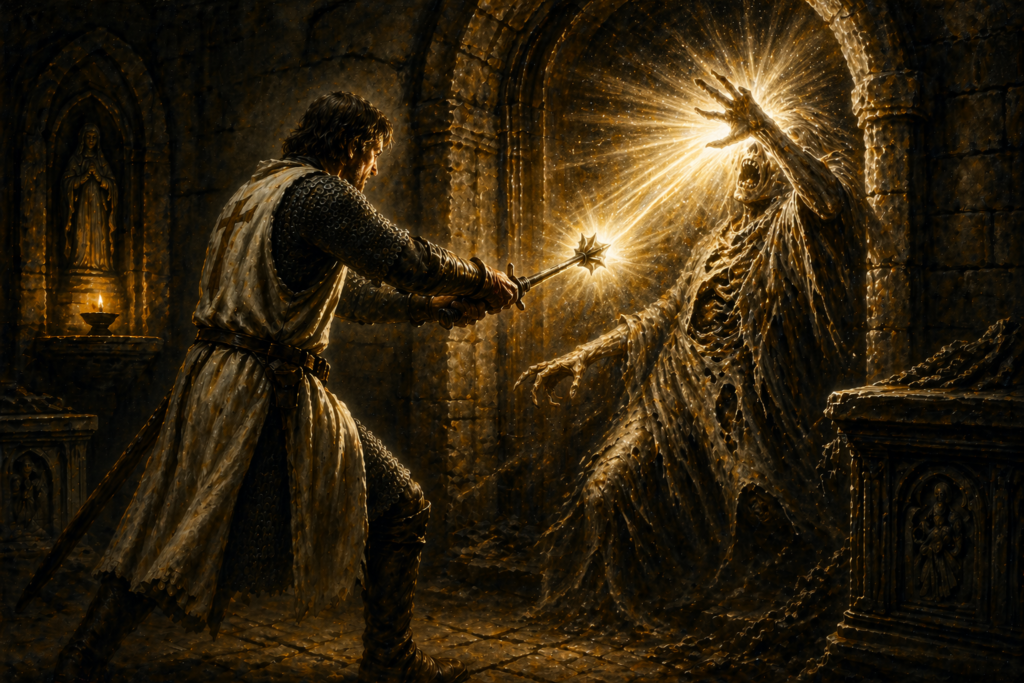
A blessed weapon shines with quiet radiance until one righteous blow erupts into a flash of punishing light.
Overview
Blinding Strike is a low-level divine weapon spell that turns a blade, mace, spear, or other weapon into a bearer of sacred light. At first, the magic is restrained: the weapon glows softly, casting steady illumination like a torch and marking the wielder as one who carries judgment into darkness.
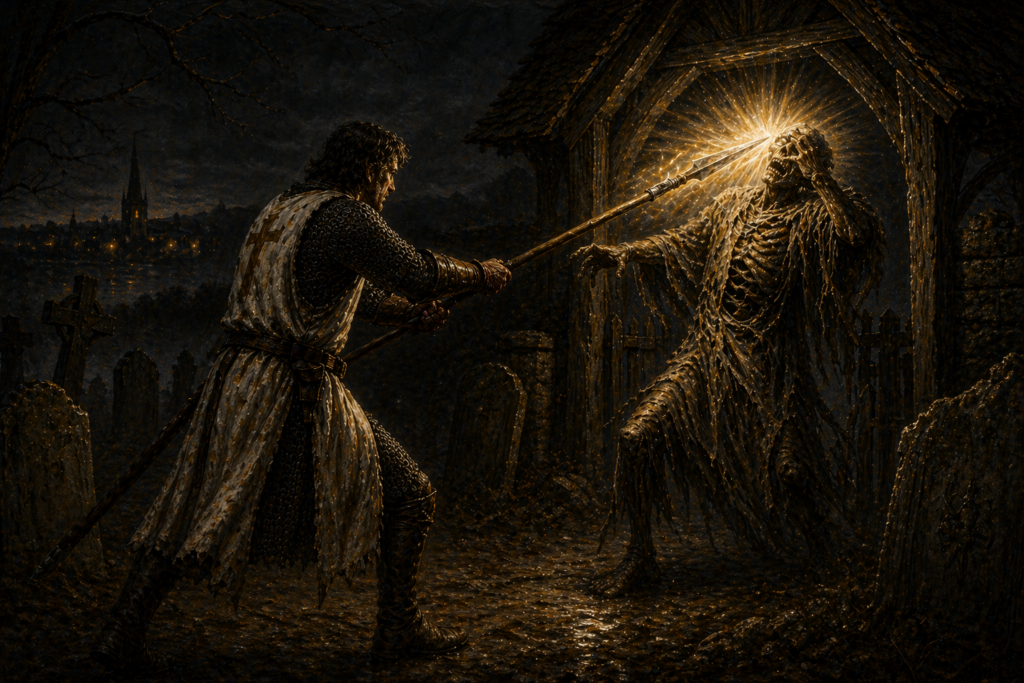
The spell’s true power is released only when the weapon strikes. On impact, the stored radiance bursts outward in a sharp white-gold flash, overwhelming the target’s sight and leaving it briefly blind. Against undead, fiends, and creatures steeped in supernatural evil, the light does more than dazzle. It burns.
For paladins, temple guards, crusading clerics, vampire hunters, and shrine-knights, the Blinding Strike spell is a practical battle-prayer. It is not a grand miracle. It is the first light before the charge, the warning gleam in a crypt passage, and the sudden flash that turns a monster’s attack into a stumble.
Effect
You touch one weapon and imbue it with sacred light. Until the spell is discharged, the weapon sheds bright light in a 20-foot radius and dim light beyond that.
The next time the weapon hits a creature before the spell ends, the Blinding Strike spell discharges. The target must resist the flash of divine light or be blinded. Against undead and other creatures especially vulnerable to sacred radiance, the strike may also deal additional holy damage.
Blinding Strike 5.5e / 2024
Blinding Strike Pathfinder 1e
Blinding Strike 3.5
Blinding Strike spell
1st-Level Evocation
Casting Time: 1 Bonus Action
Range: Touch
Components: V, S, M or Divine Focus
Duration: Concentration, up to 1 minute
Available To: Cleric, Paladin
Alternative Spell Name: Radiant Rebuke
You touch one weapon. Until the spell ends, the weapon sheds Bright Light in a 20-foot radius and Dim Light for an additional 20 feet.
The next time a creature is hit by an attack made with the weapon before the spell ends, the spell discharges. The target must make a Constitution saving throw.
On a failed save, the target has the Blinded condition until the end of its next turn.
If the target is an Undead, Fiend, or another creature the DM rules is directly empowered by supernatural evil, it also takes 1d8 Radiant damage on a failed save.
On a successful save, the target is not blinded and takes no additional Radiant damage from this spell.
After the spell discharges, the weapon’s magical light ends.
At Higher Levels
When you cast Blinding Strike using a spell slot of 2nd level or higher, the additional Radiant damage increases by 1d8 for each slot level above 1st.
5.5e Balance Notes
This version keeps Blinding Strike safely within 1st-level spell power. The blindness lasts only until the end of the target’s next turn, and the spell requires both a weapon hit and a failed Constitution save before its strongest effect applies.
The extra Radiant damage is limited to undead, fiends, and similarly corrupt supernatural creatures, so the spell remains a thematic anti-evil weapon blessing rather than a general-purpose smite replacement.
Blinding Strike spell
School: Evocation [Good, Light]
Level: Cleric 1, Paladin 1
Casting Time: 1 standard action
Components: V, DF
Range: Touch
Target: One weapon touched
Duration: 1 minute/level or until discharged
Saving Throw: Fortitude negates
Spell Resistance: Yes
You touch one weapon and fill it with sacred light. The weapon sheds light as a torch, illuminating a 20-foot radius.
The next time the weapon successfully strikes a creature before the spell ends, the spell discharges. The struck creature must succeed at a Fortitude save or be blinded for 1 round.
If the target is undead or has the evil subtype, it also takes 1d8 points of sacred damage per three caster levels on a failed save, to a maximum of 3d8 sacred damage at caster level 9th.
A successful save negates the blindness and the additional sacred damage.
Once the spell is discharged, the weapon no longer sheds light from Blinding Strike.
Pathfinder Balance Notes
The original form of the Blinding Strike spell blinded a target for 1 round per caster level, which is too severe for a 1st-level spell attached to a weapon attack. Reducing the blindness to 1 round keeps the spell useful without allowing it to dominate low-level encounters.
The sacred damage preserves the spell’s role as an anti-undead and anti-evil blessing, while the caster-level cap prevents it from scaling beyond its intended place.
Blinding Strike spell
The caster is able to touch a weapon and imbue it with the power of light, making it shine softly, providing illumination similar to that of a torch for 20 feet around the weapon.
The Quintessential Paladin
Author Alejandro Melchor
Series Quintessential Series
Publisher Mongoose Publishing
Publish date 2002
Evocation (Light, Good)
Level: Cleric 1, Paladin 1
Components: V, DF
Casting Time: 1 action
Range: Touch
Target: One weapon
Duration: Discharge
Saving Throw:Fortitude Negates
Spell Resistance: Yes
On a successful hit in combat, the opponent must make a Fortitude save or be blinded for 1 round per caster level. Blinded creatures have a 50% chance to miss in combat, lose their positive Dexterity bonus to AC (if any), and enemies have a +2 bonus on attack rolls against them.
The blinded creature moves at half speed and suffers a -4 penalty on most Strength and Dexterity-based skills. It cannot make Spot skill checks or perform any other activity (such as reading) that requires vision. If the weapon strikes an undead or a creature with the evil descriptor, the flash of holy light also deals +1d8 sacred points of damage per three caster levels on a failed save.
Why This Spell Is Dangerous in the World
The Blinding Strike spell is dangerous because it makes the first successful blow matter. A temple guard with a blessed spear can halt a ghoul at the gate. A paladin can strike a fiend-touched knight and turn a deadly counterattack into a blind swing. A cleric can place a little light on a common weapon and make it briefly fit for sacred work.
The spell is also dangerous because it announces itself. A weapon shining with divine light is not subtle. It warns enemies that judgment is near, draws the eye in darkness, and marks the wielder as someone carrying the authority of a shrine, temple, oath, or god.
Against undead and fiends, the spell carries a harsher meaning. Its radiance does not merely illuminate them. It rejects them.
Best Uses
Use the Blinding Strike spell before the first attack in a dangerous melee. It is strongest when cast just before opening a crypt door, confronting a possessed knight, entering a lightless tomb, or facing undead that rely on overwhelming speed and savagery.
The spell is also useful when a party needs light but does not want to occupy a hand with a torch or lantern. A glowing weapon gives the front line illumination while keeping the fighter, paladin, or cleric ready for combat.
Do not waste the Blinding Strike spell on weak enemies unless the light itself matters. Its best target is a creature whose next turn would be dangerous if it could see clearly.
Tactics
Cast the Blinding Strike spell on the weapon most likely to hit an important enemy. A paladin’s sword, a cleric’s mace, a knight’s spear, or a temple guard’s polearm all make strong choices.
Use the spell early against undead and fiends. The blindness can blunt their opening attack, while the radiant or sacred damage reinforces the spell’s role as a holy answer to corrupt creatures.
Because the spell discharges on a hit, it rewards timing. Cast it when combat is imminent, not when the party may spend several minutes searching, arguing, or travelling.
DM Notes
The Blinding Strike spell should feel like a small miracle with a sharp battlefield purpose. The weapon should glow before the strike, giving the scene a visible sign of sacred preparation. The flash on impact should be sudden, bright, and brief.
For the 5.5e version, avoid extending the blindness duration. A 1st-level spell that blinds for several rounds can become too punishing, especially when combined with advantage, smites, sneak attack, or concentrated party attacks.
For the Pathfinder 1e version, the fixed 1-round blindness is the key balancing change. It preserves the spell’s identity without making it stronger than higher-level control magic.
Good Combinations
- Bless: Improves the chance that the enchanted weapon lands the attack that discharges the Blinding Strike spell.
- Divine Favor: Adds steady divine combat pressure while the Blinding Strike spell provides the decisive opening flash.
- Shield of Faith: Helps the bearer survive long enough to deliver the blessed blow.
- Protection from Evil and Good: Pairs well when the party expects undead, fiends, possessed creatures, or other supernatural enemies.
- Guiding Bolt: Reinforces the divine-light theme and can set up an ally to land the enchanted weapon attack.
Using Blinding Strike in Your Game
Use the Blinding Strike spell when low-level divine magic should feel practical, martial, and sacred. It is the kind of spell a paladin murmurs before entering a tomb, a cleric places on a guard’s spear before a night watch, or a shrine-knight carries into a crypt where torches burn blue and the dead do not rest.
The spell also helps define divine institutions in the world. Temples that train militant orders may teach Blinding Strike as one of the first true battle-prayers. City watches sponsored by sun cults may bless polearms during nights of undead unrest. Vampire hunters may treat it as essential preparation before entering a sealed manor, plague vault, or barrow.
Spellcasting Culture and Worldbuilding Hooks
A temple order teaches the Blinding Strike spell as “the first light of judgment,” given only to initiates who have sworn not to use sacred force for vanity, cruelty, or spectacle.
A city watch carries blessed spears during a winter when the dead begin to rise from pauper graves.
A corrupt knight still bears a weapon enchanted with Blinding Strike spell, but the light flickers uneasily along the blade, as if the blessing no longer trusts its bearer.
An undead noble keeps blessed weapons locked in a reliquary, unable to bear their glow yet unwilling to leave them in the hands of the living.
A paladin’s oath ceremony ends in darkness, with the initiate required to cast Blinding Strike spell and light the chapel with a single blessed weapon.
Keep this reference growing
If this page helped with your reading or game, you can support its upkeep or explore the curated books.
Explore the Bookshop — epics, classics and stories behind imagined worlds.