 Buy me a coffee
Earldom of Desmond: Glory and Ruin on the Munster Frontier
In the storm-lashed southwest of Ireland, the Earldom of Desmond endures as a half-tamed Anglo-Norman war realm—where Gaelic kingship, rebel earls, and restless spirits entwine, and every oath is as fragile as the next blade drawn.
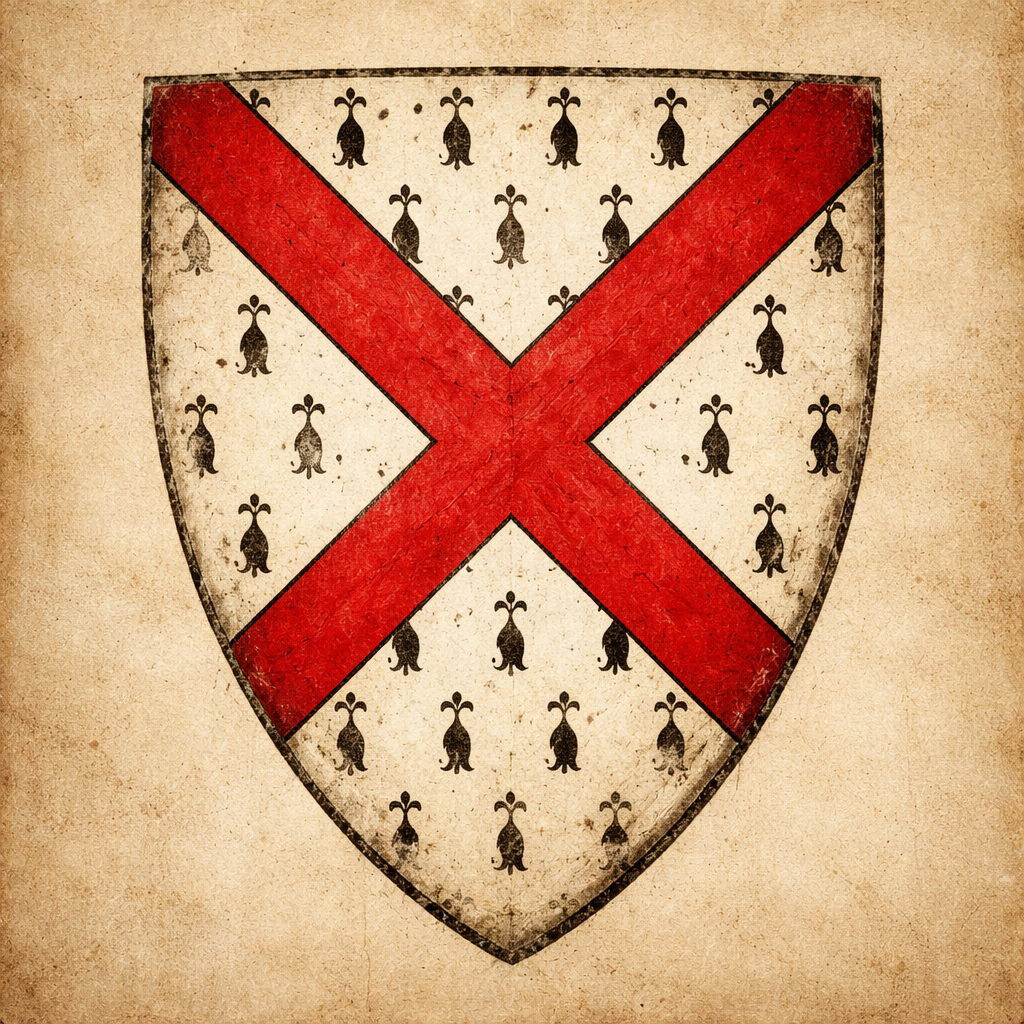
A Gaelicised Anglo-Norman lordship on the edge of royal control, Desmond blends feudal authority with clan loyalty—less a stable earldom than a shifting warlord dominion.
- Location:
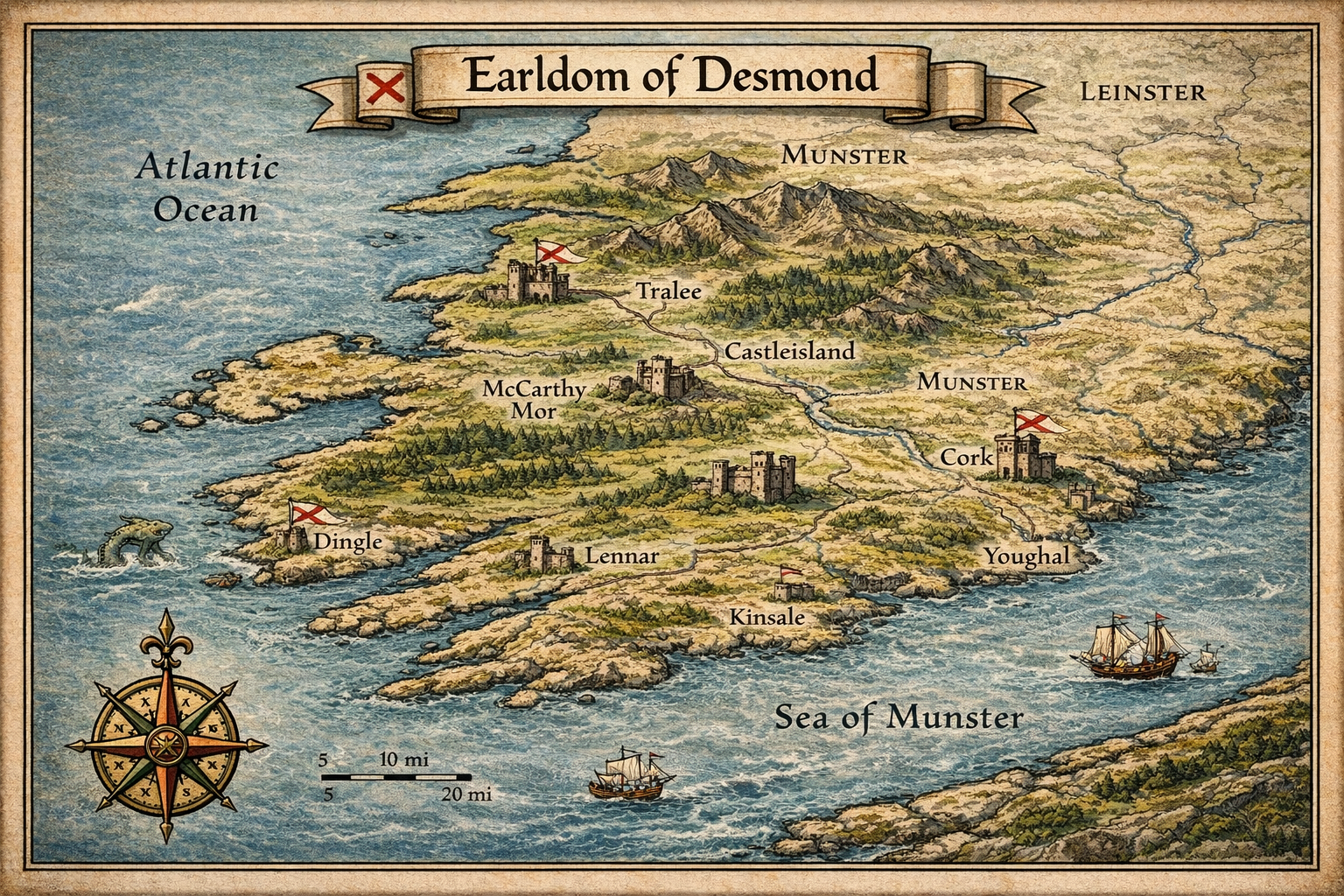
Southwestern Ireland, in the province of Munster, encompassing much of modern County Kerry and parts of County Cork. The region is defined by rugged peninsulas, dense forests, river valleys, and a storm-lashed Atlantic coastline. - Capital City:
No fixed capital; authority moves between major strongholds. - Other Settlements:
Youghal, Tralee, and numerous smaller fortified settlements positioned along river crossings and coastal inlets. - Other Names (historical):
Desmond (from Deas-Mhumhain, “South Munster”), Geraldine Desmond, Iarmuman. - Description:
A land of harsh beauty and strategic depth. Stone castles rise from hills and headlands, while scattered settlements cluster in defensible terrain. Fertile valleys contrast with wild uplands and exposed coasts, giving the region both wealth and volatility. - Real-World Inspirations:
Late medieval Munster under Anglo-Norman lordship, shaped heavily by Gaelic Irish culture and decentralized power structures.
Society & Culture
- Culture & Daily Life:
A hybrid society where Norman-descended elites rule, but Irish customs dominate. Feasting, bardic tradition, fosterage, and kinship bonds structure daily life. - Class Structure:
Geraldine nobility → Vassal lords and knights → Free clansfolk → Laborers and dependents. - Social Tensions:
Persistent friction between nominal English authority and local autonomy, alongside rivalry between Norman houses and Gaelic clans. - Moral & Philosophical Outlook:
Pragmatic and loyalty-driven. Honor is tied to kin and lord rather than distant authority; survival and reputation take precedence over formal law.
Belief System
- Religious & Spiritual Landscape:
A layered system combining inherited Norman religious structures with enduring Gaelic spiritual traditions. - Deities, Spirits, and Practices:
Veneration of land spirits, ancestral presences, sacred groves, and ancient sites. Coastal waters and deep forests are regarded as inhabited by powerful unseen forces. - Role in Governance:
Legitimacy is reinforced not only through lineage and force, but through perceived harmony with the land and its powers.
State Structure
- Government:
A feudal earldom in name, functioning as a semi-independent lordship. - Power Hierarchy:
Earl of Desmond → Major vassal lords → Clan chiefs → Local leaders. - Military:
A combination of feudal levies and professional retainers. Warfare favors mobility, with lightly armed troops and cavalry supported by fortified castles. Campaigning is seasonal and dependent on local supply.
Economy & Infrastructure
- Trade in cattle, hides, fish, and coastal goods
- Maritime trade along the Atlantic and Irish Sea
- Limited road infrastructure; overland travel is slow and unreliable
- Wealth concentrated among noble families and key strongholds
Technology Level
Late medieval: fortified stone castles, steel weaponry, mounted warfare, and limited siege capabilities.
Historical Pressure
- Increasing attempts by the English Crown to assert tighter control over Ireland
- Rivalries with neighboring lordships and Gaelic clans
- Internal instability driven by personal loyalties rather than centralized authority
Snapshot
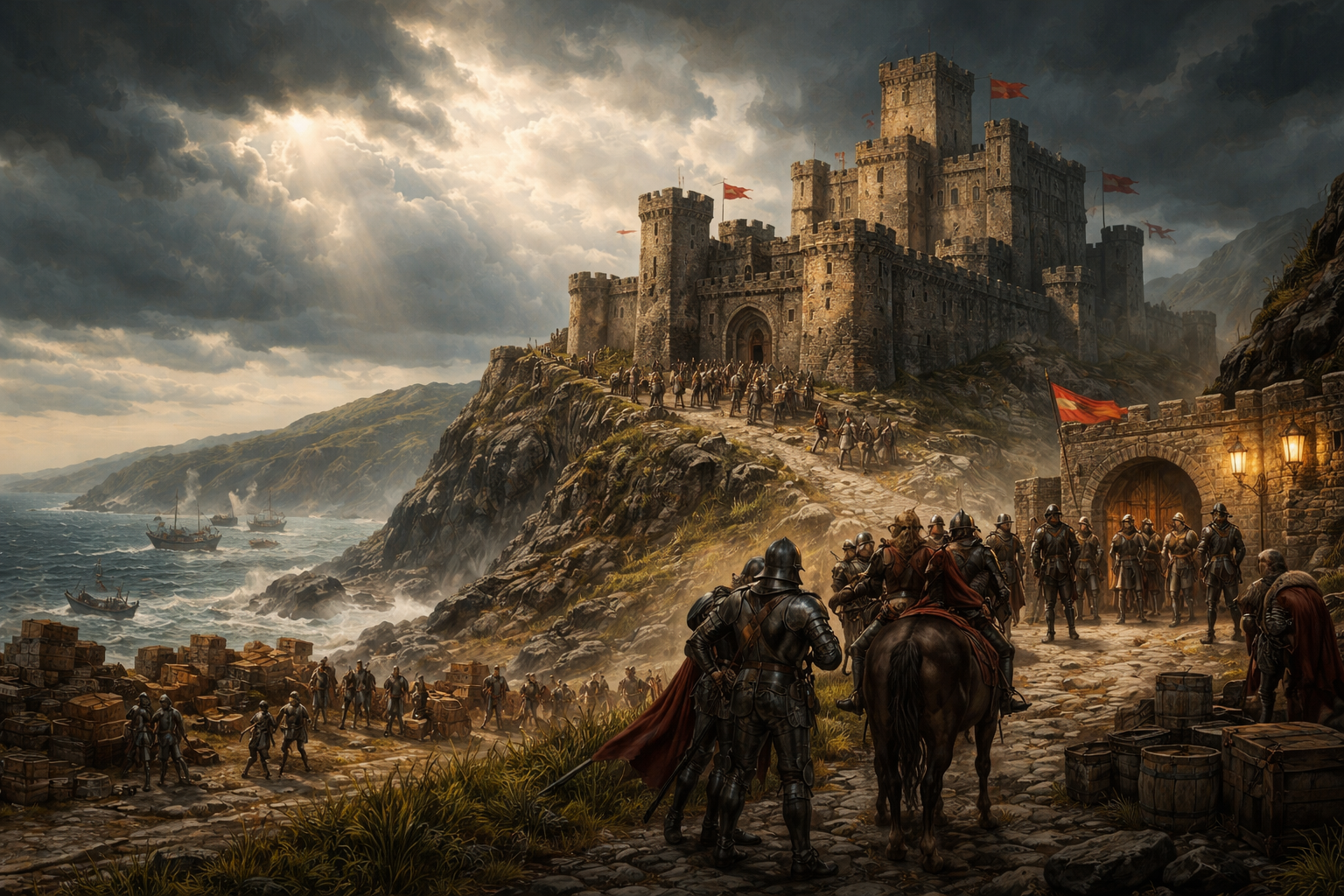
The Earldom of Desmond appears less as a unified state and more as a network of fortified domains held together by allegiance and reputation. Castles dominate the landscape, yet authority is fluid, negotiated through kinship, force, and personal loyalty rather than fixed institutions.
The population lives within a blended cultural framework. Norman lineage defines the ruling elite, but Irish language, law, and tradition shape everyday life. Feasting halls, oral histories, and bardic praise carry political weight equal to formal authority.
The land itself is treated as active and watchful. Forests, coastlines, and ancient sites are approached with caution and respect, their unseen inhabitants acknowledged as part of daily reality.
Desmond is powerful but inherently unstable—a lordship sustained by force, reputation, and a delicate balance between crown ambition, clan loyalty, and the enduring presence of the land itself.
Core Conflict Engine
Desmond is defined by the tension between increasing external control and fiercely independent local rule. Authority is unstable, loyalties shift quickly, and power must be constantly asserted through force, negotiation, or reputation.
Power Triangle
The Geraldine Earldom
- Goal: Maintain dominance over Munster while resisting outside control
- Resource: Castle network, noble alliances, military retainers
- Weakness: Internal rivalries and reliance on personal loyalty
Crown Agents and Loyalist Interests
- Goal: Extend centralized authority into Desmond
- Resource: Legitimacy, external backing, political influence
- Weakness: Limited presence and dependence on local cooperation
Gaelic Clans of Munster
- Goal: Preserve autonomy and expand influence
- Resource: Local knowledge, kinship networks, irregular warfare
- Weakness: Fragmentation and inter-clan conflict
Player Activity Loop
Adventurers in Desmond are most often engaged in:
- Escorting caravans and envoys through contested territory
- Acting as intermediaries between rival factions
- Raiding or defending strongholds
- Hunting dangerous beings in forests and coastal regions
- Recovering relics tied to noble lineage or ancient sites
Current State
- Frequent skirmishes between rival lords and clans
- Weak enforcement of central authority
- Alliances formed and broken as circumstances change
- Increasing external pressure testing regional stability
Control Map
- Secure: Major castles and lands held directly by the ruling earls
- Contested: Trade routes, river crossings, and border territories
- Dangerous: Forest interiors, remote peninsulas, ruins, and unclaimed land
World Interaction
- Key Locations:
- Coastal ports handling limited but valuable trade
- Isolated castles serving as regional centers of power
- Forest routes used by raiders and scouts
- Sacred sites tied to older traditions
- Influence and Reach:
Strong within Munster, inconsistent beyond it - Alliances and Enemies:
Alliances are pragmatic and temporary; betrayal is common
Environment and Travel
- Dense forests and uneven terrain slow movement
- Travel between major settlements may take several days
- Roads are poorly maintained and often unsafe
- Ambushes, harsh weather, and difficult terrain are constant threats
People and Creatures
- Mixed population of Norman-descended nobles and Gaelic communities
- Warriors, herders, traders, and retainers dominate society
- Forests, coasts, and ruins are inhabited by dangerous and territorial beings
Culture in Motion
- Seasonal gatherings, feasts, and displays of martial strength
- Legal customs vary between regions and lords
- Hospitality is expected, but trust is limited
Encounter Tables
d12 Low Level (1–5)
d12 Mid Level (6–10)
d12 High Level (11+)
d12 Low Level (1–5)
- A caravan is halted by a destroyed bridge; signs suggest deliberate sabotage
- A clan demands tribute for passage, while a rival group claims the same road
- A hunting party vanishes near the forest edge; tracks end abruptly
- A messenger carries sealed orders but is being pursued
- Livestock disappear nightly from a village without trace
- A minor noble seeks protection during tense negotiations
- Survivors hide in a burned farmstead, reluctant to speak of what they saw
- A traveling bard spreads rumors that incite unrest
- A sacred grove is disturbed, provoking local hostility
- A patrol attempts to detain the party as suspected raiders
- A trader offers rare goods at suspiciously low prices
- A ruined watchtower emits strange lights at dusk
d12 Mid Level (6–10)
- A fortified manor is besieged by a rival faction
- A political marriage is threatened by assassination attempts
- Raiders disrupt supply lines in a coordinated campaign
- A coastal settlement reports sightings of something emerging from the sea
- A noble hires the party to recover a stolen heirloom tied to legitimacy
- A forest region becomes impassable due to hostile forces
- A truce meeting collapses into violence
- A hidden stronghold is uncovered, occupied by a rival claimant
- A sacred site begins to affect those who approach it
- A shipment of weapons disappears en route to a major lord
- A trusted retainer defects with sensitive knowledge
- A border conflict escalates into open warfare
d12 High Level (11+)
- A major rebellion fractures the region into open war
- A powerful entity claims dominion over part of the wilderness
- A coalition of factions attempts to overthrow the ruling power
- A strategic castle falls, shifting regional control
- A relic capable of legitimizing rule resurfaces
- A supernatural force begins influencing political decisions
- A coastal invasion tests the region’s defenses
- Internal betrayal threatens to collapse the ruling structure
- A sacred site awakens, altering the surrounding land
- A rival lord asserts authority with external backing
- Widespread unrest disrupts settlements and trade
- A decisive confrontation will determine control of the earldom
Key Settlement — Youghal
- Role: Coastal trade hub and strategic port
- Size and Population: Small town with several thousand inhabitants
- Ruler: A Geraldine-appointed lord or governor
- Notable Features:
- Fortified harbor
- Active market district tied to maritime trade
- Defensive walls overlooking the coast
- Current Issues:
- Tension between merchants and military authority
- Smuggling and covert trade activity
- Exposure to coastal threats
- Quest Hooks:
- Intercept illegal shipments
- Investigate disappearances along the docks
- Secure passage for valuable cargo
- Threats:
- Maritime raiders
- Political intrigue
- Dangerous forces tied to the sea
- Unique Element:
A port where trade, politics, and danger converge, with every arrival closely watched
GM Quick Summary
- A semi-independent lordship in southwest Ireland
- Core conflict: local autonomy versus external control
- Players operate as agents, mercenaries, or intermediaries
- Persistent danger from political instability, terrain, and unseen forces
- Strong focus on intrigue, small-scale warfare, and exploration