
 Buy me a coffee
A-senee-ki-wakw, Stone Giant — Wabanaki Mountain Remnant
The mountain moved once, and the world still remembers the wound.
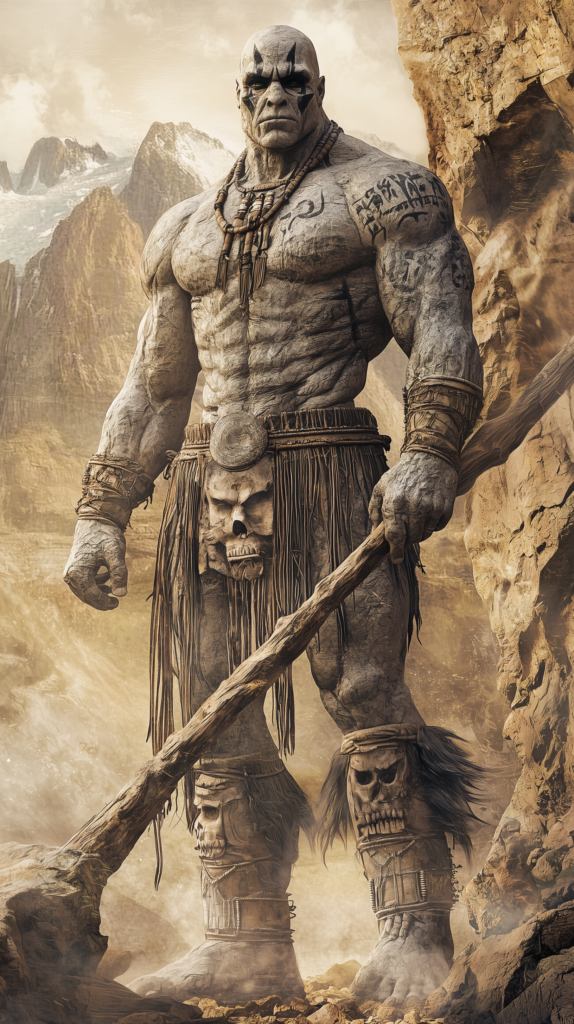
- Huge Giant, Neutral
- Also Known As: Stone Giant, Asinikiwakw, First Stone People, Ridge-Walker
- Primary Region: Northeastern woodlands, old mountain country, glacial valleys, sacred ridgelines
- Encounter Role: Ancient territorial giant, landscape hazard, mythic remnant, tragic giant of the first world
The A-senee-ki-wakw are old stone-people from the first weight of the world. They are not ordinary stone giants, and they should not be treated as a generic mountain race with a borrowed mythic name. They are remnants of an earlier making: vast, heavy, half-landscape beings whose bodies belong to a rougher and younger earth.
A living A-senee-ki-wakw is a regional event. It does not need to conquer a village to endanger it. One careless step can break a road, redirect a stream, crush a winter storehouse, collapse a bridge, or flatten a sacred cairn. Its danger comes from ancient scale before malice.
Most of the first stone people were destroyed, buried, or returned to the earth. Some became ridges. Some became boulder fields. Some sleep under old hills where their shoulders still rise beneath moss and pine roots. A few still wake.
In the campaign, an A-senee-ki-wakw is not an evil raider by default. It may be bitter, ashamed, protective, confused, hungry, wounded, territorial, or ancient beyond ordinary speech. The central question is not simply “can the party kill the giant?” It is whether this being is a monster, an ancestor, a sacred hazard, a wounded first people, or an old mistake the world never fully buried.
Appearance
An A-senee-ki-wakw looks like a walking section of mountain forced into a roughly human shape. Its skin is grey, brown, or blue-black stone, veined with quartz, mica, iron-red seams, old moss, lichen, and frost stains. Its face is broad and unfinished, with dark hollows for eyes and a mouth like a split in cliff-face.
Its shoulders can carry small trees. Its fingers look like standing stones worn by rain. When it moves, its joints grind rather than bend. Older individuals may have bird nests in shoulder cracks, shallow pools of rainwater in the hollows of their arms, and roots growing along their backs.
A sleeping A-senee-ki-wakw can be mistaken for a boulder field, ridge-end, cave wall, or old landslide. Hunters and shepherds know to distrust stones that breathe mist at dawn.
Habitat
A-senee-ki-wakw remain where old stone comes close to the surface. They are found in glacial valleys, high ridges, exposed granite shelves, cave mouths above river country, ancient lake shores, sacred mountain passes, and places where old roads crack or vanish under rockfall.
They are strongest where stone remembers them. A living one may sleep for decades or centuries, waking when quarrying cuts too deep, a sacred hill is levelled, a road is driven through its resting back, a burial ridge is disturbed, or smaller giants attempt to claim authority over its land.
They do not favour cities. They rarely enter crowded country unless displaced, driven mad, wounded, or summoned by old ritual. When one appears near a settlement, the settlement is usually the newcomer.
Ecology
A-senee-ki-wakw are not a healthy expanding species. They are remnants. A band of them is possible, but it should feel like the survival of an age, not a normal giant village.
They eat little. Some grind mineral-rich stone between their teeth. Some chew roots, shrubs, and whole trees when awake for long periods. Others draw strength from cold rain, deep earth, exposed cliff, and the slow pressure of buried stone.
Their presence alters the land. Trees grow bent around their sleeping bodies. Springs change course. Animals avoid certain slopes. Old trails become unreliable. Stone tools and cairns crack in their dreams.
A dead A-senee-ki-wakw does not rot. It settles. Its body becomes broken stone, strange ore, standing stones, a new ridge, or a mound that local people avoid naming too loudly.
Behaviour
An A-senee-ki-wakw is slow to anger, slow to answer, and terrible once it moves. It warns intruders through stone before it attacks: falling pebbles, cracked cairns, low tremors, sudden silence among birds, and boulders rolled across paths.
It does not understand urgency in the human way. A village may beg it to move away from a valley, and it may answer three days later. A lord may demand tribute, and the giant may spend a year deciding whether such a small voice matters.
It remembers Gluskab. It remembers being made too large. It remembers animals crushed beneath the first heavy feet. Some giants carry shame from that memory and withdraw from all living things. Some believe the smaller peoples inherited a world stolen from them. Some become careful guardians, staying still for generations rather than risk harming the land again. Some wake confused, starving, and dangerous.
The most dangerous A-senee-ki-wakw is not always the angriest one. Sometimes it is the one trying to be careful in a world too fragile to hold it.
Signs of an A-senee-ki-wakw
A “hill” changes position between seasons.
Boulders appear in a perfect line across a road.
Streams are diverted by one massive footprint.
Goats, deer, and dogs refuse a certain slope.
Stone tools and cairns are found crushed flat without theft or malice.
Old people insist a ridge has a face only visible at sunrise.
Quarry workers hear grinding inside the cliff before collapse.
A landslide leaves handprints the size of shields.
Mechanics Tabs
The rules below are mechanics compatible for different game editions.
A-senee-ki-wakw, Stone Giant
Elder Stone-Speaker
A-senee-ki-wakw Ridge-Breaker
A-senee-ki-wakw, Stone Giant
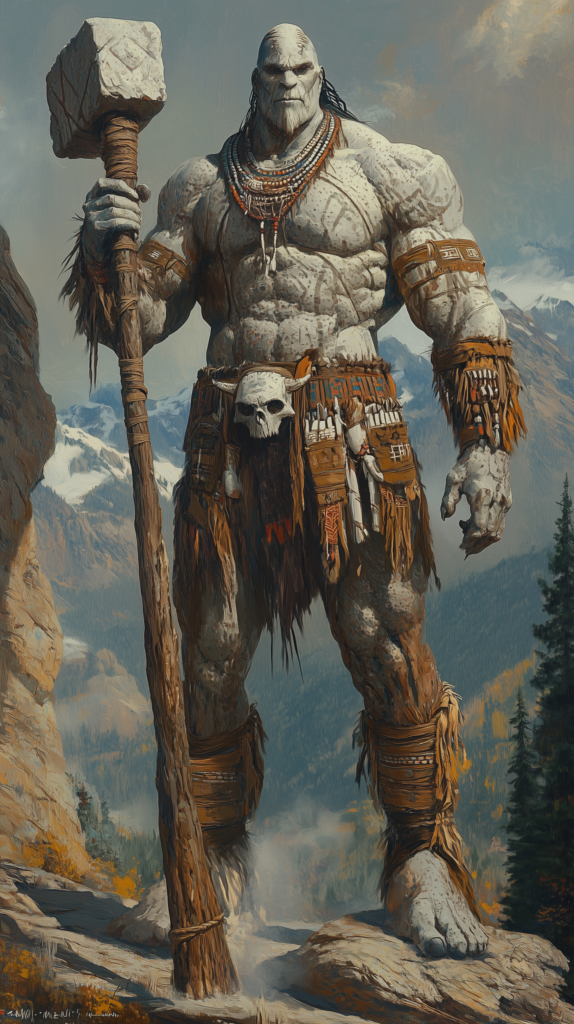
5.5e-Compatible Rules
Huge Giant, Neutral
Armor Class 17
Initiative +2
Hit Points 152
Speed 40 ft., climb 20 ft.
Proficiency Bonus +3
| STR | DEX | CON | INT | WIS | CHA |
|---|---|---|---|---|---|
| 25 (+7) | 14 (+2) | 21 (+5) | 10 (+0) | 14 (+2) | 9 (-1) |
Saving Throws Dex +5, Con +8, Wis +5
Skills Athletics +10, Perception +5, Stealth +5
Damage Resistances bludgeoning damage from natural cave-ins, rockfalls, and collapsing stone
Condition Immunities petrified
Senses darkvision 60 ft., tremorsense 30 ft., passive Perception 15
Languages Giant; Abenaki or another local Wabanaki language when encountered in its homeland; understands old stone-signs
Challenge 8
Traits
Mountain Stillness. The A-senee-ki-wakw has advantage on Dexterity (Stealth) checks made to hide in rocky terrain, boulder fields, cliffs, caves, ruins, or mountains. If it remains motionless for at least 1 minute in such terrain, it is indistinguishable from natural stone unless a creature succeeds on a DC 18 Wisdom (Perception) or Intelligence (Investigation) check.
Ancient Weight. The A-senee-ki-wakw ignores difficult terrain made of rubble, scree, broken stone, shallow mud, natural slopes, or cracked paving.
Crushing Footfalls. Normal earth, bedrock, and solid stone roads do not break under the A-senee-ki-wakw. Loose ground and fragile surfaces do. Once on each of its turns, when the A-senee-ki-wakw moves at least 10 feet across rubble, loose stone, weak flooring, fragile bridgework, mine galleries, roof structures, unstable ruins, or similar terrain, one 10-foot square it leaves becomes broken ground. Broken ground is difficult terrain for creatures other than the A-senee-ki-wakw.
Too Heavy for the Young World. Once on each of its turns, if the A-senee-ki-wakw starts or ends its movement on a fragile structure, that structure partially collapses. Creatures other than the A-senee-ki-wakw on or directly beneath the collapsing area must make a DC 16 Dexterity saving throw. On a failed save, a creature takes 10 (3d6) bludgeoning damage and falls prone. On a successful save, it takes half damage and does not fall prone. A fragile structure exposed to this effect twice fully collapses. If the structure spans open air, the A-senee-ki-wakw falls when the structure fully collapses.
Rock Catching. If a rock or similar object is hurled at the A-senee-ki-wakw, it can use its reaction to make a DC 10 Dexterity saving throw. On a success, it catches the missile and takes no bludgeoning damage from it.
Actions
Multiattack. The A-senee-ki-wakw makes two Greatclub attacks.
Greatclub. Melee Weapon Attack: +10 to hit, reach 15 ft., one target.
Hit: 20 (3d8 + 7) bludgeoning damage.
Rock. Ranged Weapon Attack: +10 to hit, range 60/240 ft., one target.
Hit: 29 (4d10 + 7) bludgeoning damage. If the target is a Large or smaller creature, it must succeed on a DC 16 Strength saving throw or fall prone.
Earth-Shaking Step — Recharge 5–6. The A-senee-ki-wakw stamps or shifts its full weight into the ground. Each creature on the ground within 20 feet must make a DC 16 Strength saving throw. On a failed save, a creature takes 18 (4d8) bludgeoning damage and falls prone. On a successful save, it takes half damage and does not fall prone. The affected area becomes broken ground until cleared.
Settle Into Stone — 1/Day. The A-senee-ki-wakw presses itself partly into the earth until the start of its next turn. During this time, it has resistance to bludgeoning, piercing, and slashing damage, cannot move, and has advantage on Strength and Constitution saving throws. When this effect ends, each creature within 10 feet must make a DC 16 Dexterity saving throw, taking 9 (2d8) bludgeoning damage on a failed save, or half as much damage on a successful one.
Reactions
Catch and Return. When the A-senee-ki-wakw successfully catches a hurled rock or similar object with Rock Catching, it can immediately throw the caught object at a creature it can see within 60 feet. It makes this attack with disadvantage unless the target is Huge or larger.
A-senee-ki-wakw Stone Giant Pathfinder 1e / 3.5e-Compatible Rules
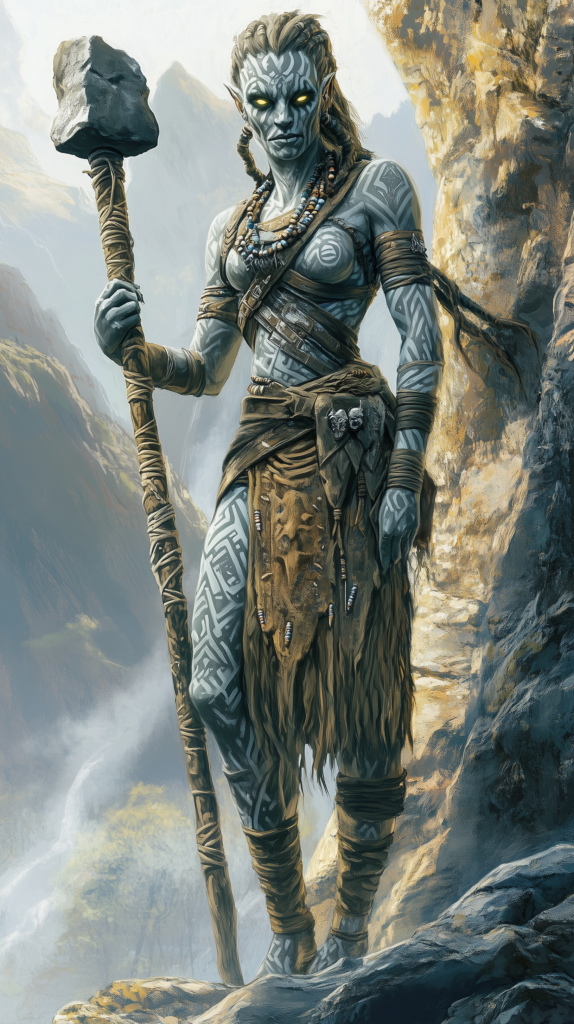
Large Giant (Earth)
Alignment Usually Neutral
CR 8
Hit Dice 14d8+70; hp 133
Initiative +2
Speed 40 ft.
Armor Class 25 (-1 size, +2 Dex, +11 natural, +3 hide), touch 11, flat-footed 23
Base Attack/Grapple +10/+23
Attack Stone greatclub +18 melee (2d8+13) or rock +11 ranged (2d8+13)
Full Attack Stone greatclub +18/+13 melee (2d8+13) or 2 slams +18 melee (1d6+9) or rock +11 ranged (2d8+13)
Space/Reach 10 ft./10 ft.
Special Attacks Earth-shaking step, rock throwing
Special Qualities Darkvision 60 ft., low-light vision, rock catching, stone camouflage, crushing footfalls, tremorsense 30 ft.
Saves Fort +14, Ref +6, Will +8
| STR | DEX | CON | INT | WIS | CHA |
| 28 (+9) | 15 (+2) | 20 (+5) | 10 (+0) | 14 (+2) | 9 (-1) |
Skills Climb +13, Hide +7*, Listen +12, Spot +12, Survival +8
Feats Combat Reflexes, Iron Will, Point Blank Shot, Power Attack, Precise Shot
Environment Cold and temperate mountains, old-growth rocky uplands, glacial valleys
Organization Solitary, pair, remnant band (3–6), or elder-led band (3–8 plus 1 elder)
Treasure Standard, usually stonework, old tools, carved markers, mineral wealth, and offerings rather than coin
Advancement By character class or elder template
Level Adjustment —
Special Abilities
Earth-Shaking Step (Ex). Once every 1d4 rounds, an A-senee-ki-wakw may stamp or shift its full weight into the ground as a standard action. Creatures standing on the ground within 20 feet must succeed on a DC 22 Reflex save or take 4d6 bludgeoning damage and fall prone. A successful save halves the damage and prevents the prone condition. The save DC is Constitution-based. The affected area becomes difficult terrain until cleared.
Rock Throwing (Ex). The range increment is 180 feet for an A-senee-ki-wakw’s thrown rocks. It uses both hands when throwing a rock.
Rock Catching (Ex). An A-senee-ki-wakw gains a +4 racial bonus on Reflex saves made to catch rocks or similar hurled objects.
Stone Camouflage (Ex). An A-senee-ki-wakw gains a +8 racial bonus on Hide checks in rocky terrain, boulder fields, caves, ruins, and mountains. This bonus is included in the skill line above when applicable.
Crushing Footfalls (Ex). Normal earth, bedrock, and solid stone roads do not break under the A-senee-ki-wakw. Once per round, when it moves at least 10 feet across rubble, loose stone, weak flooring, fragile bridgework, mine galleries, roof structures, unstable ruins, or similar terrain, one 10-foot square it leaves becomes difficult terrain.
Too Heavy for the Young World (Ex). Once per round, if the A-senee-ki-wakw starts or ends its movement on a fragile structure, that structure partially collapses. Creatures other than the A-senee-ki-wakw on or directly beneath the collapse must succeed on a DC 22 Reflex save or take 3d6 bludgeoning damage and fall prone. A successful save halves the damage and prevents falling prone. A fragile structure exposed to this effect twice fully collapses. If the structure spans open air, the A-senee-ki-wakw falls when the structure fully collapses.
Tremorsense (Ex). An A-senee-ki-wakw can sense creatures in contact with the same ground or stone within 30 feet.
A-senee-ki-wakw Elder Stone-Speaker
An Elder Stone-Speaker is an A-senee-ki-wakw that has survived long enough to remember the old making of the world. It reads ridges, studies fractures, listens to water under stone, and understands where roads, bridges, mines, and cairns have wounded the land.
Its power is memory, terrain, warning, and interpretation. It is called a Stone-Speaker because it speaks for stone, not because stone speaks through it.
D&D 5.5e-Compatible Rules
A-senee-ki-wakw Elder Stone-Speaker
Huge Giant, Neutral
Armor Class 18
Initiative +2
Hit Points 189
Speed 40 ft., climb 20 ft.
Proficiency Bonus +4
| STR | DEX | CON | INT | WIS | CHA |
|---|---|---|---|---|---|
| 25 (+7) | 14 (+2) | 21 (+5) | 10 (+0) | 18 (+4) | 13 (+1) |
Saving Throws Dex +6, Con +9, Wis +8
Skills Athletics +11, Insight +8, Perception +8, Religion +4, Stealth +6
Damage Resistances bludgeoning damage from natural cave-ins, rockfalls, and collapsing stone
Condition Immunities petrified
Senses darkvision 60 ft., tremorsense 60 ft., passive Perception 18
Languages Giant; Abenaki or another local Wabanaki language when encountered in its homeland; understands old stone-signs
Challenge 10
Traits
Mountain Stillness. The Elder Stone-Speaker has advantage on Dexterity (Stealth) checks made to hide in rocky terrain, boulder fields, cliffs, caves, ruins, or mountains. If it remains motionless for at least 1 minute in such terrain, it is indistinguishable from natural stone unless a creature succeeds on a DC 18 Wisdom (Perception) or Intelligence (Investigation) check.
Ancient Weight. The Elder Stone-Speaker ignores difficult terrain made of rubble, scree, broken stone, shallow mud, natural slopes, or cracked paving.
Crushing Footfalls. Normal earth, bedrock, and solid stone roads do not break under the Elder Stone-Speaker. Loose ground and fragile surfaces do. Once on each of its turns, when the Elder Stone-Speaker moves at least 10 feet across rubble, loose stone, weak flooring, fragile bridgework, mine galleries, roof structures, unstable ruins, or similar terrain, one 10-foot square it leaves becomes broken ground. Broken ground is difficult terrain for creatures other than the Elder Stone-Speaker.
Too Heavy for the Young World. Once on each of its turns, if the Elder Stone-Speaker starts or ends its movement on a fragile structure, that structure partially collapses. Creatures other than the Elder Stone-Speaker on or directly beneath the collapsing area must make a DC 17 Dexterity saving throw. On a failed save, a creature takes 10 (3d6) bludgeoning damage and falls prone. On a successful save, it takes half damage and does not fall prone. A fragile structure exposed to this effect twice fully collapses. If the structure spans open air, the Elder Stone-Speaker falls when the structure fully collapses.
Stone-Speaker Magic. Wisdom is the Elder Stone-Speaker’s spellcasting ability; spell save DC 16.
At will: mold earth
3/day each: meld into stone, stone shape
1/day each: commune with nature, wall of stone
Stone Listener. The Elder Stone-Speaker can read pressure, fracture, echo, water movement, and old tool-marks in natural or worked stone. By spending 1 minute touching a stone surface, it learns one of the following facts if the stone can reveal it: the direction of recent digging, the passage of heavy creatures, the presence of a hollow space, the stress point in a wall or bridge, or whether the stone has been deliberately cut, quarried, buried, or ritually marked. This is interpretation, not speech or telepathy.
Memory of First Weight. The Elder Stone-Speaker has advantage on Wisdom (Insight) and Intelligence (History) checks related to mountains, old roads, sacred stone, giant remains, buried settlements, ancient land claims, and changed terrain.
Rock Catching. If a rock or similar object is hurled at the Elder Stone-Speaker, it can use its reaction to make a DC 10 Dexterity saving throw. On a success, it catches the missile and takes no bludgeoning damage from it.
Actions
Multiattack. The Elder Stone-Speaker makes two Greatclub attacks.
Greatclub. Melee Weapon Attack: +11 to hit, reach 15 ft., one target.
Hit: 20 (3d8 + 7) bludgeoning damage.
Rock. Ranged Weapon Attack: +11 to hit, range 60/240 ft., one target.
Hit: 29 (4d10 + 7) bludgeoning damage. If the target is a Large or smaller creature, it must succeed on a DC 17 Strength saving throw or fall prone.
Earth-Shaking Step — Recharge 5–6. The Elder Stone-Speaker stamps or shifts its full weight into the ground. Each creature on the ground within 20 feet must make a DC 17 Strength saving throw. On a failed save, a creature takes 18 (4d8) bludgeoning damage and falls prone. On a successful save, it takes half damage and does not fall prone. The affected area becomes broken ground until cleared.
Command the Fault — Recharge 6. The Elder Stone-Speaker strikes a known stress line in the ground, opening a fissure in a 60-foot line that is 10 feet wide. Each creature on the ground in that line must make a DC 16 Dexterity saving throw. On a failed save, a creature takes 27 (6d8) bludgeoning damage, falls prone, and is restrained by broken stone until the end of its next turn. On a successful save, it takes half damage and is not restrained. The line becomes broken ground until cleared.
Settle Into Stone — 1/Day. The Elder Stone-Speaker presses itself partly into the earth until the start of its next turn. During this time, it has resistance to bludgeoning, piercing, and slashing damage, cannot move, and has advantage on Strength and Constitution saving throws. When this effect ends, each creature within 10 feet must make a DC 17 Dexterity saving throw, taking 9 (2d8) bludgeoning damage on a failed save, or half as much damage on a successful one.
Reactions
Catch and Return. When the Elder Stone-Speaker successfully catches a hurled rock or similar object with Rock Catching, it can immediately throw the caught object at a creature it can see within 60 feet. It makes this attack with disadvantage unless the target is Huge or larger.
Pathfinder 1e / 3.5e-Compatible Rules
A-senee-ki-wakw Elder Stone-Speaker
Large Giant (Earth)
Alignment Usually Neutral
CR 10
Hit Dice 16d8+80; hp 152
Initiative +2
Speed 40 ft.
Armor Class 26 (-1 size, +2 Dex, +12 natural, +3 hide), touch 11, flat-footed 24
Base Attack/Grapple +12/+25
Attack Stone greatclub +21 melee (2d8+13) or rock +13 ranged (2d8+13)
Full Attack Stone greatclub +21/+16/+11 melee (2d8+13) or 2 slams +20 melee (1d6+9) or rock +13 ranged (2d8+13)
Space/Reach 10 ft./10 ft.
Special Attacks Command the fault, earth-shaking step, rock throwing, spell-like abilities
Special Qualities Darkvision 60 ft., low-light vision, rock catching, stone camouflage, crushing footfalls, stone listener, tremorsense 60 ft.
Saves Fort +15, Ref +7, Will +11
| STR | DEX | CON | INT | WIS | CHA |
|---|---|---|---|---|---|
| 28 (+9) | 15 (+2) | 20 (+5) | 10 (+0) | 18 (+4) | 13 (+1) |
Skills Climb +16, Hide +8*, Knowledge (nature) +8, Knowledge (religion) +8, Listen +16, Spot +16, Survival +12
Feats Combat Reflexes, Iron Will, Point Blank Shot, Power Attack, Precise Shot, Weapon Focus (greatclub)
Environment Cold and temperate mountains, old-growth rocky uplands, glacial valleys
Organization Solitary, pair, remnant band, or elder-led band
Treasure Standard, usually stonework, old tools, carved markers, mineral wealth, and offerings rather than coin
Advancement By character class
Level Adjustment —
Special Abilities
Command the Fault (Su). Once per day, the Elder Stone-Speaker may strike a known stress line in the ground, opening a fissure in a 60-foot line. Creatures in the area must succeed on a DC 22 Reflex save or take 6d6 bludgeoning damage, fall prone, and become entangled in broken stone for 1 round. A successful save halves the damage and prevents the prone and entangled conditions. The affected area becomes difficult terrain until cleared. The save DC is Wisdom-based.
Crushing Footfalls (Ex). Normal earth, bedrock, and solid stone roads do not break under the Elder Stone-Speaker. Once per round, when it moves at least 10 feet across rubble, loose stone, weak flooring, fragile bridgework, mine galleries, roof structures, unstable ruins, or similar terrain, one 10-foot square it leaves becomes difficult terrain.
Earth-Shaking Step (Ex). Once every 1d4 rounds, the Elder Stone-Speaker may stamp or shift its full weight into the ground as a standard action. Creatures standing on the ground within 20 feet must succeed on a DC 23 Reflex save or take 4d6 bludgeoning damage and fall prone. A successful save halves the damage and prevents the prone condition. The affected area becomes difficult terrain until cleared. The save DC is Constitution-based.
Rock Throwing (Ex). The range increment is 180 feet for the Elder Stone-Speaker’s thrown rocks. It uses both hands when throwing a rock.
Rock Catching (Ex). The Elder Stone-Speaker gains a +4 racial bonus on Reflex saves made to catch rocks or similar hurled objects.
Spell-Like Abilities. Caster level 10th. Save DCs are Wisdom-based.
At will: know direction
3/day: meld into stone, stone shape
1/day: commune with nature, transmute mud to rock, transmute rock to mud, wall of stone
Stone Camouflage (Ex). The Elder Stone-Speaker gains a +8 racial bonus on Hide checks in rocky terrain, boulder fields, caves, ruins, and mountains. This bonus is included in the skill line above when applicable.
Stone Listener (Ex). The Elder Stone-Speaker can read pressure, fracture, echo, water movement, and old tool-marks in natural or worked stone. By spending 1 minute touching a stone surface, it may determine one of the following facts if the stone can reveal it: the direction of recent digging, the passage of heavy creatures, the presence of a hollow space, the stress point in a wall or bridge, or whether the stone has been deliberately cut, quarried, buried, or ritually marked. This is an extraordinary ability, not speech or telepathy.
Too Heavy for the Young World (Ex). Once per round, if the Elder Stone-Speaker starts or ends its movement on a fragile structure, that structure partially collapses. Creatures other than the Elder Stone-Speaker on or directly beneath the collapse must succeed on a DC 23 Reflex save or take 3d6 bludgeoning damage and fall prone. A successful save halves the damage and prevents falling prone. A fragile structure exposed to this effect twice fully collapses. If the structure spans open air, the Elder Stone-Speaker falls when the structure fully collapses. The save DC is Constitution-based.
Tremorsense (Ex). The Elder Stone-Speaker can sense creatures in contact with the same ground or stone within 60 feet.
Elder Stone-Speaker Combat Tactics
An Elder Stone-Speaker wins by making the battlefield reveal its weaknesses.
It uses wall of stone, stone shape, and Command the Fault to close roads, split enemy groups, block siege crews, or seal mine passages. It opens with terrain control if the enemy is organised, and with thrown rocks if the enemy is scattered.
In melee, it fights defensively, using Earth-Shaking Step to knock enemies down before withdrawing into better ground. It does not waste its strength chasing fast enemies across open country. It makes the ground worse, narrows the field, and waits for smaller creatures to run out of safe places to stand.
A careful Elder Stone-Speaker warns before it kills. A bitter one leaves warnings in cracked thresholds, shifted cairns, grinding wells, and stones that split cleanly across the road before the first wagon falls through.
A-senee-ki-wakw Ridge-Breaker
A Ridge-Breaker is the stone giant other survivors follow when the old country must move. It wakes when a pass must be closed, a road must be broken, a mine must be buried, or an army has pressed too far into sacred stone.
The Elder Stone-Speaker remembers and interprets. The Ridge-Breaker acts. It leads through weight, presence, and the deliberate breaking of terrain.
Use this version when the encounter needs a physical commander: a rare A-senee-ki-wakw that breaks roads, blocks armies, turns mines into tombs, and forces the smaller world back from the ridge.
5.5e-Compatible Rules
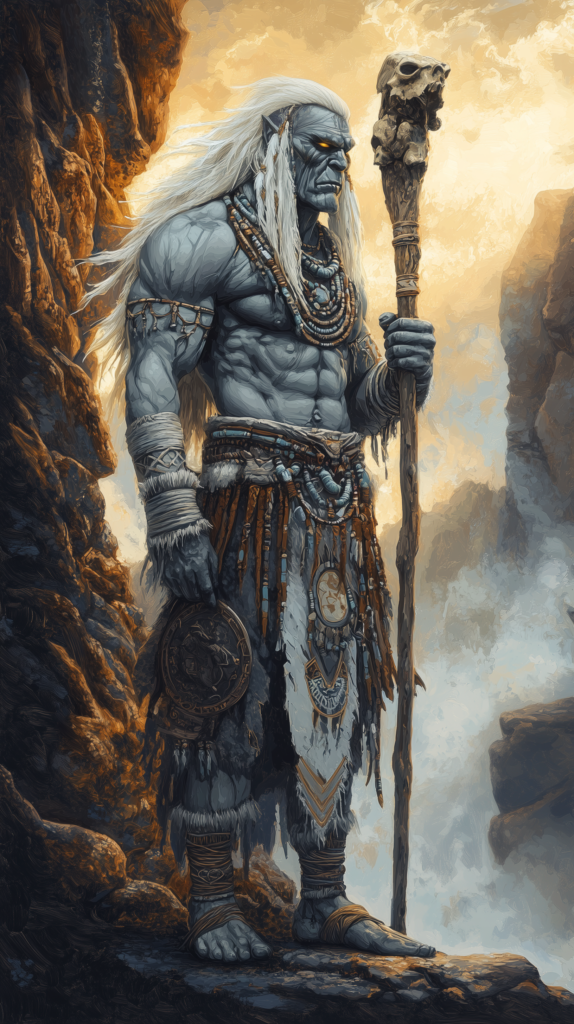
Huge Giant, Neutral
Armor Class 18
Initiative +2
Hit Points 230
Speed 40 ft., climb 20 ft.
Proficiency Bonus +4
| STR | DEX | CON | INT | WIS | CHA |
|---|---|---|---|---|---|
| 27 (+8) | 14 (+2) | 23 (+6) | 11 (+0) | 16 (+3) | 14 (+2) |
Saving Throws Str +12, Dex +6, Con +10, Wis +7
Skills Athletics +12, Intimidation +10, Perception +7, Stealth +6
Damage Resistances bludgeoning damage from natural cave-ins, rockfalls, and collapsing stone
Condition Immunities petrified
Senses darkvision 60 ft., tremorsense 60 ft., passive Perception 17
Languages Giant; Abenaki or another local Wabanaki language when encountered in its homeland; understands old stone-signs
Challenge 12
Traits
Mountain Stillness. The Ridge-Breaker has advantage on Dexterity (Stealth) checks made to hide in rocky terrain, boulder fields, cliffs, caves, ruins, or mountains. If it remains motionless for at least 1 minute in such terrain, it is indistinguishable from natural stone unless a creature succeeds on a DC 19 Wisdom (Perception) or Intelligence (Investigation) check.
Ancient Weight. The Ridge-Breaker ignores difficult terrain made of rubble, scree, broken stone, shallow mud, natural slopes, or cracked paving.
Crushing Footfalls. Normal earth, bedrock, and solid stone roads do not break under the Ridge-Breaker. Loose ground and fragile surfaces do. Once on each of its turns, when the Ridge-Breaker moves at least 10 feet across rubble, loose stone, weak flooring, fragile bridgework, mine galleries, roof structures, unstable ruins, or similar terrain, up to two 10-foot squares it leaves become broken ground. Broken ground is difficult terrain for creatures other than the Ridge-Breaker and allied A-senee-ki-wakw.
Too Heavy for the Young World. Once on each of its turns, if the Ridge-Breaker starts or ends its movement on a fragile structure, that structure partially collapses. Creatures other than the Ridge-Breaker on or directly beneath the collapsing area must make a DC 18 Dexterity saving throw. On a failed save, a creature takes 14 (4d6) bludgeoning damage and falls prone. On a successful save, it takes half damage and does not fall prone. A fragile structure exposed to this effect twice fully collapses. If the structure spans open air, the Ridge-Breaker falls when the structure fully collapses.
Ridge-Breaker’s Command. Allied A-senee-ki-wakw within 60 feet of the Ridge-Breaker ignore broken ground created by A-senee-ki-wakw. They also have advantage on saving throws against being frightened or knocked prone.
Stone-Breaking Blows. The Ridge-Breaker’s weapon attacks deal double damage to objects and structures.
Rock Catching. If a rock or similar object is hurled at the Ridge-Breaker, it can use its reaction to make a DC 10 Dexterity saving throw. On a success, it catches the missile and takes no bludgeoning damage from it.
Actions
Multiattack. The Ridge-Breaker makes two Stone Greatclub attacks.
Stone Greatclub. Melee Weapon Attack: +12 to hit, reach 15 ft., one target.
Hit: 26 (4d8 + 8) bludgeoning damage.
Rock. Ranged Weapon Attack: +12 to hit, range 60/240 ft., one target.
Hit: 35 (5d10 + 8) bludgeoning damage. If the target is a Large or smaller creature, it must succeed on a DC 18 Strength saving throw or fall prone.
Break the Road — Recharge 5–6. The Ridge-Breaker smashes the ground, a bridge, a road, a tunnel floor, or a ridge shelf within 20 feet. Each creature on the ground in a 30-foot cone from that point must make a DC 18 Strength saving throw. On a failed save, a creature takes 31 (7d8) bludgeoning damage, falls prone, and is pushed 10 feet away from the Ridge-Breaker. On a successful save, it takes half damage and is not pushed or knocked prone. The affected area becomes broken ground until cleared.
Stonefall Decree — Recharge 6. The Ridge-Breaker hurls or dislodges a massive stone at a point it can see within 120 feet. Each creature within 10 feet of that point must make a DC 18 Dexterity saving throw. On a failed save, a creature takes 33 (6d10) bludgeoning damage and is knocked prone. On a successful save, it takes half damage and is not knocked prone. The impact area becomes broken ground until cleared.
Bonus Actions
Move the Remnant Band. The Ridge-Breaker chooses one allied A-senee-ki-wakw within 60 feet that can see or hear it. That ally may move up to half its speed without provoking opportunity attacks, provided the movement ends on stone, earth, rubble, or broken ground.
Reactions
Catch and Return. When the Ridge-Breaker successfully catches a hurled rock or similar object with Rock Catching, it can immediately throw the caught object at a creature it can see within 60 feet. It makes this attack with disadvantage unless the target is Huge or larger.
Pathfinder 1e / 3.5e-Compatible Rules
A-senee-ki-wakw Ridge-Breaker
Large Giant (Earth)
Alignment Usually Neutral
CR 12
Hit Dice 20d8+140; hp 230
Initiative +2
Speed 40 ft.
Armor Class 28 (-1 size, +2 Dex, +14 natural, +3 hide), touch 11, flat-footed 26
Base Attack/Grapple +15/+29
Attack Stone greatclub +25 melee (3d8+15) or rock +16 ranged (3d8+15)
Full Attack Stone greatclub +25/+20/+15 melee (3d8+15) or 2 slams +24 melee (1d8+10) or rock +16 ranged (3d8+15)
Space/Reach 10 ft./10 ft.
Special Attacks Break the road, stonefall decree, rock throwing
Special Qualities Darkvision 60 ft., low-light vision, rock catching, stone camouflage, crushing footfalls, ridge-breaker’s command, stone-breaking blows, tremorsense 60 ft.
Saves Fort +19, Ref +8, Will +11
| STR | DEX | CON | INT | WIS | CHA |
| 30 (+10) | 15 (+2) | 24 (+7) | 11 (+0) | 16 (+3) | 14 (+2) |
Skills Climb +18, Hide +8*, Intimidate +21, Listen +18, Spot +18, Survival +14
Feats Awesome Blow, Cleave, Combat Reflexes, Improved Bull Rush, Iron Will, Power Attack, Weapon Focus (greatclub)
Environment Cold and temperate mountains, old-growth rocky uplands, glacial valleys
Organization Solitary, war-pair, remnant band, or Ridge-Breaker-led band
Treasure Standard, usually stonework, mineral wealth, giant weapons, carved memory stones, and offerings rather than coin
Advancement By character class
Level Adjustment —
Special Abilities
Break the Road (Ex). Once every 1d4 rounds, the Ridge-Breaker may smash the ground, a bridge, a road, a tunnel floor, or a ridge shelf as a standard action. Creatures in a 30-foot cone must succeed on a DC 27 Reflex save or take 7d6 bludgeoning damage, fall prone, and be pushed 10 feet away from the Ridge-Breaker. A successful save halves the damage and prevents the prone and push effects. The affected area becomes difficult terrain until cleared. The save DC is Constitution-based.
Stonefall Decree (Ex). Once per day, the Ridge-Breaker may hurl or dislodge a massive stone at a point within 120 feet. Creatures within 10 feet of the impact point must succeed on a DC 27 Reflex save or take 6d10 bludgeoning damage and fall prone. A successful save halves the damage and prevents falling prone. The impact area becomes difficult terrain until cleared. The save DC is Constitution-based.
Crushing Footfalls (Ex). Normal earth, bedrock, and solid stone roads do not break under the Ridge-Breaker. Once per round, when it moves at least 10 feet across rubble, loose stone, weak flooring, fragile bridgework, mine galleries, roof structures, unstable ruins, or similar terrain, up to two 10-foot squares it leaves become difficult terrain.
Ridge-Breaker’s Command (Ex). Allied A-senee-ki-wakw within 60 feet of the Ridge-Breaker ignore difficult terrain created by A-senee-ki-wakw crushing footfalls, Break the Road, or Stonefall Decree. They also gain a +4 morale bonus on saving throws against fear and effects that would knock them prone.
Rock Throwing (Ex). The range increment is 180 feet for the Ridge-Breaker’s thrown rocks. It uses both hands when throwing a rock.
Rock Catching (Ex). The Ridge-Breaker gains a +4 racial bonus on Reflex saves made to catch rocks or similar hurled objects.
Stone-Breaking Blows (Ex). The Ridge-Breaker deals double damage to unattended objects and structures with melee attacks, thrown rocks, Break the Road, and Stonefall Decree.
Stone Camouflage (Ex). The Ridge-Breaker gains a +8 racial bonus on Hide checks in rocky terrain, boulder fields, caves, ruins, and mountains. This bonus is included in the skill line above when applicable.
Too Heavy for the Young World (Ex). Once per round, if the Ridge-Breaker starts or ends its movement on a fragile structure, that structure partially collapses. Creatures other than the Ridge-Breaker on or directly beneath the collapse must succeed on a DC 27 Reflex save or take 4d6 bludgeoning damage and fall prone. A successful save halves the damage and prevents falling prone. A fragile structure exposed to this effect twice fully collapses. If the structure spans open air, the Ridge-Breaker falls when the structure fully collapses. The save DC is Constitution-based.
Tremorsense (Ex). The Ridge-Breaker can sense creatures in contact with the same ground or stone within 60 feet.
Ridge-Breaker Combat Tactics
A Ridge-Breaker does not duel if it can destroy the battlefield instead.
It opens by breaking the road, bridge, tunnel mouth, mine gallery, or ridge shelf the enemy needs to stand on. Against clustered enemies, it uses Break the Road first. Against archers, siege crews, spellcasters, and commanders, it uses Stonefall Decree or thrown rocks. It saves melee for creatures that survive the broken ground and come within reach.
When fighting with other A-senee-ki-wakw, the Ridge-Breaker uses Move the Remnant Band to shift allies across broken terrain, close exits, and force enemies into unstable ground. Its command does not make the band faster in open country. It makes them impossible to dislodge once the fight becomes stone, rubble, and collapse.
A careful Ridge-Breaker ends a battle by cutting off escape routes and forcing retreat. A bitter one destroys roads, bridges, mines, shrines, watchtowers, and dams until the smaller folk understand that the old stone country has woken.
Combat Tactics
An A-senee-ki-wakw does not begin combat with speed. It begins with position.
It hides as stone, waits until intruders enter a pass, quarry floor, boulder field, or broken road, then opens with thrown rocks. It targets wagons, bridge supports, horses, quarry cranes, siege crews, and unstable structures before it targets individual warriors.
If enemies scatter, it uses Earth-Shaking Step to break formation and create difficult ground. It does not waste energy chasing light skirmishers across open country unless enraged. Instead, it blocks roads, collapses exits, rolls boulders into escape routes, and forces smaller creatures to fight uphill.
An Elder Stone-Speaker is more dangerous because it thinks in terrain rather than blows. It uses stone magic to divide groups, close roads, ruin siegeworks, and pin enemies where the ground itself becomes a weapon.
A careful A-senee-ki-wakw ends fights by blocking roads, breaking weapons, overturning wagons, and forcing intruders to retreat before it kills. A bitter one deliberately destroys the land improvements of small folk: walls, bridges, roads, watchtowers, mines, dams, and shrines.
Encounter Design
A-senee-ki-wakw encounters should make the battlefield matter. Do not place the monster in an empty cave unless the cave itself is part of the story.
Use this creature in narrow mountain roads, sacred ridgelines, quarry disputes, caves with unstable ceilings, old cairn-fields, glacial boulder mazes, river valleys blocked by landslide, abandoned giant settlements, and places where a monster may also be an old wounded ancestor.
A fair encounter should include warning signs before initiative is rolled: moving boulders, breath-mist from a hill, cracked cairns, missing quarry crews, animals refusing a slope, or a road that collapses in the same place every season.
Where the old stories are still honoured, killing an A-senee-ki-wakw can solve one danger and create another.
Adventure Hooks
The Road Through the Sleeping Back
A new mountain road repeatedly collapses, no matter how well it is built. Engineers blame sabotage, but the route has been cut across the shoulder of a sleeping A-senee-ki-wakw. Moving the road may save lives. Continuing the work may wake the whole ridge.
The Quarry That Bled Grey Water
A lord’s quarry strikes a seam of stone that leaks cold grey water and shakes at night. The workers have not found ore. They have opened an old wound in a stone giant returned to the earth. Its living kin are coming to close the cut.
The Giant Who Would Not Step
A living A-senee-ki-wakw stands motionless above a valley, refusing to move because every step it takes kills something. A village below is starving because its blocked river no longer reaches the fields. The party must solve the problem without simply turning a tragic guardian into a battlefield.
Treasure and Remains
A-senee-ki-wakw treasure is rarely kept in chests. They value durable things: carved stone memory tablets, old antler tools, copper veins, quartz lenses, sacred cairn-stones, polished river boulders, fossil shells, and offerings left by people who know the mountain is alive.
A slain A-senee-ki-wakw leaves one or more remains of value: heartstone suitable for earth magic, stone hide plates usable in giant armour, quartz eye-fragments used in divination, fist-sized teeth like worn granite chisels, cairn-stones that cannot be moved safely without ritual care, and stone dust that strengthens masonry, roads, or burial markers.
Taking these remains without permission may create a curse, feud, or sacred offence. In lands that remember the old stories, killing the giant may not settle the matter. It may begin the argument.
Historical and Mythic Context
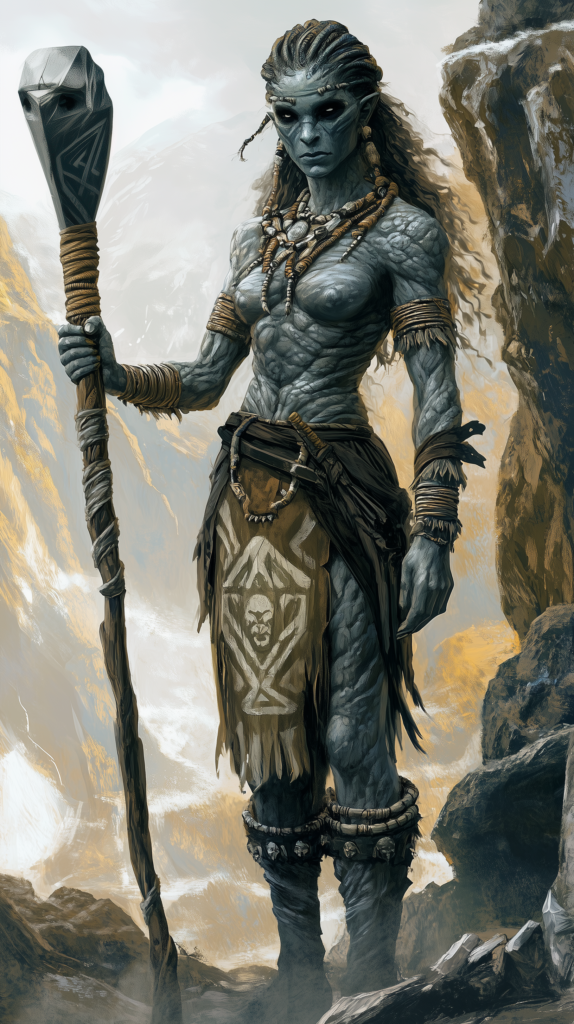
The A-senee-ki-wakw, also encountered in related spellings such as Asinikiwakw, belongs to Abenaki and wider Wabanaki mythic material surrounding Gluskab or Glooscap. The name is associated with stone giants rather than ordinary fantasy giants. In summary accounts of the tradition, they are described as stone people or early beings connected to Gluskab’s shaping of the world, their immense size making them dangerous to animals and to the earth itself.
For broader context on Gluskab and Glooscap as a culture hero, transformer, and world-ordering figure, see The Canadian Encyclopedia entry on Glooscap and World History Encyclopedia’s overview of Glooscap tales. These sources place Glooscap within Wabanaki and Eastern Algonquian story-worlds rather than in a generic pan-Indigenous fantasy category.
The Wabanaki world is not a single interchangeable myth-pool. Wabanaki usually refers to the Dawnland peoples of the northeastern woodlands and Atlantic region, including Abenaki, Mi’kmaq, Passamaquoddy, Penobscot, and Wolastoqiyik/Maliseet communities. For contemporary cultural and historical context, see the Abbe Museum’s overview of the Wabanaki Nations and Four Directions’ overview of the Wabanaki tribes.
This entry keeps the A-senee-ki-wakw distinct from the Giwakwa or Kee-wakw. Giwakwa/Kee-wakw material is usually framed around ice-hearted, cannibal, or transformed-human giants in Abenaki legend. The A-senee-ki-wakw is treated here as a stone giant remnant: a being of weight, mountain, damage, and old-world scale rather than a winter cannibal spirit. For that distinction, see Native Languages of the Americas’ Abenaki legends page and its separate page on Giwakwa/Kee-wakw.
This campaign version is a game-facing reconstruction built from the mythic core rather than a claim to reproduce a single fixed sacred text. The attested idea is simple and powerful: stone giants, first weight, dangerous size, and a world that cannot safely contain them. The campaign treats a few of those beings as surviving remnants. They become sleeping ridges, sacred hazards, dangerous ancestors, and half-buried witnesses to the first age of the world.
The Ridge-Breaker is a campaign extension of that same idea. It is not presented as an attested separate figure in Abenaki tradition. It is the battlefield expression of the A-senee-ki-wakw theme: old stone country waking, roads breaking, mines closing, and the smaller world being forced back from a ridge it should not have cut open.
This entry deliberately avoids generic fantasy giant religion, imported titan worship, unrelated Northwest Coast beings, and broad “tribal shaman” styling. The A-senee-ki-wakw should stay source-led, place-rooted, and morally more complex than a stock evil giant.