
 Buy me a coffee
The Complete Special Materials Codex of Rare Arcane Substances
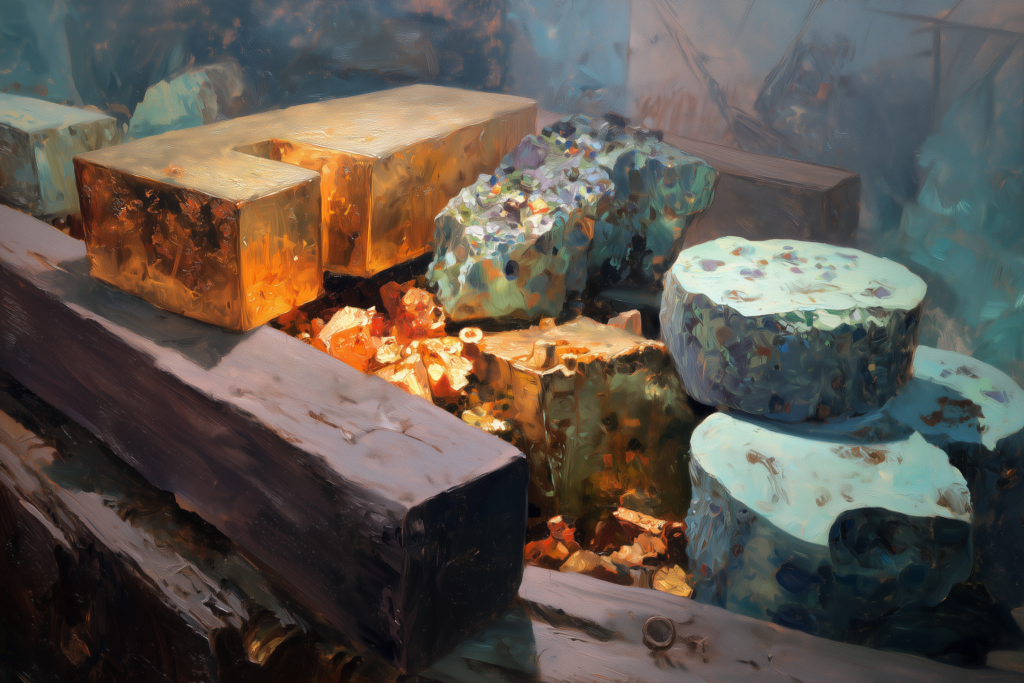
Explore this Special Materials codex featuring Adamantine, Cold Iron, Darkwood, and other rare crafting substances
Across the ages, certain materials have proven more than mere matter. Some are born of celestial violence, others shaped by ritual, alchemy, or the bones of titanic beasts. Such substances carry intrinsic properties that influence not only craft and durability, but the very metaphysical interactions between wielder, weapon, and world.
What follows is a sanctioned catalogue of materials recognized as possessing exceptional qualities beyond those of common iron, steel, or timber.
Adamantine
- Adamantine is the sovereign metal of endurance. Said to be forged from meteoric ore or drawn from the deepest mantle of the world, it is renowned for its near-indestructibility.
- Weapons wrought from adamantine shear through barriers that would blunt lesser steel. Armor fashioned of it resists denting, piercing, and corrosion alike. Its density makes it burdensome, yet no material better preserves its integrity under catastrophic strain.
- The forging of adamantine demands extreme heat and masterful skill; lesser smiths risk shattering their tools before the metal yields.
- Reputation: Favored by ancient warlords, dwarven master-smiths, and guardians of vaults thought unbreachable.
Bone
- Bone is the inheritance of the slain. Whether harvested from beasts, monsters, or sentient remains, it carries vestiges of its former life.
- Light and easily carved, bone is inferior to steel in resilience but possesses a spiritual receptivity uncommon in worked metals. Ritual weapons of bone often hold enchantments tied to death, ancestry, or primal forces. When taken from powerful creatures, the material may retain faint echoes of strength or savagery.
- It is a material as symbolic as it is practical—both tool and testament.
- Reputation: Common among tribal societies, necromantic practitioners, and cultures where nothing of the fallen is wasted.
Bronze
- An alloy of copper and tin, bronze predates the age of steel and remains a symbol of ancient empire and heroic antiquity.
- It resists corrosion better than iron and carries a warm, golden hue. Though softer than hardened steel, bronze holds an edge respectably and weathers time with dignity. In certain traditions, it is believed to bear a subtle affinity for divine or mythic enchantment, owing to its prominence in early civilizations.
- Reputation: Ceremonial arms, relics of fallen kingdoms, and artifacts of the so-called “First Age.”
Cold Iron
- Cold iron is iron in its purest and least forgiving form—unalloyed, unsoftened, and stubbornly mundane.
- It is widely regarded as inimical to supernatural beings, particularly those of fey or extraplanar origin. While difficult to enchant due to its resistance to magical manipulation, this same quality makes it a reliable weapon against creatures sustained by arcane means.
- Cold iron is heavier and less flexible than refined steel, yet its symbolic association with mortal will grants it a unique place in folklore and warfare alike.
- Reputation: Wards against the Fair Folk, hunter’s blades, rural charms against unseen forces.
Damascus Steel
- Recognizable by its flowing, water-like patterns, Damascus steel represents the pinnacle of refined metallurgy.
- Blades forged in this tradition are both flexible and resilient, capable of retaining a keen edge while resisting catastrophic fracture. Beyond function, the metal is prized for its beauty—each piece bearing a distinct pattern like a fingerprint.
- Its creation requires precise control of heat and composition, techniques known only to accomplished smiths.
- Reputation: Duelist’s swords, noble heirlooms, masterwork weapons of renown.
Darkwood
- Darkwood is a rare hardwood of exceptional density and strength. Despite its resilience, it remains remarkably light for its durability.
- Resistant to rot, insects, and warping, darkwood is often used in shields, bows, and light armor frameworks. It accepts naturalistic enchantments readily, and many believe it hums faintly with the memory of the forest from which it was taken.
- Unlike common timber, darkwood does not easily burn, splinter, or decay.
- Reputation: Elven craftsmanship, druidic armaments, ranger equipment.
Elysian Bronze
- Elysian bronze is a sanctified alloy said to have been first cast in celestial realms. Its surface gleams with a soft golden radiance, warm to the touch.
- It is particularly effective against beings of infernal or undead origin, and it resists corruption from malevolent magic. Though similar in composition to traditional bronze, its metaphysical refinement renders it lighter and spiritually luminous.
- Weapons forged from Elysian bronze are often inscribed with prayers or sigils of protection.
- Reputation: Holy orders, celestial champions, relic vaults of the devout.
Gold
- Gold is the metal of kings and gods—soft in body yet potent in symbolism.
- Ill-suited for weapons or armor without reinforcement, gold nonetheless conducts magical energy with remarkable efficiency. It neither tarnishes nor corrodes, and thus serves as the preferred medium for arcane circuitry, ritual implements, and sacred regalia.
- Its value lies less in martial durability and more in metaphysical conductivity and prestige.
- Reputation: Crownwork, ritual tools, enchanted filigree, arcane focus construction.
Greenwood
- Greenwood is timber harvested under ritual conditions, often while still living. It retains a subtle vitality even after shaping.
- Flexible and light, greenwood may slowly mend minor fractures over time and exhibits a strong affinity for plant-aligned enchantments. In humid air, it may sprout faint buds; in spring, it may warm with renewed vigor.
- Its continued connection to natural cycles makes it prized among those who walk in harmony with living systems.
- Reputation: Living bows, druidic staves, sylvan relics.
Obsidian
- Obsidian is volcanic glass born from rapid cooling lava. It may be honed to an edge sharper than steel, though at the cost of fragility.
- While capable of inflicting grievous wounds, obsidian blades are prone to shattering under heavy impact. Its deep black sheen and razor clarity have linked it symbolically with fire, shadow, and ancient sacrificial rites.
- It responds strongly to elemental forces, particularly those of flame and earth.
- Reputation: Ritual daggers, volcanic cultures, ceremonial blades of omen.
Silver, Alchemical
- Alchemical silver is silver strengthened through specialized processes that preserve its supernatural potency while mitigating its softness.
- It retains silver’s well-known efficacy against cursed and shape-shifting creatures, yet resists bending and deformation far better than its natural form. Lighter than steel but less robust than adamantine, it occupies a specialized niche in monster-hunting arsenals.
- The alchemical treatment is costly and requires precise formulae.
- Reputation: Witch-hunters, church arsenals, slayers of the afflicted.
Stone
- Stone is the primordial material of the world’s bones. When shaped by magic or titanic craftsmanship, it becomes viable for weapons and armor of tremendous mass.
- Unyielding to heat and resistant to corrosion, stone gear is brutally heavy and susceptible to shattering under extreme force. Its association with earth elementals and ancient civilizations grants it symbolic gravitas.
- Stone implements are not elegant—but they endure.
- Reputation: Giant-forged arms, elemental guardians, relics of forgotten empires.