
“Waterloo (1970): The Epic War Film Too Big to Fail—And Too Bold to Forget”

“Waterloo (1970): The Epic War Film Too Big to Fail—And Too Bold to Forget”
Waterloo (1970) is a sweeping historical epic that vividly recreates Napoleon Bonaparte’s final battle against the Duke of Wellington, blending human drama with massive, realistic war spectacles.
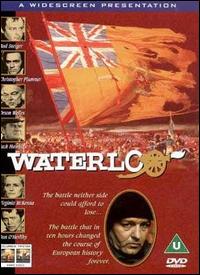
Title: Waterloo
Release Year: 1970
Director: Sergei Bondarchuk
Producers: Dino De Laurentiis, Mosfilm (Soviet co-production)
Screenplay: Franco Solinas, Sergio Leone (uncredited contribution)
Music Composer: Nino Rota
Cinematography: Armando Nannuzzi
Production Design: Ferdinando Scarfiotti
Main Cast:
- Rod Steiger as Napoleon Bonaparte
- Christopher Plummer as Duke of Wellington
- Orson Welles as Louis XVIII
- Virginia McKenna as Countess of Bessborough
- Jack Hawkins as General Blücher
- Clive Revill as Marshal Grouchy
- Daniele Vargas as Marshal Ney
- Gino Pernice as General Lobau
Genre: Historical war / Epic
Language: English (primarily)
Runtime: Approximately 142 minutes (different versions may vary)
Production Countries: Italy, Soviet Union
Notable Facts:
- Used over 17,000 Soviet soldiers as extras to recreate battle sequences.
- Known for one of the largest practical battle scenes in cinematic history.
- Considered a highly ambitious European historical epic.
Few historical war films can match the ambition of Waterloo (1970), a cinematic spectacle that captures Napoleon Bonaparte’s final battle with remarkable scale and authenticity. Directed by Sergei Bondarchuk and produced as an Italian-Soviet collaboration, the film is both a product of its era and a lasting influence on the war film genre. From massive battle sequences to powerhouse performances, Waterloo remains a must-see for fans of historical epics.
Story & Historical Context
Waterloo chronicles the dramatic events of June 1815, focusing on Napoleon Bonaparte’s final showdown against the Duke of Wellington at the Battle of Waterloo. While the narrative is straightforward, the film emphasizes the human drama behind the history. Napoleon’s ambition, pride, and eventual vulnerability are juxtaposed with Wellington’s calm strategy and steadfast leadership.
The film was released at a time when epic war films were beginning to decline in popularity. Its enormous production, combining Italian and Soviet resources, made it one of the most ambitious European historical films of the era. The collaboration also allowed for unprecedented access to thousands of soldiers as extras, giving the battle scenes an authenticity rarely seen in cinema.
Performances: Rod Steiger & Christopher Plummer Shine
Rod Steiger delivers a gripping portrayal of Napoleon, balancing his tactical genius with moments of human doubt and exhaustion. Christopher Plummer’s Duke of Wellington is composed, disciplined, and quietly commanding—a perfect foil to Steiger’s intensity. Even smaller roles, including Orson Welles as Louis XVIII, contribute to the film’s historical credibility.
The performances ground the massive spectacle, reminding viewers that behind the millions of soldiers and thunderous cannon fire are leaders making life-and-death decisions.
Direction & Cinematic Vision
Sergei Bondarchuk’s direction is the backbone of Waterloo’s success. Known for his epic War and Peace, Bondarchuk demonstrates a unique ability to manage enormous scale while retaining emotional resonance. The battle sequences are legendary, employing over 17,000 Soviet soldiers in formations that mirror Napoleonic tactics.
The camera work alternates between sweeping panoramic shots and intimate close-ups, giving audiences both the scale of the battlefield and the human stakes involved. This dual focus makes the film immersive, with a painterly quality reminiscent of historic battle paintings.
Visuals & Production Design
From authentic uniforms to meticulously recreated battlefield landscapes, Waterloo excels in visual detail. Cinematographer Armando Nannuzzi captures the mud, chaos, and exhaustion of 19th-century warfare with striking realism. While the pacing occasionally slows during long marches or dialogue-heavy sequences, the visual spectacle consistently impresses.
The film’s production design also reflects a commitment to historical accuracy, with props, costumes, and troop formations painstakingly researched and executed.
Soundtrack & Immersive Audio
Nino Rota’s orchestral score complements the epic scale of the film. Stirring themes heighten moments of triumph and tragedy, while the ambient sounds of cannons, muskets, and marching soldiers create an immersive soundscape. Though at times melodramatic, the soundtrack underscores the tension and drama of Napoleon’s last battle.
Legacy & Influence on the War Film Genre
Despite its mixed commercial success, Waterloo influenced generations of filmmakers with its dedication to historical authenticity and large-scale battle choreography. In an era transitioning toward intimate, countercultural films, its ambition was both a strength and a liability. Modern audiences can appreciate it as a bridge between classic historical epics and contemporary war films, particularly in its use of real extras rather than CGI.
Final Verdict: Is Waterloo (1970) Worth Watching Today?
Waterloo is a flawed masterpiece: overlong and occasionally uneven, yet unforgettable in its spectacle and ambition. Its historical accuracy, massive battle sequences, and strong performances make it a standout in the war film genre. Fans of historical dramas, epic battles, or cinematic feats of scale will find it both impressive and rewarding.
If you want to witness a pre-CGI war epic where real soldiers fight real battles, Waterloo (1970) is an essential viewing experience.