
Bandeirantes
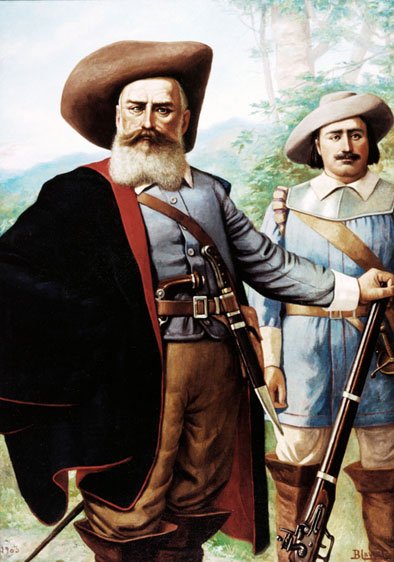
At a Glance
- Organisation
- Portuguese settler expedition companies and fortune hunters.
- Principal base
- São Paulo, in Brazil.
- Ambition
- Profit from the interior: captives, gold, silver and diamonds.
- Method
- Overland expeditions called bandeiras; armed coercion, scouting and mineral prospecting.
- Adventurers’ place
- Guides, escorts, negotiators, witnesses or opponents of a particular expedition.
- Central conflict
- A promised fortune may depend on slavery, dispossession or a claim its backers cannot enforce.

The Bandeirantes are Portuguese settlers and fortune hunters who lead bandeiras into the interior of Brazil. Their most notorious expeditions capture Indigenous people for slavery; an increasing number now seek gold, silver and diamond mines. They offer adventurers paid passage into poorly charted country, but the expedition’s declared purpose and its captain’s intentions may be very different.
What Is Happening Right Now
The search for mineral wealth is changing what expedition backers demand. A successful return can establish a captain’s reputation; an empty return leaves debts, disappointed investors and men looking for someone to blame. The older traffic in captives remains a temptation when prospecting fails. Anyone accepting an escort contract should establish whether its payment depends on a discovery, a delivery or the sale of people.
These expeditions push the colony’s effective borders beyond its settled reach. A line on a captain’s map does not make the inhabitants subjects, nor guarantee that a colonial official can protect the company once it leaves the settlements.
Purpose and Methods of the Bandeirantes
Wealth is the common purpose of the Bandeirantes, rather than a single creed. They value information that can be turned into a route, a captive or a mineral claim. A rumoured deposit can therefore be worth more to a backer than an accurate account of the people already living beside it.
Their accounts describe unmapped regions; those places may be thoroughly known to their inhabitants. Adventurers who negotiate directly with local communities can discover safe crossings and existing territorial claims that an expedition’s plans omit. That knowledge is also bargaining power: a company which loses its guides or its welcome may possess a promising map and still be unable to reach the site.
Leadership and Organisation
Among the Bandeirantes, a bandeira is an expedition, not a branch of one regiment. Deal with its captain and backers separately: the captain controls decisions on the march, while those financing the venture influence what constitutes a profitable return. Agreement with one company does not bind another.
For a particular expedition, distinguish the person paying the adventurers from the person giving orders. A guide’s authority over the route need not extend to negotiations or the division of spoils. Disputes between these roles give outsiders room to bargain, but make vague promises dangerous.
Joining the Bandeirantes
The practical point of entry is a company preparing to leave São Paulo. An adventurer can offer navigation, protection, languages or knowledge of the interior. Settle the destination, duties, payment and right to withdraw before departure; a share of an undiscovered mine is a speculation, not wages already earned.
Useful service earns a captain’s confidence and the prospect of further work. Concealing a route, abandoning an agreed watch or taking supplies can end that relationship. Refusing to participate in a slave raid presents a different choice: negotiate a clear prohibition before joining, leave while a safe route remains, or oppose the company when its intentions become clear. A contract does not remove responsibility for what the expedition does.
Bandeirantes: Reach and Limits
São Paulo is the home base of the best-known Bandeirantes. Its settlement offers a place to recruit and prepare; it does not make every company equally supplied. Before relying on a captain’s resources, ask what is actually travelling with the expedition and what must be obtained on the route.
A company can offer an escort, equipment already in its stores or information gathered on earlier journeys. It cannot guarantee a rich mine, immediate reinforcement or safe passage through someone else’s land. Food, river crossings and the willingness of guides to continue impose limits that promises of future wealth cannot pay away.
Colonial authority derives from the Kingdom of Portugal, but an expedition’s armed presence and a recognised legal claim are different things. Taking evidence back to an official may challenge a captain’s account; it does not provide an immediate rescue in the interior.
Allies, Rivals and Enemies
Investors in the Bandeirantes want a return, rival companies want the best route, and Indigenous communities have their own reasons to trade, refuse entry or resist. Treat each relationship as a negotiation with particular people. Being Portuguese does not make every settler an expedition member, and being Indigenous does not make every community an ally of its neighbours.
Resistance need not take the form of a battle. Refusing supplies, disputing a mineral claim, warning the next settlement or withholding a guide can force an expedition to change its plans. Rescue and escape become harder when a company controls the only known return route.
Customs, Reputation and Secrets
The reputation of a returning Bandeirantes expedition rests on what it claims to have found and what it brings back. A mineral sample, a route description and a captive each tell a different story about its purpose. Ask who witnessed a discovery and who is absent from the captain’s account.
The useful secret in a company’s papers may be its intended destination, an undisclosed capture order or a payment conditional on a particular cargo. Such evidence can turn an ordinary employment offer into a choice about whom the adventurers will protect.
Encounters and Adventure Hooks
The Escort Contract
A captain offers payment to escort a prospecting party. On the march, the adventurers discover restraints among its supplies and hear preparations for a raid. Insisting on the original prospecting agreement may split the company; helping the intended victims may cost the party its supplies and return guide. Refusal before departure is safer, but leaves the threatened settlement unwarned.
The Contested Discovery
A company asks the adventurers to witness a promising mineral find. People living beside the site dispute its right to dig. The party can negotiate access, expose a false account or support the claim. Delay gives a rival expedition time to arrive; a negotiated settlement must specify who may enter, what is taken and what happens if those terms are broken.
The Missing Guide
A guide disappears shortly before a difficult crossing, leaving a warning that the company intends to seize people on the far bank. Finding the guide may reveal a safer route or a deliberate attempt to stop the expedition. Returning that person to the captain, protecting them or carrying their warning each changes who can reach the crossing first.
History and Continuity
The Bandeirantes began with expeditions that captured Indigenous people for slavery. Their growing search for gold, silver and diamonds has widened their ambitions, while their journeys extend the practical reach of the Brazilian colony. Mineral prospecting has not erased the coercion on which earlier ventures depended.
São Paulo remains their principal recruiting ground. Their importance comes from repeated expeditions and the routes they open, rather than a single headquarters issuing orders to every company.
Mythical and Historical Background
The historical inspiration is the Portuguese colonial bandeiras, associated with Indigenous enslavement, exploration and mineral prospecting. The historical chronology of colonial Brazil is later than this campaign’s present; the faction’s established place here follows the setting’s chronology. The colonial “heroic explorer” image should also be distinguished from the violence of the expeditions and from later commemorative art.
- IBGE: São Paulo — Histórico (PDF, Portuguese) — a municipal historical account covering the settlement’s foundation and the transition from captive-taking expeditions to mining.
- Museu Paulista: the Calixto painting — the museum’s record identifies the artist, the two portrayed men and the work’s 1903 date.
- Paulo César Garcez Marins, “Nas matas com pose de reis” (PDF, Portuguese) — research on the later visual celebration of the Bandeirantes.
The retained portrait is a later historical painting, not a contemporary likeness or an appointment of its subject as this faction’s leader. Its image record and public-domain notice identify the existing reproduction.
Keep this reference growing
If this page helped with your reading or game, you can support its upkeep or explore the curated books.
Explore the Bookshop — epics, classics and stories behind imagined worlds.