
One Thousand and One Nights
One Thousand and One Nights, also known as The Arabian Nights, is a treasury of stories about survival, wonder, desire and the power of storytelling. Scheherazade saves her life by telling the king a story each night, withholding its ending until the next. Within that frame lie merchants and thieves, spirits and sailors, marvels and betrayals: tales that change tone as swiftly as the fortunes of their characters.
At a Glance
- Work: One Thousand and One Nights / The Arabian Nights
- Form: Collection of linked tales and nested stories
- Traditions: Arabic, Persian, Indian and other literary and oral traditions
- Central storyteller: Scheherazade
- Read it for: Clever narrators, perilous bargains, hidden identities and voyages into the unknown
- Choosing an edition: Check which tales and nights are included; collections vary considerably
What are the Arabian Nights?
The Arabic title Alf Layla wa-Layla means One Thousand and One Nights. The work is not a novel written by a single author at a single moment. It is a growing family of tales, told and collected in different places and times, brought together around a memorable frame story. Some episodes are brief fables; others develop into extended romances, mysteries or fantastic voyages.
Where did the stories come from?
The collection has roots in Persian, Indian and Arabic storytelling and developed across centuries of medieval Arabic literary culture. Stories travelled between oral performance, manuscript collections and later printed editions. Tales and their arrangements vary from version to version; even the number of nights in a surviving text need not match its title. There is no single original edition against which every retelling can be measured.
Scheherazade and the power of a story
In the frame story, King Shahryar has become murderous and distrustful. Scheherazade tells him a tale at night and leaves him eager to hear more. Her stories interrupt the cycle of violence; suspense becomes a means of survival. Tales unfold within tales, and a seemingly minor witness may become the narrator of an entire new adventure. The reader is always aware that storytelling has consequences beyond entertainment.
Which tales should you expect?
For a first selection, look for the tale of the fisherman and the jinni, the merchant and the jinni, and the larger voyage-and-adventure traditions associated with Sinbad the Sailor. Collections differ: Aladdin and Ali Baba became internationally famous through Antoine Galland’s eighteenth-century French edition and do not belong to every earlier Arabic manuscript tradition. Choose the tales and translation deliberately rather than assuming all editions contain the same contents.
Meet Scheherazade or explore the Books, Comics & Graphic Novels library for more works.
Which edition should you read?
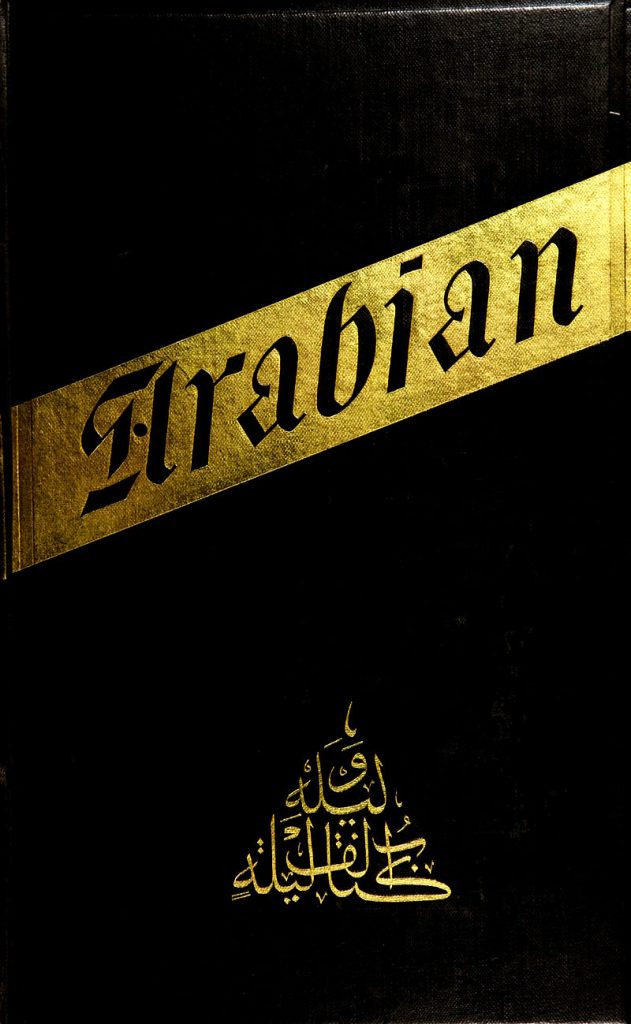
Choose between a compact selection and a substantial multi-volume translation. The illustrated historic cover above belongs to Richard Francis Burton’s nineteenth-century edition; it is not the Penguin paperback linked below. Penguin Classics’ The Arabian Nights: Tales of 1,001 Nights, Volume 1 is translated by Malcolm C. Lyons and Ursula Lyons, with an introduction by Robert Irwin. ISBN 9780140449389 identifies that first volume, not the entire collection.
Original RPG inspiration: a tale that buys another dawn
A suspicious ruler condemns a prisoner unless the party can bring back the ending of a story heard only in a distant caravanserai. Three travellers remember different versions; each conceals a grievance that changes the tale. The group can pursue the original storyteller, reconcile the competing accounts or persuade the ruler that an unfinished story is worth keeping alive. This is original game inspiration, not a retelling of a specific episode.
Sources and further reading
Shakespeare’s Globe outlines the collection’s varied history; the Library of Congress documents a nineteenth-century translation; and Penguin Classics identifies the recommended modern translation and exact ISBN.
Read the Tales
Ad – affiliate link. If you buy through the Bookshop.org link below, the site can earn a commission at no extra cost to you.
Keep this reference growing
If this page helped with your reading or game, you can support its upkeep or explore the curated books.
Explore the Bookshop — epics, classics and stories behind imagined worlds.