
Monster, Dísir: Norse Ancestral Fate-Spirits
Dísir: Norse Ancestral Fate-Spirits
Ancestral women of blood, fate, household memory, and family doom.
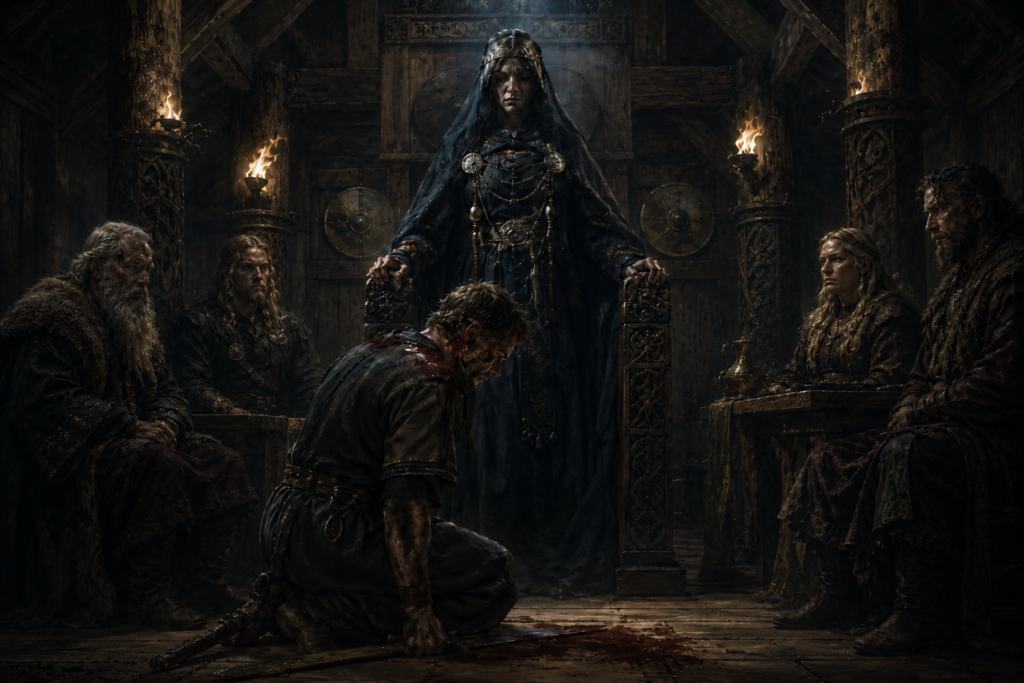
A dís is a female ancestral power bound to family, fate, childbirth, death, inheritance, oath, and household honour. The plural is dísir.
A dís is not simply a ghost, goddess, valkyrie, norn, or household spirit, though she may overlap with all of those. She is best understood as a sacred female power attached to a bloodline, hall, burial place, dynasty, battlefield, or inherited wrong.
Some dísir bless their descendants. Some warn them. Some withdraw protection from a doomed house. Some become terrible when the living forget the dead, break guest-right, murder kin, steal inheritance, abandon burial duty, or silence a woman whose name should have been remembered.
A dís is dangerous because she is not merely angry. She is ancestral authority made visible.
Mythic Role and World Status
Dísir belong to the difficult borderland of Norse and Germanic supernatural belief: female guardian spirits, ancestral powers, fate-women, battle-spirits, protective presences, and divine female figures. General references to Germanic religion describe dísir and related female guardian powers as part of a wider northern tradition of household, ancestral, and fate-associated spirits. Britannica specifically notes that medieval writers refer to female guardian spirits called dísir and fylgjur, while also noting that later writers sometimes used those words interchangeably.
A dís should not be reduced to a generic undead creature. She may be represented mechanically as a spirit, undead, fey, celestial, outsider, deathless guardian, or unique mythic being depending on the campaign, but her reader-facing identity should remain clear:
A dís is an ancestral female power of bloodline, household memory, oath, inheritance, childbirth, death, and fate.
She may be recognised by:
| Anchor | What It Means |
|---|---|
| Family Line | She protects, judges, or curses descendants. |
| Royal Dynasty | She stands behind legitimacy, succession, prophecy, or downfall. |
| Ancestral Hall | She guards the high-seat, hearth, guest-right, and household honour. |
| Grave-Mound | She remembers burial duties, stolen bones, grave-goods, and the honoured dead. |
| Battlefield | She marks the moment a bloodline won glory or earned doom. |
| Childbirth Bed | She governs fertility, inheritance, hidden parentage, and survival of the line. |
| Oath-Stone | She answers broken vows, kin-murder, false witness, and violated guest-right. |
| Women’s Cult or Household Rite | She may be approached through seasonal offerings, remembered names, and inherited ritual. |
She is not automatically hostile. She becomes hostile when the living have made themselves answerable.
Appearance
A dís usually appears as a woman of grave authority rather than obvious monstrosity.
She may look like:
- a veiled elder with iron-grey hair and ringed hands;
- a young warrior-woman with bloodless lips and smoke-dark mail;
- a mother carrying a dead child who has not yet been born;
- a queenly ancestress seated where no living person dares sit;
- three women reflected in one body: maiden, mother, and corpse;
- a figure visible only in polished shields, still water, frost, or blood.
Her presence changes the room before she speaks. Fires lean away. Milk sours. Dogs crawl under benches. Old swords rattle against walls. A cradle rocks without being touched. A family name, spoken aloud, echoes once in a dead woman’s voice.
Behaviour and Motives
A dís acts with purpose. She does not haunt randomly.
She may seek:
- a broken oath answered;
- a murderer named;
- a stolen inheritance restored;
- a child protected;
- a burial corrected;
- a forgotten woman remembered;
- a false heir exposed;
- a cowardly descendant forced to act;
- a kin-slayer brought before the hall;
- a bloodline severed before it produces something worse.
A benevolent dís may bless childbirth, steady a warrior’s hand, protect a threshold, guide a lost heir, or turn aside the first killing blow meant for a rightful descendant.
A wrathful dís may bring stillbirth, madness, battlefield failure, legal ruin, public shame, broken sleep, barren fields, hostile dreams, or repeated deaths by the same weapon.
Signs and First Clues
| d12 | Sign |
|---|---|
| 1 | A dead grandmother’s name is heard in an empty room. |
| 2 | A cradle rocks by itself whenever inheritance is discussed. |
| 3 | Blood on a threshold refuses to dry. |
| 4 | One feast-seat remains empty no matter who sits there. |
| 5 | Every woman in the household dreams the same dream. |
| 6 | An old sword falls from the wall whenever a lie is spoken. |
| 7 | Milk turns red in the house of a kin-slayer. |
| 8 | A grave-mound appears closer to the hall each dawn. |
| 9 | Newborn children stare at one corner of the room and stop crying. |
| 10 | A wedding veil is found folded inside a burial chest. |
| 11 | Ravens gather only above the women’s side of the hall. |
| 12 | A family name vanishes from written records until justice is done. |
How Dísir Enter Play
As an Encounter
The dís appears at a threshold: hall-door, grave-edge, battlefield line, birthing room, wedding chamber, oath-stone, or high-seat.
She names the wrong. She may ignore strangers at first unless they carry the disputed sword, guard the false heir, broke guest-right, stole from the grave, or accepted payment to silence the truth.
As a Problem
A noble house is failing. Children die. Warriors lose duels they should win. Servants flee. The land gives poor harvests. The family blames witches, rivals, plague, or bad luck, but the true cause is ancestral judgement.
As a Patron or Judge
The dís gives the party a command: recover stolen bones, protect the unborn heir, expose the false marriage, kill the kin-slayer, return the bride-price, find the missing daughter, restore the grave-goods, or bring the oath-breaker to the hall before winter.
As a Consequence
A dís may appear after the party kills someone with recognised bloodline status, breaks guest-right, steals from a grave, supports a false heir, accepts a corrupt inheritance, or helps bury a family crime.
As a Campaign Thread
A dís can follow a bloodline across years of play. She may begin as a warning, become a patron, turn into an enemy, and finally reveal that she was trying to prevent a worse inherited doom.
Killing, Bargaining, and Consequences
A dís is not ordinary prey.
Killing or banishing a dís may be justified if she is actively murdering innocents, but it can also be sacrilege, kin-treason, spiritual vandalism, or the destruction of a household’s last protective power.
Before treating her as a combat opponent, decide what she is in the world.
| Status | Meaning in Play |
|---|---|
| Household Guardian | Killing her leaves the hall exposed to curses, hostile spirits, plague-undead, rivals, or worse ancestral powers. |
| Wronged Ancestor | Defeating her without correcting the wrong delays the curse rather than ends it. |
| Battle-Doom Spirit | Destroying her may alter who lives or dies in an approaching war. |
| Birth Guardian | Harming her may endanger childbirth, adoption, fertility, inheritance, or the next generation. |
| Dynastic Authority | Opposing her may trigger a succession crisis or weaken a ruler’s legitimacy. |
| Unremembered Ancestress | Restoring memory may be more effective than combat. |
| False Dís | A demon, hag, undead impostor, or sorcerous construct may be using the family’s fear of ancestral judgement as camouflage. |
A dís can usually be appeased by truth, burial, compensation, confession, restoration, vengeance, remembrance, oath-renewal, or public judgement. Gifts alone do not satisfy her unless the underlying wrong is addressed.
Edition Stats
Dís, Ancestral Fate-Spirit
Dís, Pathfinder 1e
Kami, Disir, Pathfinder
Dís, Ancestral Fate-Spirit
Medium Spirit, typically Lawful Neutral or Lawful Evil
Armor Class 17
Hit Points 127 (15d8 + 60)
Speed 30 ft., Fly 40 ft. hover
| STR | DEX | CON | INT | WIS | CHA |
|---|---|---|---|---|---|
| 10 (+0) | 18 (+4) | 18 (+4) | 16 (+3) | 20 (+5) | 19 (+4) |
Saving Throws Wis +9, Cha +8
Skills History +7, Insight +9, Intimidation +8, Perception +9, Religion +7
Damage Resistances Cold, Necrotic, Radiant; Bludgeoning, Piercing, and Slashing from nonmagical attacks
Damage Immunities Poison
Condition Immunities Charmed, Exhaustion, Frightened, Poisoned
Senses Darkvision 120 ft., Truesight 30 ft., Passive Perception 19
Languages Old Norse or a local ancestral tongue, plus any languages spoken by her bloodline; telepathy 120 ft. with recognised descendants
Challenge 9
Proficiency Bonus +4
Traits
Ancestral Recognition. The dís always knows whether a creature within 120 feet belongs to the bloodline, household, war-band, or oath-community to which she is bound. Illusion and mundane disguise do not fool this sense.
Bound to Blood and Hall. The dís is tied to a hall, grave, bloodline, battlefield, oath-site, or inheritance object. While within 1 mile of that anchor, she has advantage on Wisdom and Charisma saving throws.
Household Luck. While the dís is not hostile to her household, recognised descendants and sworn guests inside her bound hall who have not violated guest-right gain advantage on saving throws against being Frightened or cursed.
Unfinished Wrong. If the dís is reduced to 0 Hit Points while the murder, oath-breaking, inheritance theft, burial violation, or family wrong that awakened her remains unresolved, she reforms at her anchor after 1d10 nights. A Remove Curse, Hallow, Dispel Evil and Good, or similar magic may delay this return, but only justice, appeasement, or proper ritual settlement ends it permanently. The DM should provide discoverable ways to identify and settle the wrong before relying on this trait.
Actions
Multiattack. The dís makes two Fate-Touch attacks.
Fate-Touch. Melee Spell Attack: +9 to hit, reach 5 ft., one target. Hit: 18 (3d8 + 5) Necrotic damage plus 9 (2d8) Psychic damage. If the target has knowingly broken an oath, betrayed kin, violated guest-right, stolen inheritance, or denied burial within the last year, it must succeed on a DC 17 Wisdom saving throw or be marked by ancestral doom until the end of its next turn.
Ancestral Doom. A creature marked by ancestral doom cannot regain Hit Points, has disadvantage on Charisma checks made to lie, and takes 10 (3d6) Psychic damage the first time it willingly moves farther away from the dís on its turn.
Name the Wrong. Recharge 5–6. The dís names one creature she can see within 60 feet. The target must make a DC 17 Charisma saving throw. On a failure, the target takes 31 (7d8) Psychic damage and must speak one true sentence about the wrong that brought the dís forth. On a success, the target takes half damage and is not compelled to speak. A creature that genuinely does not know the wrong has advantage on the save. If a creature knowingly lies about the ancestral wrong within 60 feet of the dís, this ability immediately recharges.
Bless the Remembered. 3/Day. The dís chooses one creature within 60 feet that has honoured the dead, defended kin, kept guest-right, protected a child, or acted truthfully in the matter before her. That creature gains 18 (4d8) Temporary Hit Points and advantage on its next attack roll, saving throw, or ability check before the end of its next turn.
Withdraw Household Luck. The dís targets up to three creatures within 60 feet. Each target must succeed on a DC 17 Wisdom saving throw or be cursed for 1 minute. While cursed, the target subtracts 1d4 from attack rolls, saving throws, and ability checks. A cursed creature repeats the saving throw at the end of each of its turns, ending the effect on itself on a success.
Reactions
Answer for the Blood. When a creature within 60 feet damages one of the dís’s recognised descendants or sworn protectees, the dís can force the attacker to make a DC 17 Wisdom saving throw. On a failure, the attacker takes 14 (4d6) Psychic damage and has disadvantage on the next attack roll it makes before the end of its next turn.
Legendary Actions
The dís can take 2 Legendary Actions, choosing from the options below. Only one Legendary Action can be used at a time, and only at the end of another creature’s turn.
Move Without Crossing. The dís moves up to half her speed without provoking Opportunity Attacks. She may pass through creatures and objects during this movement but must end in an unoccupied space.
Whisper of the Mothers. One creature within 60 feet must succeed on a DC 17 Wisdom saving throw or have disadvantage on the next saving throw it makes before the end of its next turn.
Touch the Oath-Wound. Costs 2 Actions. One creature marked by ancestral doom takes 21 (6d6) Psychic damage, and the dís regains Hit Points equal to half the damage dealt.
Dís, Ancestral Fate-Spirit
CR 9
XP 6,400
LN or LE Medium outsider native, spirit
Init +8; Senses darkvision 120 ft., true seeing 30 ft.; Perception +20
Defense
AC 23, touch 15, flat-footed 18; +4 Dex, +1 dodge, +8 natural
hp 123 (13d10+52)
Fort +8, Ref +12, Will +15
Defensive Abilities ancestral anchor, incorporeal step; DR 10/magic; Immune fear, poison; Resist cold 10, negative energy 10; SR 20
Special channel resistance +4 if treated as undead
Offense
Speed 30 ft., fly 40 ft. perfect
Melee 2 fate touches +18 touch (2d8+5 negative energy plus ancestral doom)
Special Attacks ancestral doom, name the wrong, withdraw household luck
Spell-Like Abilities CL 13th; concentration +18
At will — augury, detect thoughts DC 17, doom DC 16, speak with dead
3/day — bestow curse DC 19, divination, remove curse, status
1/day — geas/quest DC 21, vision
Statistics
Str 10, Dex 19, Con 18, Int 16, Wis 21, Cha 21
Base Atk +13; CMB +13; CMD 28
Feats Ability Focus name the wrong, Alertness, Dodge, Improved Initiative, Iron Will, Mobility, Weapon Finesse
Skills Diplomacy +21, Fly +24, Intimidate +21, Knowledge history +19, Knowledge religion +19, Perception +20, Sense Motive +24, Stealth +20
Languages local ancestral tongue, Old Norse or equivalent, telepathy 120 ft. with recognised descendants
SQ ancestral recognition, bound to blood and hall, unfinished wrong
Special Abilities
Ancestral Anchor (Su). A dís is bound to a bloodline, hall, grave, battlefield, oath-site, or inheritance object. Within 1 mile of this anchor, she gains a +4 sacred bonus on Wisdom-based and Charisma-based checks and saves. If destroyed while the wrong that summoned her remains unresolved, she reforms at the anchor after 1d10 nights.
Ancestral Recognition (Su). A dís automatically recognises members of her bound bloodline, household, sworn war-band, or oath-community. This ability is not fooled by mundane disguise, invisibility, or non-mythic illusion.
Fate Touch (Su). A dís’s touch deals 2d8+5 negative energy damage. Against a creature that has knowingly broken an oath, betrayed kin, violated guest-right, stolen inheritance, or denied burial within the last year, the touch also triggers ancestral doom unless the target succeeds at a DC 21 Will save. The save DC is Charisma-based.
Ancestral Doom (Su). A doomed creature takes a –2 penalty on attack rolls, saving throws, skill checks, and ability checks for 1 minute. In addition, it cannot benefit from magical healing during the first round of the effect. The target may attempt a new DC 21 Will save at the end of each of its turns to end the effect.
Name the Wrong (Su). Once every 1d4 rounds, a dís may name one creature within 60 feet and force it to confront a hidden wrong. The target must succeed at a DC 23 Will save or take 7d8 points of damage from supernatural guilt and ancestral judgement, and speak one true sentence about the wrong. On a successful save, the target takes half damage and need not speak. This is a language-dependent mind-affecting compulsion. The save DC is Charisma-based.
Withdraw Household Luck (Su). Three times per day, a dís may curse up to three creatures within 60 feet. Each target must succeed at a DC 21 Will save or take a –2 penalty on attack rolls, saving throws, skill checks, and ability checks for 1 minute. Affected creatures may attempt a new save at the end of each turn.
Incorporeal Step (Su). As part of movement, the dís may pass through a single wall, door, creature, grave-marker, threshold, or household object connected to her anchor. She must end her movement in an open space.
3.5e Use. For 3.5e campaigns, use the Pathfinder stat block as a close conversion base. Treat the dís as an outsider, fey, deathless, or undead according to the campaign’s cosmology.
Kami, Disir
This spectral woman floats midair with an unearthly grace and demanding presence.
Disir CR 4
XP 1,200
LN Medium Outsider (incorporeal, kami, native)
Init +7; Senses Darkvision 60 ft.; Perception +11
Aura fate (20 ft.)
—– Defense —–
AC 17, touch 17, flat-footed 14 (+4 deflection, +3 Dex)
hp 37 (5d10+10); fast healing 2
Fort +3, Ref +7, Will +7
Defensive Abilities incorporeal; Resist acid 10, cold 10, electricity 10, fire 10
—– Offense —–
Speed fly 30 ft. (perfect)
Melee incorporeal touch +8 (2d8 cold damage plus cursed fate)
Spell-Like Abilities (CL 5th; concentration +9)
At will—mage hand
—– Statistics —–
Str —, Dex 16, Con 14,Int 13, Wis 17, Cha 18
Base Atk +5; CMB +8 CMD 18
Feats Combat Reflexes, Flyby Attack, Improved Initiative
Skills Diplomacy +12, Intimidate +12, Fly +19, Knowledge (local) +9, Perception +11, Sense Motive +11, Stealth +11
Languages Common, Skald; Telepathy 100 ft.
SQ merge with ward, ward (house)
—– Ecology —–
Environment Urban
Organization Solitary or entourage (1 disir plus 1d4 domovoi house spirits)
Treasure Standard
—– Special Abilities —–
Aura of Fate (Su) A disir within or nearby to its ward radiates an aura of fate to a radius of 20 feet. Enemies within the aura forced to roll two d20s whenever a situation calls for a d20 roll (such as an attack roll, a skill check, or a saving throw) and must use the lower of the two results generated. Allies designated by the disir in this aura are instead blessed with good fate, and likewise roll two d20s whenever a situation calls for a d20 roll, but may take the higher result instead. This is a mind-affecting morale effect that does not work on fey or other kami. A disir may suppress this aura at will as a free action.
Cursed Fate (Su) Any creature touched by a disir must succeed at a Will save (DC 16) or become cursed. Cursed creatures treat a roll of 20 on a d20 as a roll of 1 and may not take a 10 or a 20 on skill checks. This curse lasts for 24 hours and the save DC is Charisma based.
Disir are kami native to Midgard, formed from the spirits of devoted family members or servants thereof. The first disir originated from families that settled north after crossing the Crown of the World from the East. These kami serve as guardians of family homes, acting as watchful protectors of both the families that live within them and the structures themselves.
A disir prefers to remain anonymous, going about its activity when family members are not present. They occasionally benefit the family by means of their fate aura or more mundane tasks; tidying up the house, locking doors, or shutting windows left open in cold months.
Most disir continue to protect the home of the family they were a member of in life, or otherwise were strongly devoted to, moving with them from one ward home to another as the family moves. When a family line guarded by a disir is wiped out, the disir falls into a bleak depression and remains fixated on their last place of residence, becoming a vengeful and spiteful spirit that forcibly attempts to evict any other family that tries to take up residence or otherwise trespass in its ward.
Disir have a fond regard for house spirits, particularly domovoi, whom on occasion form bonds of cooperation to better the home and family they are bonded to.
Running the Dís
A dís should be foreshadowed before she appears. Let the household feel wrong first: the empty seat at the feast, the sword fallen from the wall, the child who will not be born, the missing name in the family record, the old grave no one admits belongs to them.
When the dís manifests, she should bring a charge as well as a threat. She does not simply attack because she is angry. She appears because something binding has been broken: an oath, a burial duty, an inheritance, guest-right, kinship, marriage, fosterage, or the public memory of a woman whose name was removed.
Before the confrontation ends, the players should have a chance to discover at least one truth that changes the scene:
- the wrong that awakened her;
- the person she recognises as kin;
- the oath that was broken;
- the place or object that anchors her;
- the act of restitution that may quiet her;
- the living person who is lying.
A dís can be defeated in battle, but battle alone should rarely answer the whole problem. If the party destroys her without settling the cause, the house may remain cursed, the inheritance disputed, the childbirth endangered, or the dead still unquiet. If they uncover and settle the wrong, the dís may withdraw, bless the house, name a hidden enemy, or become a dangerous ancestral ally.
Combat Tactics
A dís does not fight like a hungry undead. She fights like a judge who already knows the charge.
She first identifies the guilty party, isolates them socially, and forces truth into the open. She uses Name the Wrong early, not only to deal damage but to expose secrets. She protects truthful descendants with Bless the Remembered and punishes aggressors with Answer for the Blood.
She should not waste her strongest powers on ignorant mercenaries unless they knowingly joined the crime. If the party entered the matter without knowing the truth, she may test them before attacking.
A dís retreats if combat becomes meaningless. If the wrong remains unresolved, she can return. The real victory is usually justice, restoration, appeasement, or ritual settlement, not hit point depletion.
Non-Combat Use
A dís is especially strong in social, legal, and investigative play.
Use her to:
- expose a false heir;
- reveal a hidden murder;
- force a family to admit a buried crime;
- protect a child who should inherit;
- judge whether a marriage, oath, adoption, or inheritance is legitimate;
- decide whether a warrior died honourably;
- turn a private family scandal into a public supernatural crisis;
- place the party between mortal law and ancestral law.
The dís is most interesting when obeying her is costly but ignoring her is worse.
Treasure, Offerings, Relics, and Remains
A dís rarely hoards treasure like a dragon. Her treasure is tied to memory, burial, proof, and inheritance.
| d8 | Treasure or Reward |
|---|---|
| 1 | A silver brooch from a founding mother. |
| 2 | A sword that cannot be drawn against lawful kin. |
| 3 | A wedding ring that reveals false vows. |
| 4 | Grave-goods worth 500–2,000 gp if stolen, but sacred if returned. |
| 5 | An ancestral cloak that grants advantage or a +2 bonus on saves against fear while defending family or sworn companions. |
| 6 | A spindle, key, cup, comb, or veil that proves legitimate descent. |
| 7 | The true name of a murderer, heir, hidden child, or buried ancestress. |
| 8 | A one-use ancestral blessing that grants advantage on a future oath-test, inheritance claim, childbirth crisis, or curse-breaking rite. |
A dís may also grant a blessing instead of treasure: safe childbirth, protection from one curse, advantage on a future oath-test, or the right to call on her once at a threshold.
Manifestations of a Dís
A dís is not divided into tidy subspecies. The same ancestral power may appear differently depending on what the family, hall, grave, battlefield, or bloodline has done.
These are manifestations, not variants. They describe how a dís enters the story, what pressure she brings, and what kind of scene she creates.
The Dís at the High-Seat
The dís appears in the hall, usually near the ruler’s seat, the hearth, the women’s benches, or the place reserved for honoured dead. She is concerned with guest-right, inheritance, family truth, and the public honour of the household.
She does not need to attack. Her presence alone can stop a feast, expose a false heir, silence a boast, or make every oath spoken in the room dangerously binding.
Use this manifestation when the problem is public, political, or dynastic. The family may want the dís gone because she makes private shame visible.
The Dís at the Bedside
The dís appears near childbirth, sickness, marriage, adoption, or the deathbed. She is concerned with whether the family line continues rightly, whether a child is recognised, whether a marriage is lawful, and whether the dying have spoken what must be spoken.
She is frightening because she stands where private family secrets become future history.
Use this manifestation when inheritance, legitimacy, hidden parentage, fertility, adoption, or final confession matters more than battlefield violence.
The Dís at the Grave
The dís appears at a mound, burial field, cairn, ship-burial, churchless graveyard, or stolen tomb. She is concerned with bones, names, grave-goods, burial duties, and whether the dead have been honoured or erased.
This manifestation is most likely when someone has stolen from the dead, hidden a murder, denied burial, moved ancestral remains, or falsified a lineage.
The dís at the grave should feel old, quiet, and difficult to bribe. The dead do not need flattery. They need the truth set back into the ground.
The Dís Before Battle
The dís appears before or after violence: on a battlefield, at a duel, beside a raid-road, or among the shield-dead. She is not merely a chooser of slain warriors. She reveals whether a fight is honourable, cursed, lawful, cowardly, or born from an old crime.
Her appearance should make warriors afraid not only of death, but of dying wrongly.
Use this manifestation when the party must decide whether a battle should be fought at all, whether a commander’s cause is rotten, or whether victory will create ancestral debt.
The Dís of the Broken Oath
The dís appears when a family’s words have become rotten: guest-right broken, kin murdered, bride-price stolen, fosterage betrayed, inheritance perjured, sworn peace violated, or a judgement knowingly falsified.
This is the most dangerous manifestation because she does not ask whether the oath-breaker feels guilty. She asks whether the oath was broken.
Use this manifestation when the party needs moral clarity but not easy comfort. The dís may be right and still terrible.
The Dís No One Names
The dís appears where a woman has been erased from memory: a murdered wife, a displaced mother, a hidden daughter, a slave-concubine, a founding ancestress, a betrayed foster-mother, or a woman whose bloodline made the house legitimate but whose name was removed from the record.
This is not a “forgotten ancestor variant.” It is a campaign revelation: the house itself may be built on an omitted woman.
Use this manifestation when the answer is not “kill the spirit,” but “restore the missing name.”
Using Dísir in Your Campaign
A dís works best when she is introduced before she is seen. Begin with household signs, repeated dreams, inheritance trouble, a failing birth, a sword falling from the wall, or a family that refuses to say one woman’s name.
Do not use a dís as a random wandering monster. She should appear because something has gone wrong between the living and the dead: a broken oath, stolen inheritance, denied burial, false heir, erased ancestress, kin-murder, or a family line trying to outrun its own judgement.
The strongest dísir encounters give the players three possible paths:
- Fight her, which may stop the immediate danger but leave the wrong unresolved.
- Investigate her claim, which turns the monster encounter into family history, law, and supernatural evidence.
- Settle the wrong, which may require confession, compensation, burial, vengeance, public judgement, or restoring a name.
A dís should make the party ask: what happened here, who benefited, and why is the dead woman still right?
Common Mistakes When Running Dísir
Do not make her a generic ghost.
A dís is not just a dead woman with cold damage. She is ancestral pressure, household memory, and fate acting through family consequence.
Do not over-classify her.
She may resemble a valkyrie, norn, fylgja, goddess, fey power, or undead ancestor, but she should not be flattened into one tidy category unless the campaign needs that choice.
Do not make combat the only solution.
A dís can be fought, but the real question is usually why she appeared and what will happen if the cause remains unresolved.
Do not make her morally simple.
She may be right and still terrifying. She may protect the family and still demand blood. She may expose a crime in a way that ruins innocent descendants.
Do not use her without consequence.
If a dís appears, the family, hall, law, inheritance, burial, or future of a bloodline should change.
Table-Ready Scene: The Name Removed from the Cloth
The party is invited to witness a succession feast. A long linen genealogy hangs behind the high-seat, naming every lord and mother of the house. During the oath-taking, one embroidered name darkens, unthreads itself, and falls to the floor like black hair.
The hall doors shut. The hearth burns blue. A veiled woman appears behind the high-seat and asks:
“Who took her name?”
The current heir insists nothing is wrong. The oldest servant begins weeping. The family priest tries to burn the cloth. Anyone who speaks a falsehood about the missing woman must save against Name the Wrong.
The scene can become an investigation, a public trial, a supernatural duel, or a succession crisis. The dís does not need to explain everything. She only needs to make denial impossible.
Adventure and Worldbuilding Hooks
The Empty High-Seat
A ruling family keeps one seat empty at every feast. A foreign-born heir sits there by mistake, and the hall’s dís appears behind him. She does not attack. She asks him to name the woman whose blood gives him the right to sit.
The Child Who Will Not Be Born
A noblewoman has been in labour for three days. Priests, midwives, and physicians fail. The family’s dís refuses to let the child enter the world until the true father, the murdered first wife, and the stolen inheritance are all named.
The Sword That Falls
Every time a certain warrior boasts of his lineage, an old sword drops from the wall. The household calls it an omen of glory. In truth, the dís is trying to reveal that the man’s ancestor won the family lands by killing his oath-brother.
Historical, Mythic, and Legendary Context
The dísir belong to the older northern world of female sacred powers: ancestral women, fate-bearing spirits, protective presences, battle-associated figures, household powers, and family guardians. Surviving references do not present them as one clean class of being, and that uncertainty should not be flattened. It is exactly what makes them useful in a mythic campaign. Encyclopaedia Britannica’s discussion of Germanic guardian spirits notes that dísir and fylgjur were both referenced by medieval writers, while later writers could blur the distinction between them.
The dísablót, a sacrifice or ritual offering to the dísir, is part of the surviving evidence for their cultic importance. A modern overview of the dísir notes that in Norway and Iceland the dísablót took place at the beginning of winter and could be held in either a private house or formal temple. Norse Mythology for Smart People’s overview of the dísir is a useful accessible summary of this tradition.
For SpiralWorlds, this places the dísir in a stronger position than “monster” or “ghost.” They belong in scenes where the dead still have claims, where women’s names matter, where inheritance is sacred as well as legal, and where fate presses through the family rather than descending as an abstract prophecy.
Useful External References
- Encyclopaedia Britannica: Germanic Religion and Mythology
- Encyclopaedia Britannica: Germanic Religion and Mythology — Guardian Spirits
- Norse Mythology for Smart People: Dísir
- Wikipedia: Dís
- Wikipedia: Dísablót
Keep this reference growing
If this page helped with your reading or game, you can support its upkeep or explore the curated books.
Explore the Bookshop — epics, classics and stories behind imagined worlds.