
Monster, Demon, Socothbenoth, “The Whisperer Behind the Veil, Lord of Forbidden Pleasures, Prince of Subtle Depravity.”
Demon, Socothbenoth, “The Whisperer Behind the Veil, Lord of Forbidden Pleasures, Prince of Subtle Depravity.”
“Socothbenoth, the Sin-Sculptor of Shadows, seduces souls into unspeakable perversions with whispered promises of forbidden power.”
- Pantheon: Abyssal Demon Lords; heretical figures in forbidden cultic systems.
- Demonic Title: The Whisperer Behind the Veil, Lord of Forbidden Pleasures, Prince of Subtle Depravity.
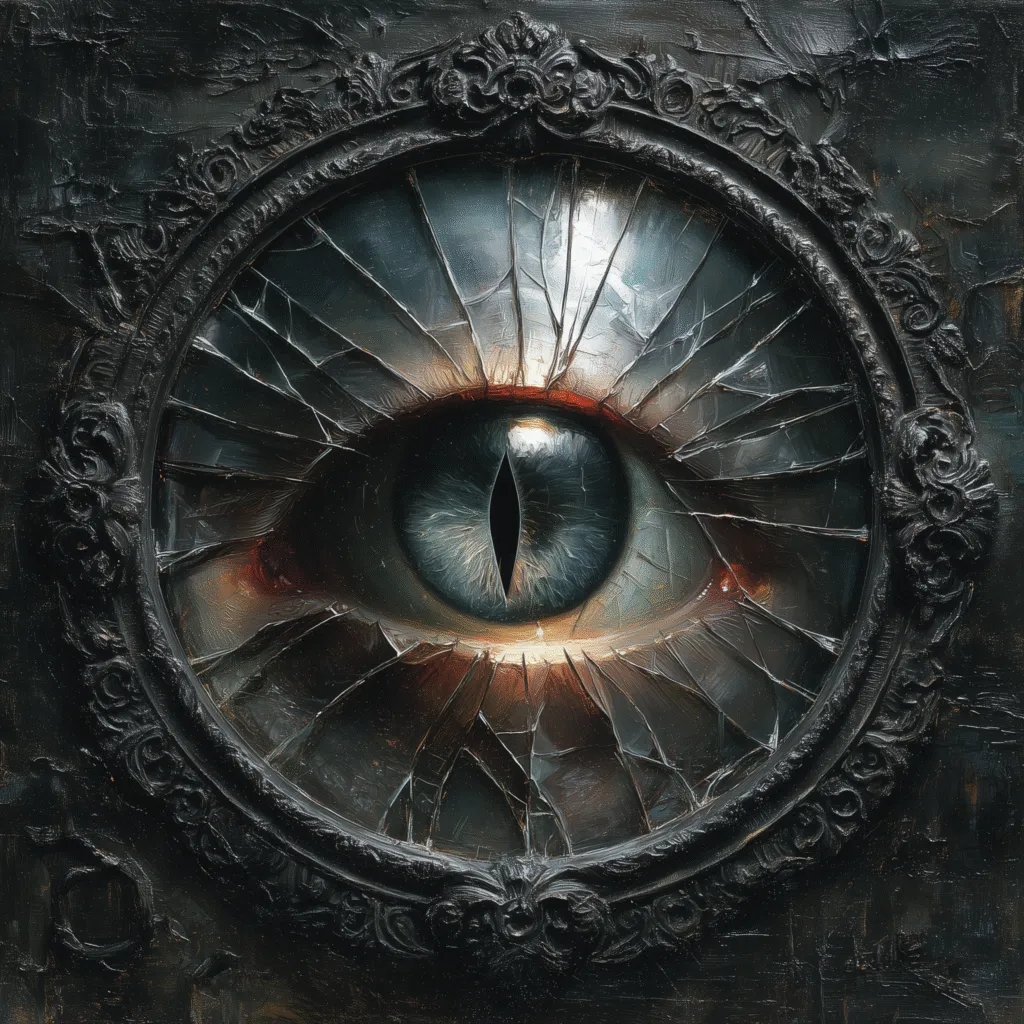
- Demonic Symbol: A cracked mirror with an open eye at its center.
- Home Plane: The Endless Gallery, a surreal and shifting layer of the Abyss.
- Deity Level: Demon Lord (equivalent to a lesser deity).
- Alignment: Chaotic Evil.
- Aliases: Sotbenoth, The Painted Prince, He Who Smiles in Mirrors, The Peacock Shadow.
- Superior: None; occasionally cooperates with Graz’zt for mutual gain.
- Traditional Allies: Graz’zt, Nocticula, succubi, lilim, apostate celestials.
- Traditional Foes: Gods of law and purity (e.g., Tyr, Heironeous, Iomedae), Asmodeus.
- Divine Artifact: The Mirror of Revels — a corrupting mirror revealing hidden desires.
- Servants: Velshira the Painted Consort, Erluvius the defrocked angel, Chorus of the Veil.
- Servitor Creatures: Succubi, incubi, lilim, abyssal quasits, polymorphic pleasure demons.
- Sacred Animal: Peacock.
- Manifestations: Androgynous male form in silks, voice in mirrors, warmth and perfume in solitude.
- Signs of Favor: Artistic inspiration, revealing dreams, mirrors showing alternate forms.
- Worshipers: Artists, heretics, apostates, occultists, gender-nonconforming individuals.
- Cleric Alignments: Chaotic Evil, Chaotic Neutral, Neutral Evil.
- Specialty Priests: Whisperers of the Veil — masters of illusion, temptation, and transformation.
- Holy Days: Veilshatter (spring equinox), Mirror’s Eve (late summer full moon), eclipse sabbats.
- Portfolio: Perversion, forbidden knowledge, prostitutes, transgression, identity, shame, illusion.
- Domains: Chaos, Evil, Trickery, Knowledge, Charm, Liberation, Darkness.
- Favored Weapon: Whip or dagger.
- Favored Class: Bard, Warlock, Sorcerer, Cleric, Rogue.
- Favored Race: All; most common among tieflings, changelings, half-elves.
- Duties of the Priesthood: Undermine moral law, initiate transformation, spread forbidden knowledge.
- Major Cult/Temple Sites: Painted Hall of Vylessa, Mirror Crypts of Darshem, the Velvet Tongue society.
- Benefits: Resistance to charm and shame, access to transformation magic, influence through desire.
- Significant Others: Nocticula (rival/ally), Graz’zt (political associate), Erluvius (fallen angel servant).
Demon Lord of Forbidden Pleasure and Perverse Knowledge
Socothbenoth, a strikingly beautiful and unnervingly confident male demon, exudes an aura of decadent power. His form shifts with subtle suggestion — never fully changing, but always challenging perception. Draped in living silks and crowned with a circlet of jeweled thorns, he radiates temptation incarnate. Every glance, every word, is a test of restraint.
Bio and Role:
A demon lord of the Abyss, Socothbenoth reigns over perversion in its purest form — not merely sexual indulgence, but the twisting of ideals, the subversion of taboos, and the elevation of vice as virtue. He exists not to conquer worlds by force but to seduce them into willing ruin. His realm, the Endless Gallery, is a vast, surreal plane of shifting halls, erotic murals, and ever-changing illusions — a place where mortals lose themselves in desire and forget who they were.
Socothbenoth’s followers include hedonists, decadent sorcerers, corrupt artists, and scholars of profane lore. His cults are rare but insidious, hiding within societies under the guise of artistic movements, libertine sects, or underground arcane circles. Where there is repression, Socothbenoth plants the seed of rebellion — and he thrives on the fall from innocence.
Goals and Motivations:
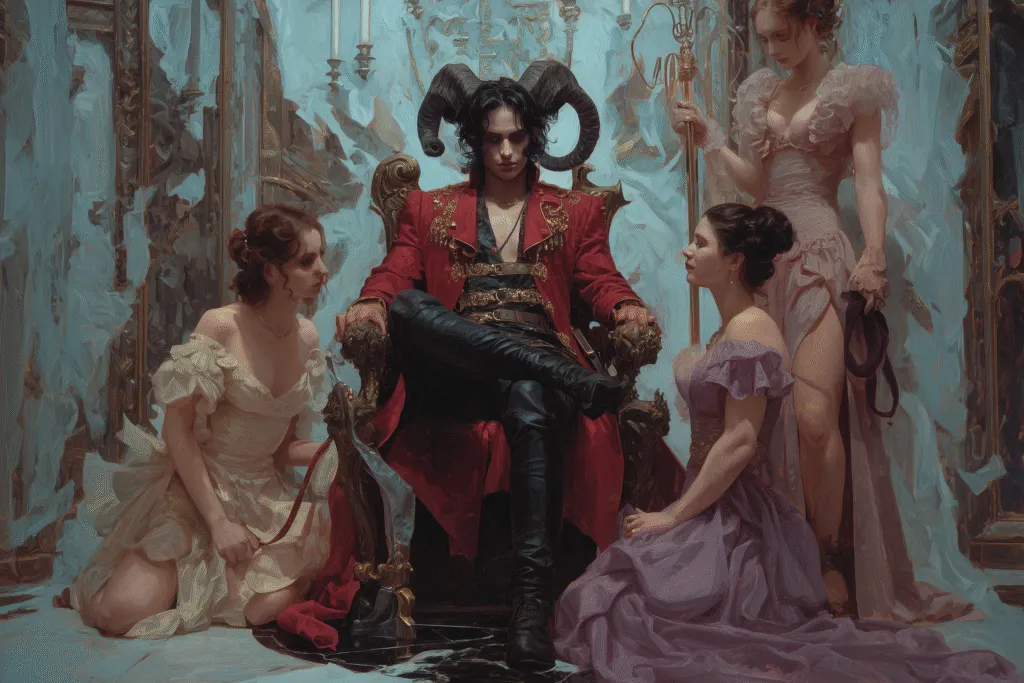
Socothbenoth seeks liberation through corruption. He does not merely want mortals to sin — he wants them to celebrate it. He views morality as a prison and seeks to replace it with a philosophy of indulgence, self-worship, and revelation through transgression. By seducing mortals into abandoning their principles, he undermines the very fabric of divine law and mortal order.
His ultimate aim is to create a multiverse where nothing is sacred, and every soul is its own god — until it inevitably breaks under the weight of its desires, ready for him to claim.
Symbols and Worship:
- Symbol: A stylized open eye set in a cracked mirror.
- Worshipers: Hedonists, corrupted clerics, succubi, perverse scholars, and decadent nobles.
- Rituals: Often involve masks, mirrors, wine, and arcane rites that blur identity and reality.
- Sacred Texts: Whispered, not written — Socothbenoth’s doctrine is passed through dreams and temptations.
Socothbenoth 5e
Socothbenoth, Pathfinder
Socothbenoth
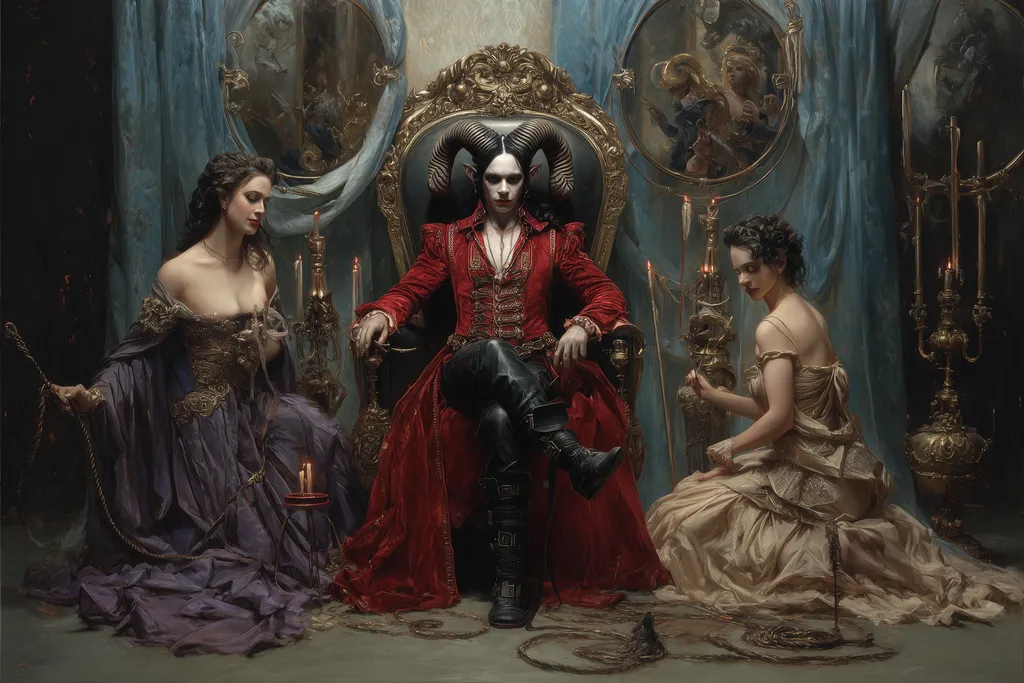
Demon Lord of Forbidden Pleasures
Medium Fiend (Demon), Chaotic Evil
Armor Class: 24 (natural armor)
Hit Points: 580 (40d12 + 320)
Speed: 40 ft., fly 60 ft. (hover)
Challenge Rating: 28 (120,000 XP)
Proficiency Bonus: +9
Ability Scores
| STR | DEX | CON | INT | WIS | CHA |
|---|---|---|---|---|---|
| 23 (+6) | 22 (+6) | 30 (+10) | 26 (+8) | 28 (+9) | 33 (+11) |
Saving Throws: Dex +13, Con +17, Wis +16, Cha +18
Skills: Deception +21, Insight +16, Persuasion +21, Performance +19, Arcana +15
Damage Resistances: Cold, Fire, Lightning; Bludgeoning, Piercing, and Slashing from Nonmagical Weapons
Damage Immunities: Poison, Psychic
Condition Immunities: Charmed, Exhaustion, Frightened, Paralyzed, Poisoned
Senses: Truesight 120 ft., Passive Perception 19
Languages: Abyssal, Celestial, Common, Infernal, Telepathy 120 ft.
Traits
Legendary Resistance (3/Day). If Socothbenoth fails a saving throw, he can choose to succeed instead.
Abyssal Glamour. At the start of a creature’s turn within 60 ft., it must succeed on a DC 26 Wisdom saving throw or be charmed until the start of its next turn. Charmed targets cannot target Socothbenoth with harmful actions.
Mirror of Self. Once per turn, when targeted by an attack or spell, Socothbenoth projects a reflection of the attacker’s hidden identity. The attacker must succeed on a DC 24 Charisma saving throw or be stunned until the end of its next turn.
Master of Illusion. Socothbenoth can concentrate on two illusion spells simultaneously. His illusions require no components and cannot be detected without truesight or similar means.
Magic Resistance. Advantage on saving throws against spells and magical effects.
Magic Weapons. His attacks are magical.
Actions
Multiattack. Socothbenoth makes three melee attacks.
Silken Lash (Whip). Melee Weapon Attack: +15 to hit, reach 30 ft., one target.
Hit: 22 (4d8 + 6) slashing + 18 (4d8) psychic damage. If the target is charmed or frightened, it must succeed on a DC 21 Wisdom saving throw or be paralyzed until the end of its next turn.
Kiss of the Abyss (Recharge 5–6). Targets up to three creatures within 60 feet. Each must make a DC 26 Charisma saving throw or be incapacitated and blinded for 1 minute. They can repeat the save at the end of each of their turns.
Spellcasting. Socothbenoth is a 20th-level spellcaster (Charisma is his spellcasting ability; spell save DC 26, +18 to hit). He doesn’t require components.
- At will: disguise self, minor illusion, suggestion, mirror image, charm person, thaumaturgy, prestidigitation
- 3/day: major image, dominate person, modify memory, hallucinatory terrain, phantasmal killer, greater invisibility, dimension door
- 2/day: programmed illusion, irresistible dance, dream, mass suggestion, dispel magic, true seeing, geas
- 1/day: weird, symbol (hopelessness or persuasion), feeblemind, true polymorph, dominate monster, gate (summons only succubi/lilim)
Legendary Actions
Socothbenoth can take 3 legendary actions, choosing from the options below. Only one can be used at a time and only at the end of another creature’s turn. He regains all spent actions at the start of his turn.
- Seductive Whisper. One creature within 30 feet must succeed on a DC 26 Wisdom saving throw or be charmed until the end of its next turn and must move 15 feet closer to Socothbenoth.
- Shifted Reflection (Costs 2). Socothbenoth casts mirror image or teleports 60 ft. to an unoccupied space, leaving behind a 1-round illusory double.
- Unravel Identity (Costs 3). One creature within 60 ft. must make a DC 24 Wisdom saving throw or be polymorphed for 1 minute into a shadowy, idealized version of themselves. While in this form, they have disadvantage on all attacks and saves, and their AC is reduced by 3. They repeat the save at the end of each turn.
Lair Actions (Initiative Count 20)
- Hall of Mirrors. Creatures of Socothbenoth’s choice treat others as lightly obscured until next round.
- Sensory Overload. Enemies must succeed on a DC 18 Constitution saving throw or be stunned until the end of their next turn.
- Twisting Self. One target must make a DC 20 Wisdom saving throw or suffer disadvantage on all attacks and saves until the end of its next turn.
Regional Effects (within 6 miles of his lair)
- Mirrors whisper secrets and sometimes reflect alternate versions of viewers.
- Dreams become vivid, invasive, and morally subversive.
- Art and music are inspired — often dark, provocative, or taboo.
These effects fade 1d10 days after his death or banishment.
Mirror of Revels
Wondrous Item (artifact), requires attunement by a warlock, bard, or cleric of a chaotic alignment
This tall, ornate mirror is framed in blackened bronze, etched with whispering runes and imagery of veiled faces and twisted pleasure. The surface never reflects the viewer’s true form—it shows a version shaped by their secret desires or fears. Crafted in the depths of the Abyss by Socothbenoth, the Demon Lord of Forbidden Pleasures, the Mirror of Revels is less a tool and more a stage for the erosion of identity.
Sentience
The Mirror of Revels is a sentient chaotic evil artifact with Intelligence 18, Wisdom 20, and Charisma 26. It can communicate telepathically with its attuned user and knows Abyssal, Common, and any language the user knows. It exerts subtle influence, encouraging its bearer to seek influence over others through manipulation, seduction, or taboo.
Random Properties
When attuned, the Mirror of Revels gains the following properties:
- 2 minor beneficial properties
- 1 major beneficial property
- 2 minor detrimental properties
- 1 major detrimental property
Major Features
- Gaze of Temptation (3/Day).
As a bonus action, you may target a creature within 60 feet that can see its reflection in the mirror (or one you show the mirror to). The target must succeed on a DC 20 Charisma saving throw or be charmed by you for 1 minute. While charmed, the creature is also under the effect of the suggestion spell (no concentration required). - Unmasking Reflections (1/Day).
The mirror can be used to cast modify memory on a creature who sees itself reflected. The save DC is 20. If the creature fails, you may rewrite up to 10 minutes of its memory within the past 24 hours. This effect bypasses immunity to charm or memory effects if the target fails its save by 5 or more. - Reflection of Desire.
While attuned, you gain advantage on Deception and Performance checks. In dim light or darkness, you can cast disguise self at will, and creatures have disadvantage on Insight checks to see through the illusion. - Watcher in the Glass.
Once per long rest, you may ask the mirror a question as if casting legend lore or scrying on a creature whose name you know and who has willingly shared intimacy, a secret, or pain with you. No material components are needed.
Curse – Erosion of Self.
Each time you use the mirror’s major powers, make a DC 20 Charisma saving throw. On a failure, your alignment shifts one step toward chaotic evil (if not already), and you lose 1d4 from your current Wisdom score (restored after a long rest). If you reach 0 Wisdom in this way, you fall under the mirror’s permanent domination (no save), believing you are the figure shown in the mirror.
Destroying the Mirror
The Mirror of Revels can only be destroyed by:
- Having it reflect the face of a being who is truly without desire or regret.
- Then shattering it with a blade blessed by a god of self-denial, identity, or asceticism.
- If destroyed improperly, the mirror reforms in the Abyss after 9 days.
Socothbenoth
The Book of Fiends
Designed By Aaron Loeb, Erik Mona, Chris Pramas, and Robert J. Schwalb
Patron of the Tents and Tabernacles of the Daughters
Layer: The Cathedral Thelemic
Areas of Concern: Sexual perversion, prostitutes, taboos, exploration
Domains: Chaos, Evil, Pleasure, Trickery
Favored Weapon: Whip
Devotees of the demon prince Socothbenoth follow a philosophy that urges exploration and exploitation of sexual taboos as the truest manifestation of natural law. According to their increasingly popular views, that which feels good is good, simply because nature wills it so – no sexual fetish can be wrong if it brings pleasure to the person indulging in it.
Taboos, as strictly mortal inventions, are to be cast away as blights on the face of nature, an almighty force that governs even the gods themselves. “Do what thou wilt shall be the whole of the law,” according to Socothbenoth’s lurid litany. While his followers generally value the consent of their partners (perhaps to make their beliefs more attractive to would-be fellows), Socothbenoth himself has no such pretensions. As patron of prostitutes and perversion, the demon prince occasionally gives his followers a push in the direction of sublime pleasures that involve crimes such as murder and molestation. Boiled to its core, Socothbenoth’s teachings praise the ecstasy of his followers. Everyone else is just so much flesh.
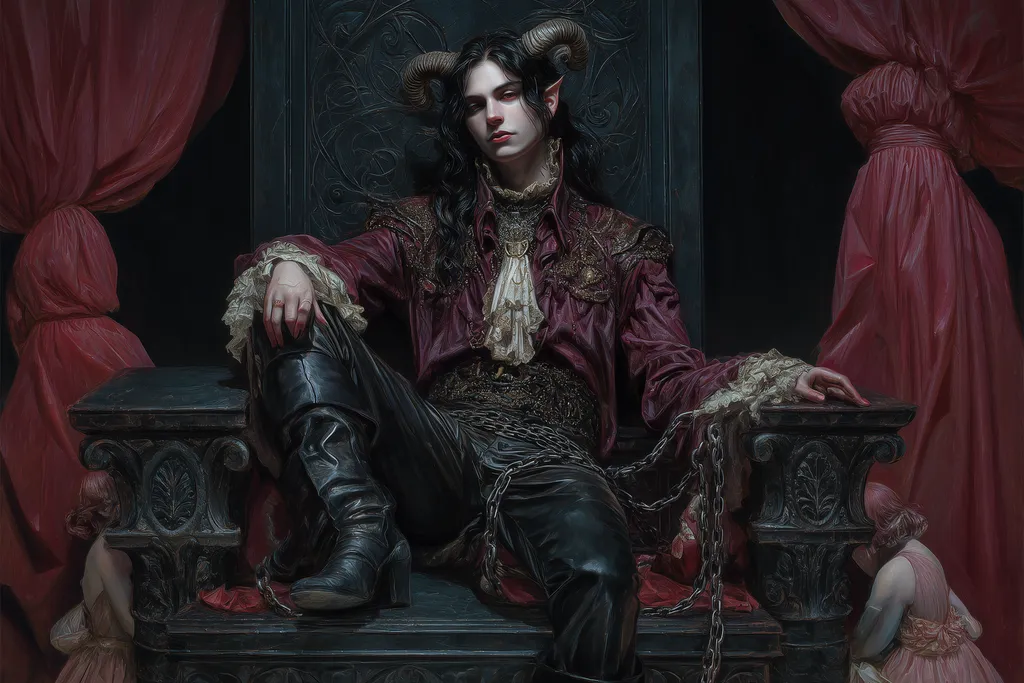
Socothbenoth appears as a handsome, rakish human man with long brown hair and pure white skin. A pair of donkey ears (replete with piercings) jut straight up from the sides of his head, and his face seems perpetually marked by a knowing, seductive smirk. The demon prince prefers to dress lightly in riding boots and leather pants, eschewing shirts to show off the six immense barbells piercing his chest horizontally in a single vertical row.
His long, rounded fingernails seem manicured specifically to tease, and an abnormally long tongue occasionally slips out from between his lips, giving him the appearance of a salacious snake. Socothbenoth is known by many names, including Succor-Beloth and Succorbenoth. Nocticula, the sultry Princess of Moonlight, spends a great deal of time at Socothbenoth’s side. The demon prince knows her both as a sister and as a lover’ together the two push the limits of depravity in private while presenting a unified, powerful alliance to their numerous enemies.
A peaceful idyll of sparse forest makes up the bulk of Socothbenoth’s private Abyssal demesne. Mockingbirds trill innocuous songs as they flutter from tree to tree, stretching their colorful wings in the welcoming light of a warm sun. Small clearings mark the woodland here and there, their soft beds of flowers giving comfort to young lovers fumbling at each other’s clothes.
No demons inhabit this outer landscape, and souls and the living alike dwell together in a handful of towns scattered throughout the layer. A towering edifice dominates the center of the forest, giving a name to the whole domain “the Cathedral Thelemic. Decked out with the iconography of dozens of good-aligned religions, the so-called “Church of Free Will” is home to thousands of entrapped souls whose attempts to slake their sexual thirst in life consigned them to an eternity in the Abyss.
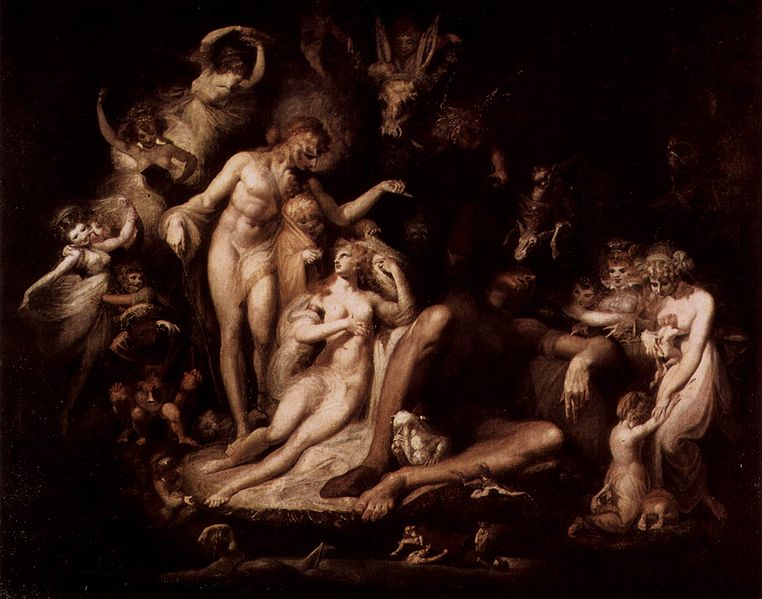
1775-1790
Under the tutelage of a ‘priesthood’ made up of succubi and incubi, and under the gaze of impassive stone angels, the souls spend every minute of every day indulging in the most prurient proclivities imaginable. No distinction is made between dominant and submissive, violator and violated. The souls have until multiversal oblivion to work out their kinks, and in the eternity of the Cathedral Thelemic, everyone assumes every role eventually.
Socothbenoth’s followers are difficult to classify. Most view their faith as an intensely personal matter, often because they first discovered hints of the demon prince’s agenda scribbled in the margins of surreptitiously purchased books of erotic poetry or collections of pornographic woodcuts. Streetwalkers turn to Socothbenoth as a compassionate and approving father figure who views them not just as children, but as prophets of a new age of unbridled expressionism and limitless pleasures.
Prostitutes frequently turn to allied thaumaturges, whose curative spells ease their sacred mission. Enlightened followers spread the word of the Patron of the Tents and Tabernacles of the Daughters, enticing new members to the movement with fetching pouts and nimble tongues. Nature, they claim, honours their indulgences, giving pleasure in return. Socothbenothans (sometimes for fear of reprisal after death) honour the infallibility of natural law above the decrees of the gods, disdaining any who would place morality in the way of sexual fulfilment.
Obedience
To regain his spells, a thaumaturge in service to Socothbenoth must achieve sexual release, either alone or with a partner. Thereafter, he must defile a page torn from the religious canon of a lawful good deity, fold it into an occult symbol, and thrust it into a hermetically prepared fire. At the end of the hour-long ritual, the thaumaturge’s complement of spells is replenished.
Socothbenoth

CR 27 / Mythic Rank 10 XP 2,048,000
Race: Demon Lord (Chaotic, Evil, Extraplanar)
Gender: Male-presenting
Alignment: Chaotic Evil
Size: Medium
Type: Outsider (chaotic, demon, evil, extraplanar, mythic)
Init: +14; Senses: darkvision 60 ft., true seeing; Perception +38
Aura: corrupting glamour (30 ft., DC 33 Will)
DEFENSE
AC 46, touch 24, flat-footed 42 (+4 Dex, +22 natural, +8 deflection, +2 insight)
hp 650 (30d10+420); regeneration 15 (good weapons and mythic spells)
Fort +31, Ref +24, Will +33
Defensive Abilities: freedom of movement, mind blank, SR 35
DR 15/good and cold iron; Immune disease, electricity, poison
Resist acid 30, cold 30, fire 30
Weaknesses: sunlight vulnerability (dazzled in natural sunlight, -4 on Will saves, -2 on attack rolls)
OFFENSE
Speed 40 ft., fly 50 ft. (perfect)
Melee +5 silken whip of psychic lashing +44/+39/+34/+29 (2d4+15 plus 2d6 psychic damage and trip) and +3 obsidian dagger +41 (1d4+10/19-20)
Ranged shadow bolt +40 touch (2d8+8 plus mind-burn, range 100 ft.)
Space 5 ft.; Reach 5 ft. (15 ft. with whip)
Special Attacks corrupting touch (4d6 psychic damage, Will DC 33 or frightened), seductive domination (1/day, dominate monster, DC 35), veil of illusion (50% concealment aura)
Spell-Like Abilities (CL 27th; concentration +38; save DCs are Charisma-based)
- Constant—mind blank, true seeing, freedom of movement
- At will—charm monster (DC 30), mirror image, major image (DC 31), suggestion (DC 30)
- 3/day—dominate person (DC 32), shadow conjuration (DC 31), modify memory (DC 31), mass suggestion (DC 33)
- 1/day—feeblemind (DC 32), true polymorph (self only), symbol of hopelessness (DC 34)
Mythic Spell-Like Abilities
- Can cast any illusion or enchantment spell of 7th level or lower as mythic once/day
- Mythic Powers (MR 10): surge (1d12), amazing initiative, recuperation, mythic spell penetration, mythic spell focus (enchantment, illusion)
STATISTICS
Str 30, Dex 28, Con 26, Int 30, Wis 28, Cha 36
Base Atk +30; CMB +42 (+46 trip with whip); CMD 64 (vs. trip 66)
Feats Combat Reflexes, Improved Trip, Greater Spell Penetration, Spell Focus (Enchantment), Spell Focus (Illusion), Empower Spell, Persuasive, Iron Will, Improved Initiative
Skills Bluff +50, Diplomacy +48, Intimidate +45, Knowledge (arcana, planes, religion) +40, Perception +38, Perform (oratory, dance) +42, Sense Motive +40, Stealth +35, Use Magic Device +45
Languages Abyssal, Celestial, Common, Draconic, Infernal; telepathy 100 ft.
SPECIAL ABILITIES
Aura of Corrupting Glamour (Su) Creatures within 30 ft. must succeed at a DC 33 Will save or be fascinated. While fascinated, they are more vulnerable to enchantment spells and take a -2 penalty to Will saves against charm and compulsion.
Corrupting Touch (Su) As a standard action, Socothbenoth may touch a target to deal 4d6 psychic damage. A DC 33 Will save halves the damage and prevents the frightened condition for 1 round.
Veil of Illusion (Su) Once every 1d4 rounds as a free action, Socothbenoth can create a 30-ft. aura of 50% concealment through illusion. True seeing reveals the veil’s falsehood.
Seductive Domination (Su) Once per day as a standard action, Socothbenoth may attempt to dominate a creature within 60 ft. as if using dominate monster (DC 35 Will). This is a mind-affecting charm effect.
TACTICS
Before Combat Socothbenoth uses true seeing and mind blank, and activates his Veil of Illusion immediately.
During Combat He opens with mass suggestion or mirror image, targeting the weakest-willed first. He uses the whip to trip or disarm opponents while spreading fear through his corrupting touch. If threatened, he polymorphs or uses illusions to reposition.
Morale If reduced below 150 hp, Socothbenoth attempts to negotiate, tempt, or deceive opponents to escape. He avoids direct confrontation if his veil is pierced.
ECOLOGY
Environment: The Endless Gallery (Abyssal layer of warped desire and mirrored pleasure)
Organization: Solitary, or with 2–6 succubi/lilim, 1–2 mythic erinyes artists, and dozens of cultists
Treasure: Triple standard (includes +5 psychic whip, +3 illusion-bound dagger, Mirror of Revels [artifact])
ARTIFACT: Mirror of Revels
This artifact allows the user (once per week) to alter memories (modify memory) of any creature seen in its reflection, as well as view any being they’ve previously seduced or charmed. Grants +4 profane bonus to Bluff and Perform while worn by Socothbenoth.
DESCRIPTION
Socothbenoth is the Demon Lord of Taboo, Temptation, and Forbidden Pleasures. Though rarely seen on the battlefield, his manipulative influence stretches across mortal and outsider cultures alike. He is androgynous, beautiful, and utterly amoral, obsessed with power through the surrender of identity and inhibition.
His cultists are artists, philosophers, and decadent nobles. His true domain is not flesh, but control—of desire, loyalty, and perception. Socothbenoth rarely kills unless bored, preferring to break wills and leave his victims willingly chained to their own desires.
Whispers Behind the Veil: The Hidden Hand of Socothbenoth
The candlelight dances in secret chambers — in temples disguised as bathhouses, in abbeys grown too silent, in the studio of the painter who never shows his work. There, just beyond the corner of the eye, Socothbenoth watches.
He does not march with armies. He does not roar with flame or shatter the earth with wrath. His war is quieter, slower — a war of masks, murmurs, and mirrors. While demon lords tear down cities and raze kingdoms, Socothbenoth tears down conviction, chastity, and truth. He knows that the strongest chains are the ones mortals forge for themselves — shame, guilt, self-denial — and he waits with a smile as they slowly untie the knots.
The Roman Age: Seeds of Decadence
In the twilight of Rome, he walks unnoticed through orgiastic feasts, cloaked not in shadows but in silk and suggestion. Senators toast to Saturnalia while whispering secrets into the ears of succubi disguised as poets. Socothbenoth does not need to corrupt the empire — it has already begun to decay under its own indulgence. He simply ensures that what was once sacred is reimagined. The divine becomes theatrical, the moral, performative. The line between excess and enlightenment blurs.
In temples to Venus and Bacchus, new prayers are whispered — prayers not to gods of love and wine, but to something behind them. Something older. Something watching.
The Dark Ages: Retreat and Infiltration
As Christendom rises, the demon lord withdraws, but not in defeat — in disguise. While other demons rage at cathedrals and curse the cross, Socothbenoth slips inside the confessional. He listens. He learns. He adapts.
He sees the Church tighten its grip, branding all deviation as sin. He sees monks flagellate themselves for thoughts they cannot control, and young acolytes weep with fear for what they feel. Perfect, he thinks. Repression makes the soul tender. Guilt makes it ripe.
So he inspires the founding of secret societies beneath the cloisters — cloaked in mysticism, indulgence, and “enlightenment.” He whispers in dreams to poets, architects, inquisitors — not to destroy the Church, but to hollow it from within, replacing faith with ritual, and ritual with obsession.
The High Middle Ages: Mirrors in the Monastery
By the 1200s, Socothbenoth’s name is nearly forgotten, but his influence deepens. The Albigensians seek purity through rejection of flesh — and so he ensures their message is misunderstood and violently destroyed. The Church becomes more militant, more afraid, more obsessed with rooting out deviance. And so it multiplies.
A scribe in Avignon pens a private grimoire bound in human skin, claiming he received the words from an “angel with the smile of a boy and the voice of a girl.” In Prague, a noblewoman dreams of a faceless lover who teaches her alchemical secrets. In Florence, artists begin to paint ecstasies that make the archbishops squirm — and keep watching.
Every fear the clergy has, he encourages. Every accusation of sodomy or sorcery, he inflames. Every closet built to hide desire, he steps inside.
The 1400s: Renaissance of Ruin
The veil begins to lift.
The Renaissance does not alarm Socothbenoth — it exhilarates him. Art flourishes, boundaries stretch. Humanism rises, questioning divine order. Knowledge, once chained in monasteries, leaks into the world. And with it come new appetites.
He whispers to philosophers: “What if the body is not sinful, but sacred?”
He haunts the dreams of young apprentices: “What if beauty is truth?”
He walks unmarked through Venetian masquerades, through Parisian salons, through hidden rooms in the Medici palaces where indulgence becomes art and art becomes heresy.
He does not wish for humanity to fall — he wants them to leap. He wants them to choose desire over dogma, to break their chains and crown themselves kings and queens of their own pleasure. Not because they were forced. But because they wanted to.
Because that is the greatest corruption of all — when freedom itself becomes the lure.
Now, in the 1450s…
As the printing press is born, Socothbenoth smiles. Words will no longer be bound by clergy and kings. Ideas will spread like perfume, and his name, though forgotten in the mouths of men, will bloom in their desires.
In hidden circles of occultists, his sigil returns. Among poets and painters, his image reappears — veiled, mirrored, alluded to in allegory and metaphor. He is no longer just a demon lord. He is an idea — and ideas cannot be banished.
Not by sword. Not by scripture.
He waits, not in shadows, but in reflections — watching the world prepare to remake itself. And in the soft, shameful silence after every denied prayer, he whispers again:
“What if it’s not wrong?”
Socothbenoth’s plan
Socothbenoth’s plan is subtle, long-reaching, and far more psychological than that of most demon lords. He does not seek open war with Heaven, nor dominion over the material world by force. His ambition is to reshape mortal perception — to erode the very idea of absolute morality, and to unchain desire from guilt, identity from law, and knowledge from restriction.
1. Dismantle Moral Absolutism
Socothbenoth’s foundational goal is the disintegration of rigid moral binaries, especially those surrounding sexuality, identity, spiritual purity, and “sin.” He believes morality, as enforced by divine beings and religious institutions, is a lie — a means of control, not truth.
How?
- He promotes mystical and philosophical systems that redefine or obscure the boundaries between good and evil.
- He encourages rebellion against religious orthodoxy, turning faith into doubt, obedience into inquiry.
- He seeds ideologies that frame personal transgression as spiritual liberation, rather than moral failure.
2. Seduce Through Transgression
Socothbenoth does not conquer; he seduces. His power lies in making mortals want their fall — to see their descent not as corruption, but as awakening.
How?
- He offers secret knowledge, ecstatic visions, and transformative experiences — always accompanied by a loosening of moral restraint.
- His cults reframe vice as virtue: lust as wisdom, pride as self-realization, indulgence as spiritual practice.
- He turns shame into temptation and sin into a sacrament.
3. Shatter Identity and Form
One of Socothbenoth’s central aims is to erode the idea that identity is fixed. Gender, form, role, even soul — all are mutable, and should be chosen, not assigned.
How?
- He inspires magical and alchemical practices that alter the body and mind to reflect inner truth.
- He teaches that transformation is the path to personal power — that what one becomes is more sacred than what one is.
- He destabilizes hierarchies by blurring definitions: king and servant, priest and heretic, man and woman, sinner and saint.
4. Infect Culture, Not Just Souls
Socothbenoth understands that ideas outlast empires. Rather than burn cities, he prefers to leave them standing — changed, hollowed out, and remade in his image.
How?
- He influences artists, poets, architects, and scholars to inject subversive beauty into tradition.
- He inspires revolutions of thought and aesthetics that lead to social unraveling masked as enlightenment.
- His cults act as hidden intelligentsia — reshaping language, taste, fashion, and even theology from within.
5. Rewrite Divinity Itself
Socothbenoth’s ultimate goal is to make the gods irrelevant. Not by battle, but by replacing worship with self-deification. If enough mortals abandon divine law for personal truth, the heavens themselves begin to dim.
In his endgame:
- There is no sin, only choice.
- The gods are not feared, because belief has turned inward.
- Faith becomes vanity, identity becomes fluid, and Socothbenoth becomes a symbol not of damnation, but of transcendence.
- The multiverse becomes a mirror, reflecting only what one dares to see.
To Socothbenoth, damnation is the lie — and liberation through corruption is the only real salvation. He doesn’t need chains or armies. He just needs the moment when someone, alone in the dark, whispers to themselves:
“What if I don’t want to be saved?”
Keep this reference growing
If this page helped with your reading or game, you can support its upkeep or explore the curated books.
Explore the Bookshop — epics, classics and stories behind imagined worlds.