
Bestiary · Legendary Creatures
Magical Beasts — Creatures, Rules & Bestiary
At a Glance
- Creatures
- 193 entries, from small woodland oddities to immense sea monsters.
- Common signs
- Unnatural tracks, impossible anatomy, strange cries and places avoided by ordinary animals.
- Typical encounters
- Territorial hunters, guardians, enchanted mounts, ominous hounds and creatures of Faerie.
- Rules
- 5.5e / 2024 · 5e / 2014 · Pathfinder 1e · D&D 3.5e. Use the type given in each creature’s edition entry.
Magical Beast Traits and Behaviour
Beyond the familiar beasts of field and forest lie winged guardians, impossible predators and creatures whose very bodies carry magic. Some defend sacred places. Others stalk the roads, sleep beneath islands or wait in the black water below a ship.
Magical beasts often resemble animals, yet possess unnatural powers, unusual intelligence or anatomy that has no place in the ordinary world. Hunger and territory still shape many of their lives. A clever beast may also remember an insult, honour a bargain or serve a cause of its own.
A guardian at a ruined gate presents a different danger from a predator in the reeds. Look first at what the creature wants, what it protects and how it can be approached. Its behaviour matters as much as its strength.
Creature types across editions. Magical beast is a rules type in Pathfinder 1e and D&D 3.5e. Modern D&D distributes these creatures among Monstrosity, Fey, Celestial and other types. This collection also retains creatures of related folklore; its directory placement does not override a stat block.
Notable Magical Beasts
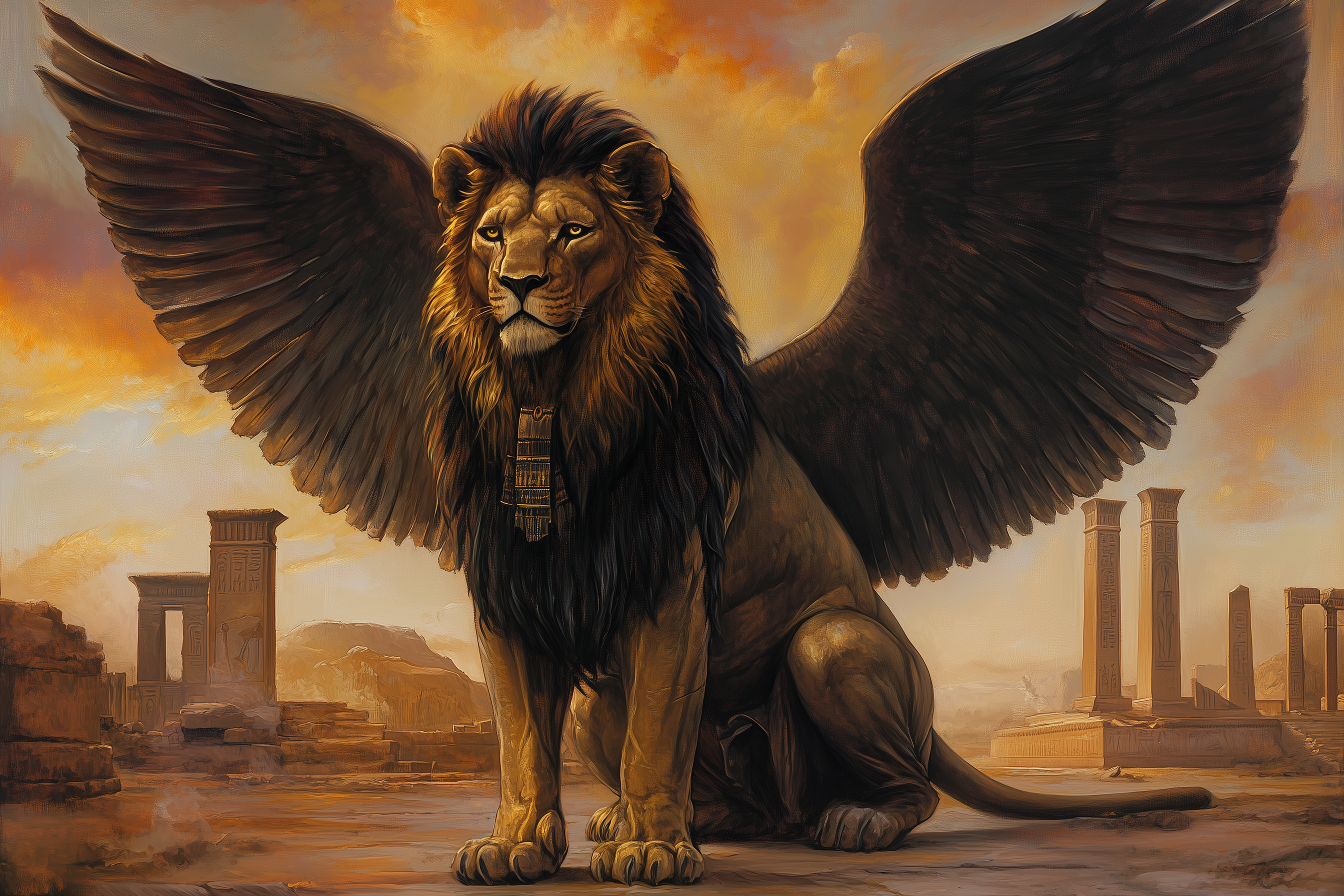
Sphinx
Ancient guardians whose riddles, judgement and watchfulness bar the way to forbidden places.
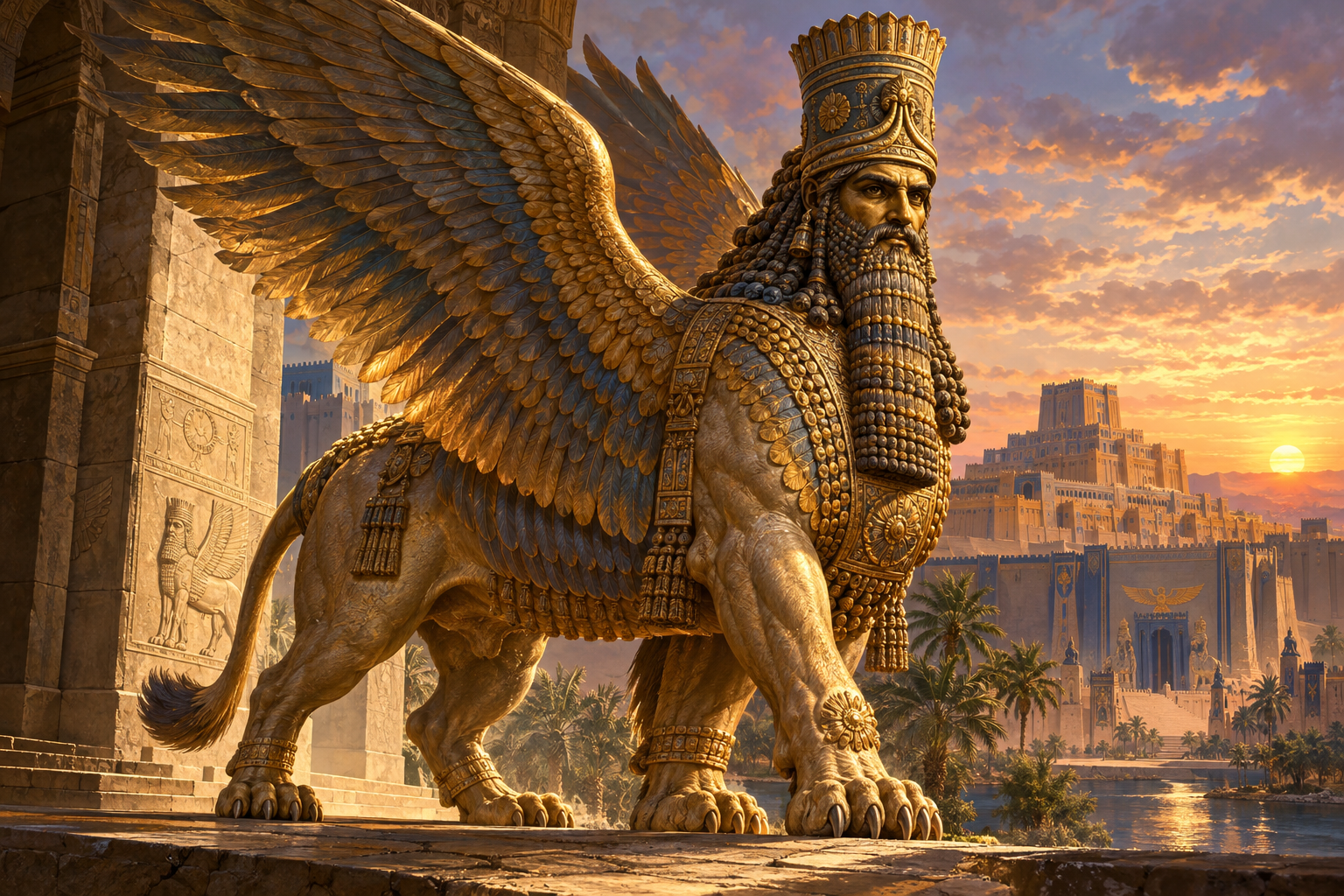
Lammasu
Winged, human-faced guardians that shelter travellers and watch over desert ruins.

Griffon
Eagle-headed, lion-bodied hunters of crags, high passes and the open sky.

Unicorn
Horned guardians of secluded glades and the wild places beyond settled roads.
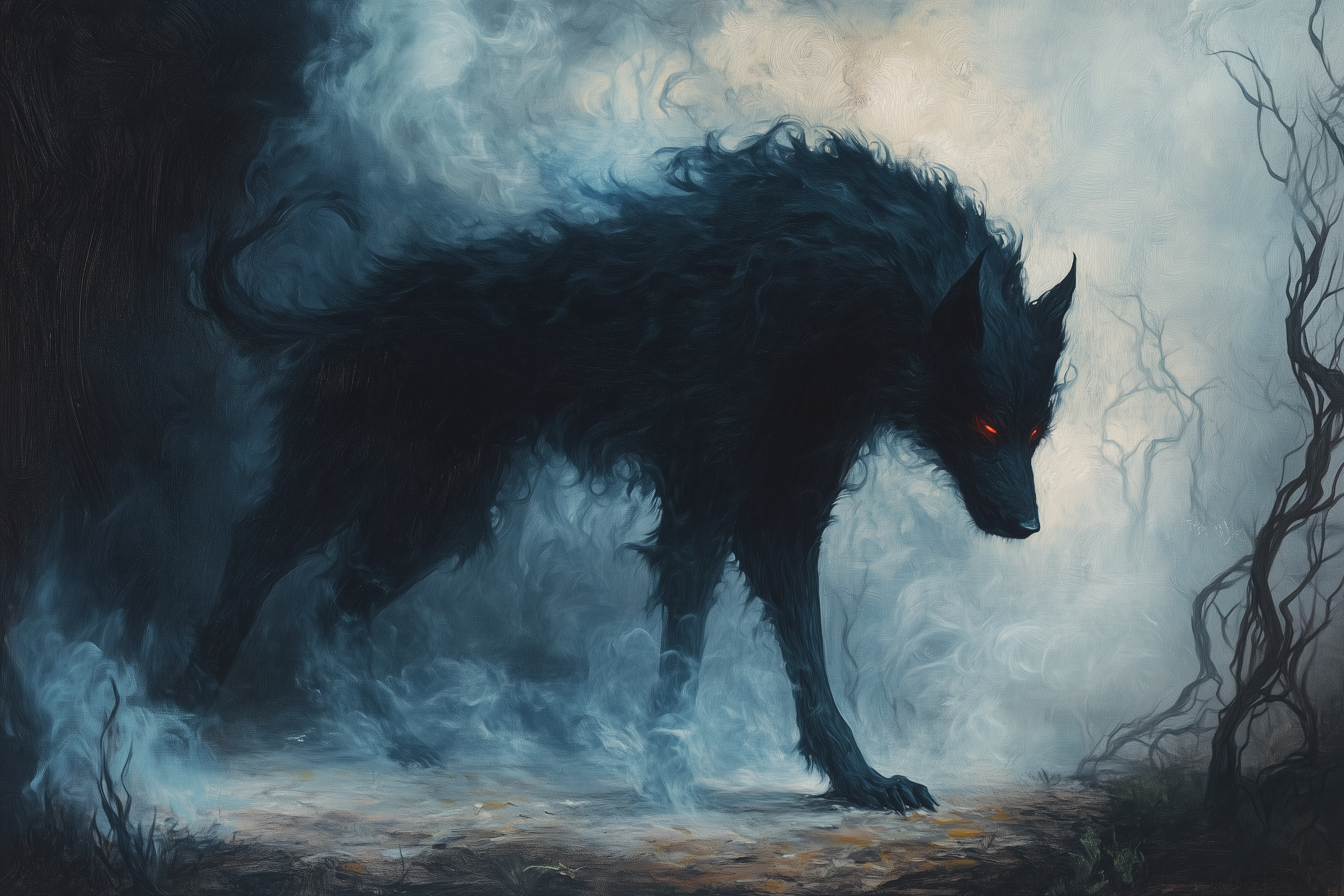
Black Dog
A supernatural hunting hound whose shadowed presence haunts lonely roads.

Bunyip
An amphibious predator whose cries disturb the silence of remote billabongs.

Kokogiak
A monstrous northern hunter, feared in the frozen wilderness.

Owlbear
A powerful feathered predator with a bear’s body and an owl’s hooked beak.
For stranger encounters, seek the island-like Aspidochelone, the tearful Squonk or the mighty Kraken. The distinct Black Shuck has its own folklore and regional identity.
Magical Beasts — Full A–Z Index
Browse all 193 entries. Open a letter range to see its creatures.
Magical Beast Rules by Edition
Choose the edition used at the table. These are creature-type rules; a particular monster’s listed exceptions take precedence.
5.5e / 2024 — Use the Creature’s Listed Type
Magical Beast is not a creature type in this edition. Read the type beneath the creature’s name, such as Monstrosity, Fey or Celestial.
The stat block supplies Hit Dice, saving throws, skills, senses and languages. This collection grants no additional Darkvision, proficiencies or immunities. Spells and other effects that depend on creature type use the type in the selected stat block.
5e / 2014 — Use the Creature’s Listed Type
This edition also has no Magical Beast type. A beast of legend may be a Monstrosity, Fey, Celestial or another creature type; resemblance to an animal does not automatically make it a Beast.
Use the 2014 stat block’s Hit Dice, saving throws, skills, senses and languages. Do not apply Pathfinder or 3.5e type features to it. Effects restricted to Beasts only apply when the creature’s actual type or an explicit exception permits them.
Pathfinder 1e — Magical Beast Type
These creatures resemble animals but may have Intelligence above 2. Such a creature knows at least one language, although it may be unable to speak. Its unusual qualities can be extraordinary or supernatural.
- Racial Hit Dice: d10.
- Base attack bonus: equal to racial Hit Dice.
- Good saves: Fortitude and Reflex.
- Skill ranks: 2 + Intelligence modifier per racial Hit Die, minimum 1. Class skills are Acrobatics, Climb, Fly, Perception, Stealth and Swim.
Default traits: Darkvision 60 feet; low-light vision; proficiency with natural weapons only; no armour proficiency. Magical beasts breathe, eat and sleep. Individual entries can specify exceptions.
D&D 3.5e — Magical Beast Type
Magical beasts resemble animals but may possess greater Intelligence, extraordinary abilities or supernatural powers.
- Racial Hit Dice: d10.
- Base attack bonus: equal to racial Hit Dice, as a fighter.
- Good saves: Fortitude and Reflex.
- Skill points: 2 + Intelligence modifier per racial Hit Die, minimum 1; quadruple that amount for the first racial Hit Die. Use the creature’s 3.5e skill list, rather than Pathfinder’s consolidated skills.
Default traits: Darkvision 60 feet, low-light vision, proficiency with natural weapons only and no armour proficiency. They breathe, eat and sleep unless the individual entry states otherwise.
Magical Beasts in Faerie
Magical beasts, particularly those native to Faerie, tend to live in animalistic terms, hunting and foraging for most of their time. However, unlike intelligent plants, which generally obsess over the natural order in their immediate area, magical beasts tend to be more social and concern themselves with personal glory, relationships, and pursuing abstract ideals aside from natural balance, such as good or chaos.
Unicorns, pegasi, and a few others are so well-integrated into fey society that they sometimes adopt archfey or Powers of their own species as their lords much as fey often do. Others, such as the thrasfyr, are bound to serve powerful masters and vanish quietly to the fringes of Faerie when left to their own devices.
Among the most dangerous magical beasts in Faerie are krakens, who are both power-hungry and mighty enough to overpower most other beings aside from fey nobles and giant warlords. These vile and mysterious creatures lurk in the deep seas of Faerie, away from most fey concerns and the influence of most beings aside from a few Fomorians and archfey associated with the Court of Coral.
Magical Beasts at Sea
An apparent island can be as dangerous as a predator beneath the hull. Aspidochelone is a colossal, whale-like magical beast that draws travellers towards its resting back, then endangers them when it dives. Its Pathfinder 1e profile is CR 17. The kraken provides a different encounter: a sea monster whose intelligence and ambitions can make it an active enemy. The ocean guide connects these threats to sea routes and travel.
Mythical and Historical Context
Many of these beasts belong to traditions of storytelling as well as to the wilderness: the sphinx at a forbidden threshold, the unicorn of the secluded forest, the griffon above the mountains and Cerberus at the gates of Hades.
Their stories give an encounter more than a shape. A guardian asks who has the right to pass. A beast mistaken for an island makes safety itself uncertain. A hound on an empty road turns an ordinary journey into a warning.
Cerberus, the many-headed hound at the gates of Hades, embodies the danger of crossing a guarded threshold.

Sources and Rules Reference
- Archives of Nethys — Pathfinder 1e Magical Beast type, from the Pathfinder RPG Bestiary.
- D&D 3.5e SRD — Magical Beast type.
- D&D System Reference Documents — official 5.1 and 5.2.1 references.
Creature statistics, conversions and their licensing notes are given in the individual entries. This hub collects those entries and distinguishes the rules editions.
Keep this reference growing
If this page helped with your reading or game, you can support its upkeep or explore the curated books.
Explore the Bookshop — epics, classics and stories behind imagined worlds.